Picture this: it’s early 2026, and a small bakery owner in Seoul just launched a web app that lets customers customize their orders in real time, tracks inventory automatically, and loads in under a second on a 4G connection. Three years ago, building something like that would have required a six-figure budget and a dedicated dev team. Today? A solo developer pulled it off in six weeks using tools and frameworks that barely existed in 2023. That’s the kind of sea change we’re living through right now in web development — and if you’re trying to figure out where to focus your energy (or your budget), you’ve landed in the right place.
Let’s think through this together. The web development landscape in 2026 isn’t just “more of the same with shinier tools.” There are genuinely structural shifts happening — in how we build, where code runs, how AI fits into the workflow, and what users actually expect. I want to walk you through the trends that are reshaping real projects, not just conference keynote slides.
1. AI-Native Development Is No Longer Optional
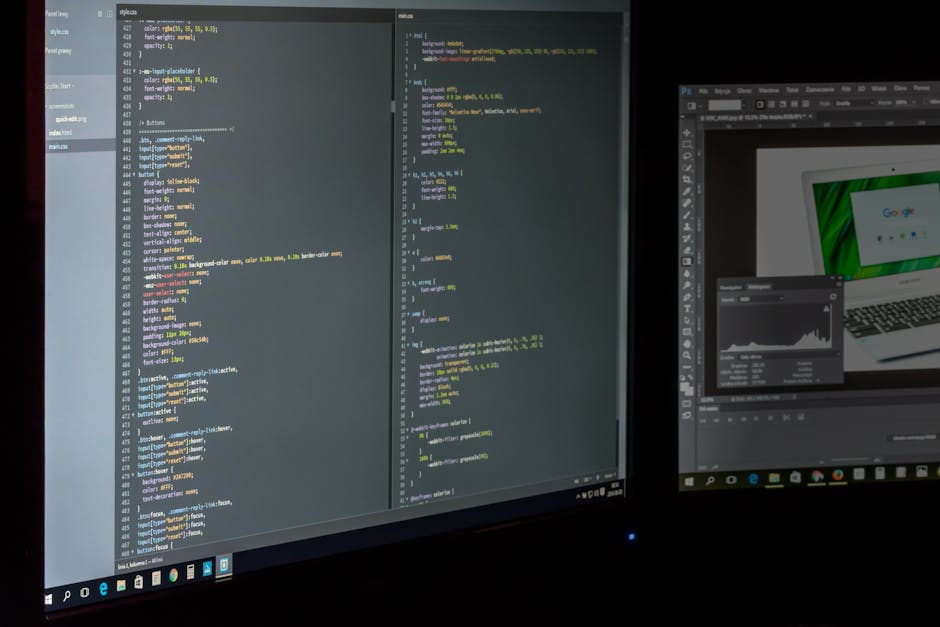
Let’s be honest: in 2024 and 2025, AI coding assistants felt like a cool party trick. In 2026, they’re closer to a power tool — genuinely dangerous to ignore if you’re competing professionally. GitHub Copilot, Cursor, and a wave of newer entrants have evolved from autocomplete on steroids to systems that can reason about your entire codebase architecture.
According to Stack Overflow’s 2026 Developer Survey (released in February 2026), 78% of professional developers now use AI-assisted coding tools daily — up from 44% in early 2024. More interestingly, the productivity gap between AI-augmented developers and those working without assistance has widened to an estimated 40-60% in routine task completion speed. That’s not marginal. That’s a competitive moat.
But here’s the nuance worth thinking about: AI tools are exceptional at boilerplate, pattern repetition, and documentation — but they still stumble badly on novel architectural decisions, security edge cases, and deeply context-specific business logic. The developers winning right now are those treating AI as a junior collaborator, not an oracle.
2. Edge Computing Has Moved from Buzzword to Default
Remember when “the cloud” felt like magic? Edge computing is having that moment in 2026. Platforms like Cloudflare Workers, Vercel Edge Functions, and AWS Lambda@Edge have matured to the point where running logic physically close to your users — slashing latency from 200ms to under 20ms — is accessible to indie developers, not just enterprise teams.
The practical impact: e-commerce conversion rates have been shown to improve by up to 17% for every 100ms reduction in page load time (data from Core Web Vitals industry reports, Q1 2026). That’s not a theoretical number — that’s revenue. Edge-first architectures, where authentication, personalization, and A/B testing logic all run at the network edge rather than in a centralized server, are quickly becoming the default starting point for new projects rather than an optimization layer added later.
3. The Framework Wars Are (Sort Of) Settling
For years, choosing a JavaScript framework felt like picking a religion. React, Vue, Angular, Svelte — passionate communities, fierce debates. In 2026, the picture is a bit more pragmatic. React remains dominant in enterprise environments (roughly 58% market share in professional projects per the 2026 State of JS report), but the interesting story is what’s happening around it.
- Next.js 15 has cemented server components as a mainstream pattern, blurring the line between frontend and backend in genuinely useful ways.
- SvelteKit is the go-to choice for performance-critical projects where bundle size and runtime overhead matter — popular in regions with slower connectivity infrastructure.
- Astro 5.x has become the darling of content-heavy sites (blogs, documentation, marketing pages) with its “zero JS by default” philosophy delivering lighthouse scores that make old-school developers weep with joy.
- HTMX has carved out a surprisingly robust niche for teams wanting server-side simplicity without abandoning interactivity — particularly popular among Python and Go backend developers who’d rather not learn a full JavaScript framework ecosystem.
- Qwik continues to push resumability as a concept, and while mainstream adoption is still growing, its ideas are influencing how other frameworks think about hydration.
The realistic takeaway? In 2026, framework choice is increasingly about team context and project type rather than ideological loyalty. That’s actually a healthy maturation of the ecosystem.
4. WebAssembly Is Finally Eating Real Use Cases
WebAssembly (WASM) has been “almost ready for prime time” for what feels like forever. In 2026, it’s genuinely arrived for specific, important use cases. We’re talking about computationally intensive browser applications: video editing tools (Capcut’s web editor runs a WASM-powered video processing pipeline), CAD tools, music production software, and browser-based machine learning inference.
Figma’s engineering blog noted in January 2026 that their latest rendering engine improvements — which dramatically sped up complex vector operations — were WASM-powered. Adobe’s web apps have been shipping WASM-based filters for over a year. This isn’t replacing JavaScript for typical web apps, but for the category of “desktop-class applications that live in the browser,” WASM is the enabling technology.
5. Accessibility and Core Web Vitals: Now With Legal Teeth
This one doesn’t always make the “exciting trends” lists, but it’s arguably the most practically impactful shift of 2026 for businesses: web accessibility is no longer just a best practice — it’s a legal requirement in an expanding number of jurisdictions. The EU’s European Accessibility Act fully came into force in mid-2025, affecting digital products sold to European consumers. In the US, ADA-related web accessibility lawsuits continue to rise year over year.
Smart development teams are integrating accessibility testing (using tools like Axe, WAVE, and increasingly AI-powered accessibility auditors) directly into CI/CD pipelines rather than treating it as a launch-day checklist item. The good news: well-built accessible interfaces also tend to perform better on Core Web Vitals, which directly affects Google search ranking. It’s one of those rare situations where doing the right thing and the commercially smart thing align perfectly.
Real-World Examples Showing These Trends in Action
Toss (South Korea): The fintech super-app rebuilt key web-facing surfaces in 2025-2026 using edge-rendered React Server Components, reporting a 31% improvement in first contentful paint for users outside Seoul — a meaningful win for rural user retention in a highly competitive market.
Shopify (Global): Shopify’s Hydrogen framework (their React-based commerce framework) has doubled down on edge-first rendering in 2026, and their merchant dashboard now uses AI-assisted code generation to let non-technical merchants customize their storefronts through natural language prompts — a practical fusion of the AI and edge trends.
Notion (Global): Notion’s web app performance overhaul, which began rolling out in late 2025, involved migrating performance-critical document rendering operations to WebAssembly, resulting in faster block rendering on complex, image-heavy pages.
What This All Means for You: Realistic Paths Forward
Okay, so where does this leave you, depending on who you are?
- If you’re a solo developer or freelancer: Learn one modern meta-framework deeply (Next.js if you want maximum job market optionality, Astro if you focus on content sites). Add AI tooling to your daily workflow — not because it’s trendy, but because clients expect the speed gains to be reflected in pricing. Edge deployment on Vercel or Cloudflare is worth understanding at a basic level.
- If you’re a small business owner evaluating web projects: Ask your developers specifically about Core Web Vitals scores and accessibility compliance from the start — not as afterthoughts. These aren’t optional in 2026. Be skeptical of agencies still delivering slow, heavy sites without clear performance benchmarks.
- If you’re a developer team lead: The honest strategic question is how you integrate AI tooling into your workflow without creating security or quality risks. Establishing clear AI usage guidelines — what it can be used for, what it needs human review for — is now a real governance task, not a philosophical debate.
- If you’re just starting to learn web development: The fundamentals still matter enormously. HTML, CSS, and vanilla JavaScript aren’t going anywhere — they’re the foundation everything else is built on. But once you have those, pick up a framework (React remains the safest career bet), understand what “performance” actually means technically, and get comfortable with AI pair programming tools early.
Editor’s Comment : What strikes me most about the web development landscape in 2026 is that the gap between “what’s technically possible” and “what a small team can actually ship” has never been smaller. Edge computing and AI tooling aren’t just enterprise luxuries anymore — they’re democratizing forces. But with that accessibility comes a new kind of responsibility: the developers who thrive aren’t necessarily those with the most impressive tool stacks, but those who can think clearly about which tools actually serve their users’ real needs. The bakery web app I mentioned at the start? It works beautifully not because it used every cutting-edge technology available, but because someone made smart, deliberate choices about which ones to reach for. That judgment — not the tool list — is the real skill worth developing in 2026.
태그: [‘web development trends 2026’, ‘modern web development’, ‘AI coding tools’, ‘edge computing’, ‘JavaScript frameworks 2026’, ‘WebAssembly’, ‘Core Web Vitals’]
Leave a Reply