Picture this: it’s 3 a.m., and a pipeline operator in Texas receives an alert on his smartphone. A pressure anomaly has been detected 200 miles away — not by a human on patrol, but by a SCADA system running AI-assisted anomaly detection. He taps a few commands, the system auto-adjusts valve pressure, and a potential catastrophe is averted before most people have had their morning coffee. That’s not science fiction. That’s the state of industrial control in 2026.
SCADA — which stands for Supervisory Control and Data Acquisition — has been the backbone of critical infrastructure for decades. But the landscape in 2026 looks almost unrecognizable compared to even five years ago. Let’s think through what’s actually changing, why it matters, and what organizations at every scale can realistically do about it.
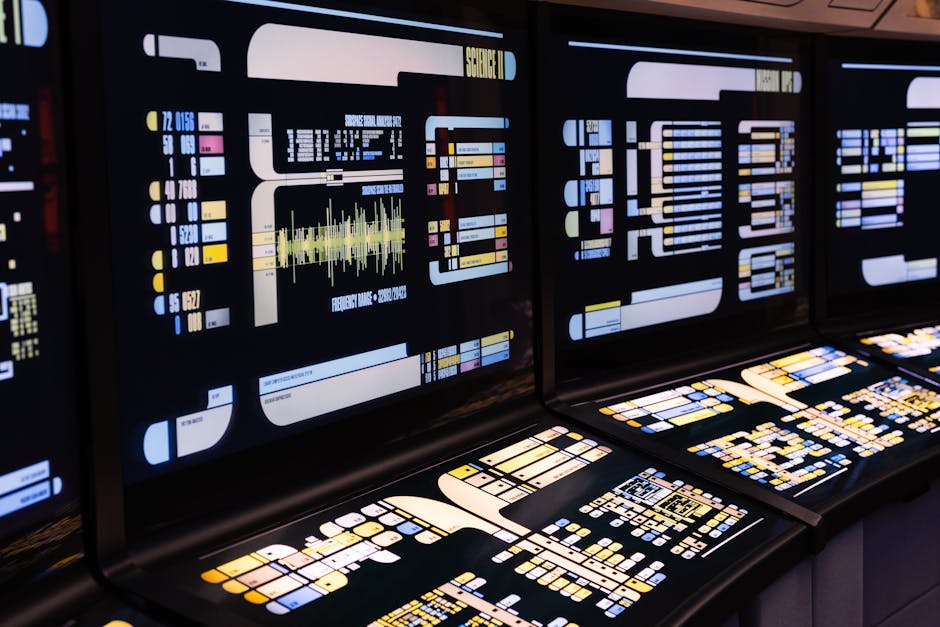
What Is SCADA and Why Should You Care?
For those newer to the industrial tech world, SCADA systems are essentially the nervous system of large-scale operations — power grids, water treatment plants, oil refineries, manufacturing floors, and transportation networks. They collect real-time data from sensors and instruments (RTUs and PLCs), display it in human-readable dashboards, and allow operators to issue control commands remotely.
The reason this matters beyond factory walls? SCADA systems underpin the infrastructure that keeps modern society running. When they fail or get compromised, the consequences ripple out fast.
The 2026 Landscape: Key Trends Reshaping SCADA
So what does the current data actually tell us? According to the 2026 Global Industrial Automation Report by ARC Advisory Group, the SCADA software market is projected to surpass $14.8 billion USD by the end of 2026, up from $11.2 billion in 2023. That’s not just growth — that’s a structural shift in how industries are investing in operational technology (OT).
Here are the major trends worth unpacking:
- Cloud-Native SCADA Architectures: Traditional on-premise SCADA is rapidly giving way to hybrid and fully cloud-based deployments. AWS Industrial, Microsoft Azure IoT, and Siemens MindSphere are all seeing record adoption in 2026. The advantage? Scalability, remote access, and reduced hardware maintenance costs.
- AI and Machine Learning Integration: Predictive maintenance algorithms are now standard in enterprise-grade SCADA platforms. Instead of reacting to failures, operators can now anticipate them 48–72 hours in advance. This alone reduces unplanned downtime by an estimated 30–45%, according to Gartner’s OT Analytics Benchmark 2026.
- OT/IT Convergence: The old wall between Operational Technology (OT) and Information Technology (IT) is crumbling. This creates enormous efficiency gains but also exposes SCADA systems to cybersecurity threats that were previously isolated. More on this in a moment.
- Edge Computing at the Field Level: Rather than sending all sensor data to a central server, edge nodes now pre-process data locally. This reduces latency from seconds to milliseconds — critical for safety-sensitive applications like nuclear cooling systems or high-speed rail management.
- Digital Twin Integration: SCADA platforms are increasingly paired with digital twins — real-time virtual replicas of physical assets. Operators can simulate what-if scenarios before pushing changes to live systems, dramatically reducing human error.
Cybersecurity: The Elephant in the Control Room
Let’s be honest about something most vendor marketing glosses over: the OT/IT convergence that makes modern SCADA so powerful also makes it a larger attack surface. The Dragos Industrial Cybersecurity Year in Review 2025/2026 report flagged a 47% increase in ransomware attacks targeting industrial control systems compared to the previous year. Groups like VOLTZITE and KAMACITE have specifically targeted SCADA endpoints in water utilities and energy grids across North America and Europe.
This isn’t meant to be alarmist — it’s meant to be realistic. Any organization upgrading or modernizing SCADA infrastructure in 2026 needs to treat cybersecurity as a co-equal design priority, not an afterthought.

Real-World Examples: Who’s Getting This Right?
Let’s look at some concrete cases that illustrate where the industry is heading:
South Korea — Smart Water Grid Initiative: K-water (Korea Water Resources Corporation) completed the nationwide deployment of its AI-integrated SCADA platform in early 2026. The system monitors over 3,200 remote sensors across water treatment and distribution networks in real time, using edge computing nodes to flag contamination anomalies within seconds. The result? A reported 22% reduction in non-revenue water loss in the first year of full operation. For a country with high urban density and aging pipe infrastructure, this is a genuinely impressive outcome.
Germany — Siemens and the Decarbonized Factory: Siemens’ Amberg Electronics Plant in Bavaria is often cited as a benchmark for Industry 4.0, but its 2026 upgrade pushed further: a fully integrated SCADA-digital twin system now manages energy consumption dynamically, shifting high-demand processes to off-peak hours automatically. The plant achieved a 17% reduction in energy costs in Q1 2026 alone, while maintaining output levels.
United States — Texas Grid Resilience Post-Reform: Following the infamous 2021 grid failures, Texas invested heavily in SCADA modernization through ERCOT (Electric Reliability Council of Texas). By 2026, over 85% of generation assets report real-time telemetry to a centralized AI-assisted control platform. During the January 2026 cold snap, operators were able to dynamically reroute load balancing — a response that would have been impossible under the legacy system.
What Does This Mean for Smaller Organizations?
Here’s where I want to offer some grounded, realistic thinking — because not every organization is K-water or Siemens. If you’re running a mid-sized manufacturing operation or a regional utility, the question isn’t “should we adopt these trends?” It’s “where do we start without blowing the budget?”
A few practical alternatives and entry points worth considering:
- Start with a SCADA audit: Before investing in AI or cloud migration, understand what you actually have. Many facilities are running SCADA software versions from 2010–2015 with known vulnerabilities. Patching and hardening existing systems is unglamorous but immediately impactful.
- Pilot edge computing at one facility: Rather than overhauling everything, deploy edge nodes at a single high-value asset. Measure latency improvements and failure prediction accuracy over 90 days before scaling.
- Use open standards (IEC 62443, NIST SP 800-82): These are the internationally recognized frameworks for OT cybersecurity. Building your SCADA roadmap around them ensures you’re not locked into proprietary solutions and makes audits significantly easier.
- Consider SCADA-as-a-Service (SCaaS): Several vendors, including Inductive Automation (Ignition) and Wonderware by AVEVA, now offer subscription-based SCADA platforms that eliminate large upfront capital expenditure. For smaller utilities, this model can reduce the barrier to modernization considerably.
- Workforce training is non-negotiable: The fanciest platform in the world is useless if operators don’t understand how to read its alerts. Invest in certified OT operator training — programs through ISA (International Society of Automation) are globally recognized and increasingly offered online.
Looking Ahead: What to Watch for the Rest of 2026
A few developments are worth keeping an eye on through the remainder of the year. The EU’s NIS2 Directive enforcement is tightening, meaning European operators of essential services face real financial penalties for inadequate SCADA cybersecurity posture. Expect a wave of compliance-driven modernization across European utilities by Q3 2026. Meanwhile, the integration of 5G private networks into SCADA communications is moving from pilot to production in several heavy industries — reducing reliance on wired infrastructure and enabling truly mobile field operations.
The bottom line? SCADA isn’t a niche technical topic for control engineers anymore. It’s a boardroom issue, a national security topic, and — as that Texas pipeline operator at 3 a.m. would tell you — a very human story about preventing disasters before they happen.
Editor’s Comment : What strikes me most about the SCADA evolution in 2026 is that the technology is finally catching up to the ambition. For years, we talked about “smart infrastructure” as a future goal — now it’s a present-tense reality with measurable ROI. That said, the gap between large, well-funded operators and smaller regional ones is widening. The real challenge for the industry isn’t building better SCADA platforms — it’s democratizing access to them. If you’re working in operations technology, even at a small scale, now is genuinely the best time to engage with these tools. The learning curve is steep, but so is the cost of waiting.
태그: [‘SCADA systems 2026’, ‘industrial control systems’, ‘OT cybersecurity’, ‘ICS automation trends’, ‘smart infrastructure technology’, ‘digital twin SCADA’, ‘industrial IoT edge computing’]
Leave a Reply