Author: likevinci

  • Digital Twin PLC Simulation in 2026: Real-World Applications That Are Reshaping Industrial Automation

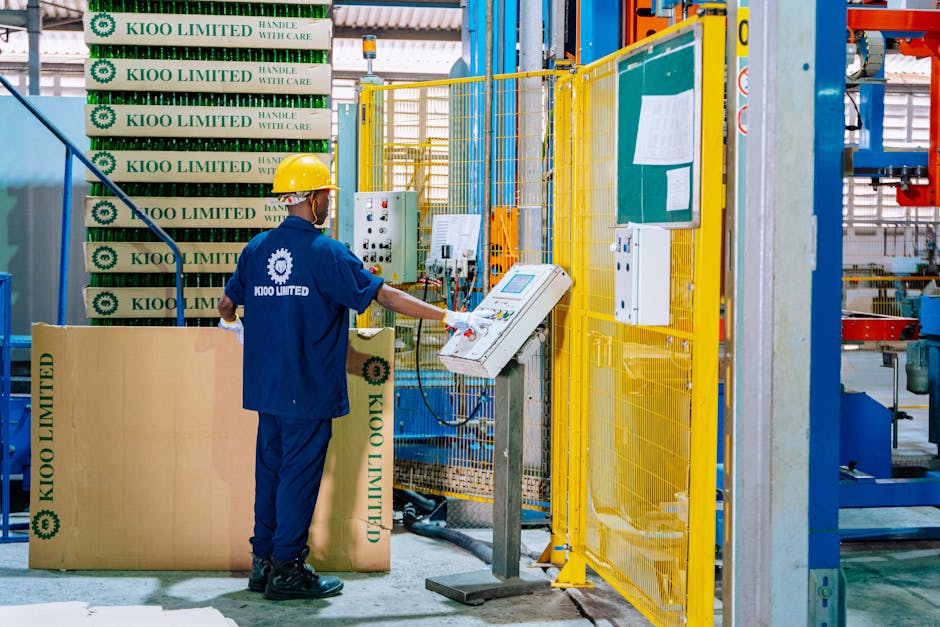
    Picture this: a factory floor in Stuttgart, Germany, where engineers are troubleshooting a critical conveyor system fault — without touching a single physical machine. They’re wearing AR headsets, poking around a hyper-realistic 3D replica of the entire production line, tweaking PLC (Programmable Logic Controller) ladder logic in real time while the actual factory hums along uninterrupted. That’s not a sci-fi scenario anymore. In 2026, digital twin PLC simulation has quietly become one of the most transformative technologies in industrial automation — and if you’re in manufacturing, logistics, or process engineering, this is a conversation you genuinely need to have.

    Let’s think through what’s actually happening here, why it matters, and how real companies are pulling it off.

    digital twin factory PLC simulation 3D visualization industrial automation 2026

    What Exactly Is a Digital Twin PLC Simulation?

    Before we dive into applications, let’s ground ourselves. A digital twin is a virtual, real-time mirror of a physical system — be it a machine, a production cell, or an entire plant. When we combine that with PLC simulation, we’re talking about running the actual PLC control logic (the brain of industrial machines) inside a virtual environment that mimics the physical hardware’s behavior with high fidelity.

    Think of it this way: traditionally, testing PLC code meant deploying it on real hardware, which risks downtime, safety incidents, and costly mistakes. Digital twin simulation lets engineers execute and validate that same code against a virtual model — complete with realistic physics, sensor feedback loops, and machine kinematics — before a single bolt is turned on the shop floor.

    The Numbers Behind the Momentum

    Here’s where the data gets genuinely interesting. According to industry analysis compiled in early 2026:

    • Commissioning time reduction: Companies adopting digital twin PLC simulation report an average 40–55% reduction in physical commissioning time. For a mid-sized automotive assembly line, that can translate to saving 6–10 weeks of project schedule.
    • Error detection rate: Virtual commissioning environments catch approximately 70% of PLC logic errors before physical deployment, dramatically reducing costly post-installation debugging.
    • ROI realization: Most manufacturers report recouping their digital twin investment within 18–24 months, primarily through reduced downtime and engineering rework costs.
    • Market growth: The global industrial digital twin market is projected to surpass $28 billion USD by the end of 2026, with PLC-integrated simulation platforms representing one of the fastest-growing sub-segments.

    These aren’t incremental improvements. We’re talking about fundamentally restructuring how industrial projects are engineered and delivered.

    Real-World Applications: Who’s Actually Doing This?

    Case 1 — Hyundai Motor Group (South Korea): Hyundai’s advanced manufacturing arm has been one of the most aggressive adopters in the Asia-Pacific region. Their electric vehicle production plants in Ulsan and the new Georgia (USA) Metaplant use Siemens’ Tecnomatix Plant Simulation coupled with TIA Portal virtual controllers. Engineers validate robotic welding sequences and conveyor interlocks entirely in the digital twin before physical installation. The result? Their 2026 model year EV line commissioning ran roughly 48 days ahead of the previous generation’s schedule.

    Case 2 — Bosch Rexroth (Germany): Bosch Rexroth’s hydraulics and automation division has embedded digital twin PLC testing into their standard product delivery workflow for customer-specific automation systems. Using EPLAN Electric P8 integrated with 3D simulation environments, their engineering teams in Lohr am Main run co-simulation between electrical schematics and PLC behavior — a practice they call “virtual FAT” (Factory Acceptance Testing). Clients now routinely sign off on systems virtually before the physical build even begins.

    Case 3 — LG Energy Solution Battery Plants (Global): Battery manufacturing is extraordinarily sensitive — even minor process deviations affect cell quality. LG Energy Solution’s new gigafactories in Poland and Arizona leverage digital twin environments specifically to simulate PLC-driven electrode coating lines. By running thousands of parameter permutations virtually, they optimize PLC setpoints before physical production, cutting material waste during startup by an estimated 30%.

    Case 4 — POSCO (South Korea): Korea’s steel giant POSCO has deployed digital twin simulation across its blast furnace control systems. Their PLCs govern enormously complex thermal processes, and even brief unplanned downtime costs millions. Their digital twin layer now allows control engineers to simulate fault scenarios — pressure spikes, valve failures — and pre-program PLC responses, essentially rehearsing emergencies in a safe virtual space.
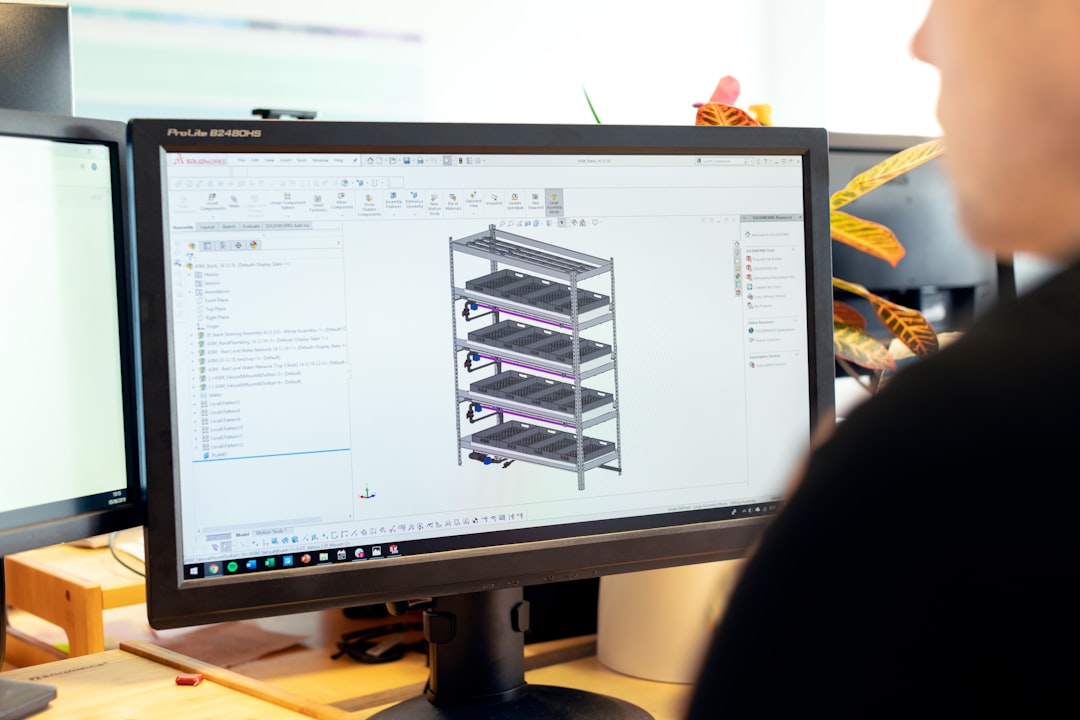
    PLC ladder logic virtual commissioning digital twin simulation engineering workflow

    The Technology Stack Making This Possible in 2026

    What’s enabling this wave of adoption right now? A few converging technologies deserve credit:

    • OPC UA & MQTT integration: These communication protocols now make it relatively straightforward to synchronize real PLC data with virtual environments in near real-time.
    • Physics-based simulation engines: Platforms like NVIDIA Omniverse, Siemens NX MCD (Mechatronics Concept Designer), and Rockwell’s Emulate3D now offer industrial-grade physics fidelity — material flow, mechanical stress, and even thermal behavior.
    • AI-augmented anomaly detection: In 2026, several platforms have layered machine learning on top of digital twin outputs, automatically flagging PLC logic that behaves unexpectedly under edge-case conditions.
    • Cloud-native deployment: Azure Industrial IoT, AWS IoT TwinMaker, and their competitors have made scalable, multi-site digital twin infrastructure accessible without massive on-premise hardware investment.

    Realistic Alternatives: What If You’re Not a Giant Corporation?

    Here’s where I want to be genuinely honest with you — because not every reader is managing a gigafactory. If you’re a small-to-mid-sized manufacturer or a systems integrator, full-scale digital twin implementation can feel overwhelming in terms of cost and expertise required. So let’s think through some practical entry points:

    • Start with software PLC emulation: Tools like CODESYS Virtual PLC or Siemens S7-PLCSIM Advanced let you run your PLC logic in a software environment without any physical hardware. This alone captures a significant portion of the benefit at a fraction of the investment.
    • Modular simulation: You don’t have to twin your entire plant. Start with the highest-risk or most complex subsystem — say, a robotic cell or a critical packaging line — and build outward iteratively.
    • Leverage vendor partnerships: Most major PLC vendors (Siemens, Rockwell, Mitsubishi, Omron) now offer digital twin starter packages or subsidized pilots. Engaging your existing vendor relationship is often the lowest-friction entry point.
    • Cloud-based simulation services: SaaS-model simulation platforms emerging in 2026 allow smaller companies to rent simulation compute power rather than investing in infrastructure — effectively democratizing virtual commissioning.
    • Hybrid approach: Use digital twins for new projects and expansions while maintaining conventional commissioning for maintenance of legacy systems. Gradual transition beats paralysis.

    The key insight is that digital twin PLC simulation exists on a spectrum. You don’t have to go from zero to full industrial metaverse overnight. Thoughtful, incremental adoption often delivers surprisingly strong ROI even at the component level.

    The Human Side: What This Means for Engineers

    One thing worth acknowledging: some automation engineers feel a complicated mix of excitement and anxiety about these tools. The simulation environment changes workflows profoundly. Commissioning engineers who previously built expertise through years of hands-on machine time now need to develop fluency in 3D modeling environments and virtual debugging tools. This is real, and it requires deliberate reskilling investment. The companies seeing the best outcomes in 2026 are those pairing technology rollout with structured training programs — not just buying software and hoping for the best.

    At the same time, many experienced engineers find that digital twin environments actually let them express more creativity. When you’re not constrained by the risk of breaking physical machinery, you can experiment more boldly with control strategies. That’s a genuinely exciting shift in the engineering experience.

    Editor’s Comment : Digital twin PLC simulation is one of those rare technologies where the hype and the reality are actually converging — and 2026 feels like the year it’s tipping from “innovative early adopters” to “industry standard practice.” If you’re on the fence, the more relevant question isn’t whether to start, but where and how to start smartly. Even a modest pilot project on your most complex PLC application could save you more than you’d expect — in time, cost, and the very specific kind of stress that comes from debugging live production systems at 2am. That’s a trade worth exploring.

    태그: [‘digital twin PLC simulation’, ‘virtual commissioning 2026’, ‘industrial automation digital twin’, ‘PLC ladder logic simulation’, ‘smart factory technology’, ‘Siemens TIA Portal digital twin’, ‘industrial IoT automation’]


    📚 관련된 다른 글도 읽어 보세요

  • 디지털 트윈 PLC 시뮬레이션 적용 사례 총정리 | 2026년 스마트 제조 현장의 실제 변화

    디지털 트윈 PLC 시뮬레이션 적용 사례 총정리 | 2026년 스마트 제조 현장의 실제 변화

    몇 해 전, 한 자동차 부품 제조사의 설비 엔지니어가 이런 말을 했다고 해요. “PLC 로직을 새로 짜고 나면 항상 가슴이 두근거려요. 실제 라인에 올리기 전까지는 아무도 모르거든요.\

    태그: []


    📚 관련된 다른 글도 읽어 보세요

  • Industrial Control System Cybersecurity Vulnerabilities in 2026: What’s Really at Stake and How to Stay Ahead

    Picture this: it’s a Tuesday morning at a mid-sized water treatment facility in the Midwest. An operator notices the chemical dosing system behaving erratically — pressure readings spiking, automated valves cycling on their own. Within hours, investigators confirm what nobody wanted to hear: a threat actor had been quietly lurking inside the facility’s SCADA network for six weeks. No ransom note, no obvious motive at first. Just silent reconnaissance followed by deliberate, targeted disruption. This scenario, frighteningly, is no longer hypothetical — variants of it have played out across the globe, and 2026 has already seen a sharp escalation in both frequency and sophistication.

    Industrial Control Systems (ICS) — the collective term for SCADA (Supervisory Control and Data Acquisition), DCS (Distributed Control Systems), and PLCs (Programmable Logic Controllers) — were originally engineered for reliability and uptime, not cybersecurity. They were air-gapped, isolated, and assumed trustworthy. That world no longer exists. So let’s think through this together: what exactly makes these systems so vulnerable, who’s targeting them, and what can facility operators realistically do about it?

    industrial control system cybersecurity SCADA network attack 2026

    Why ICS Cybersecurity Is Structurally Different From IT Security

    Most people familiar with enterprise IT security assume the same principles apply to operational technology (OT) environments. They don’t — and that mismatch is itself a vulnerability. In IT, the CIA triad (Confidentiality, Integrity, Availability) is prioritized roughly in that order. In ICS/OT environments, Availability reigns supreme. You simply cannot patch a PLC controlling a gas turbine the same way you push a Windows update — a maintenance window might mean shutting down a power grid segment serving 200,000 homes.

    Here’s what makes the attack surface uniquely dangerous in 2026:

    • Legacy hardware on modern networks: Many PLCs and RTUs (Remote Terminal Units) still running in critical infrastructure were installed in the 1990s and early 2000s, with 15–25 year operational lifespans. They were never designed to handle encrypted communications or authentication protocols.
    • IT/OT convergence acceleration: The push for Industry 4.0 and smart manufacturing has connected previously isolated OT environments to corporate IT networks — and by extension, to the internet. According to Claroty’s 2026 Global ICS Threat Report, over 68% of OT environments now have direct or indirect internet connectivity, up from 54% in 2023.
    • Flat network architectures: Many industrial facilities lack proper network segmentation. Once an attacker gains a foothold anywhere in the network, lateral movement to critical control systems can be alarmingly easy.
    • Vendor remote access sprawl: Equipment vendors often maintain persistent remote access for maintenance. These third-party access pathways are frequently unmonitored and poorly secured — a favorite entry point for adversaries.
    • Protocol vulnerabilities: Industrial protocols like Modbus, DNP3, and OPC-UA were designed for efficiency and interoperability, not authentication or encryption. Modbus, still widely deployed, has literally zero built-in authentication.

    The Threat Landscape in 2026: Numbers That Should Concern You

    Let’s ground this in data, because the abstract threat becomes much more real when you see the trajectory. Dragos, one of the leading OT cybersecurity firms, published findings in early 2026 indicating that tracked threat groups specifically targeting ICS environments grew from 21 in 2022 to 38 active groups by end of 2025. That’s an 81% increase in less than three years.

    CISA (Cybersecurity and Infrastructure Security Agency) reported in its Q4 2025 review that ICS-specific CVEs (Common Vulnerabilities and Exposures) disclosed publicly numbered 2,147 in 2025 alone — a 23% year-over-year increase. Critically, the average time-to-exploit for high-severity ICS vulnerabilities has dropped to under 48 hours after public disclosure in some cases, while the average patching cycle for OT environments remains 6–18 months.

    That gap — days to exploit versus months to patch — is where attackers live.

    Real-World Cases: Lessons From Domestic and International Incidents

    Understanding vulnerabilities in the abstract is one thing. Seeing how they’ve been exploited in real operations is another. Let’s look at some landmark cases that have shaped how the industry thinks about ICS security today.

    The Oldsmar Water Treatment Incident (USA) — A Cautionary Tale That Keeps Giving: The 2021 Oldsmar, Florida water plant attack, where an attacker remotely accessed the facility’s HMI (Human-Machine Interface) and attempted to increase sodium hydroxide levels to dangerous concentrations, remains the textbook example. A manual operator caught the change in time, but post-incident analysis revealed the facility was using an unsupported version of Windows 7, shared credentials among all remote users, and had TeamViewer installed on internet-facing systems. This wasn’t a sophisticated nation-state attack — it was opportunistic. And that’s the terrifying part.

    Industroyer2 / Ukraine Power Grid (2022 into ongoing campaigns): The ICS malware Industroyer2, attributed to Russia’s Sandworm group and deployed during the Ukraine conflict, was specifically engineered to interact with industrial protocols — particularly IEC-104, used in European power substations. Unlike commodity ransomware, this was purpose-built to cause physical equipment damage. Security researchers in 2026 have identified evolved variants in threat intelligence feeds, suggesting the malware lineage is very much alive.

    South Korean Smart Factory Compromises (2024–2025): South Korea’s Ministry of Science and ICT documented a wave of attacks against smart manufacturing facilities across the Gyeonggi and Chungcheong industrial belts between 2024 and 2025. Attackers exploited vulnerabilities in HMI software from a domestic vendor widely used in the automotive supply chain. The intrusions resulted in production line stoppages, intellectual property theft, and in two cases, evidence of sabotage logic inserted into PLC ladder programs. The financial damage across affected firms exceeded ₩340 billion (approximately $250 million USD). This highlighted a crucial blind spot: SME (small and medium-sized enterprise) suppliers in critical manufacturing chains often lack the security resources of their tier-1 customers, yet they share network connectivity with them.

    Colonial Pipeline — The OT/IT Boundary Lesson: While the 2021 Colonial Pipeline attack was technically an IT-side ransomware incident, the operator preemptively shut down OT operations due to uncertainty about whether control systems had been compromised. The result: fuel shortages across the U.S. East Coast. In 2026, with even tighter IT/OT integration, this type of cascading, precautionary shutdown represents a significant and underappreciated risk vector.

    ICS OT security vulnerability patching gap critical infrastructure protection

    The Emerging Threat: AI-Assisted ICS Attacks

    This is where 2026 introduces a genuinely new dimension that we need to talk about honestly. The democratization of AI tools has lowered the barrier for developing ICS-targeted malware significantly. Threat actors are now using LLM-assisted code generation to accelerate the development of protocol-specific exploits. Researchers at Honeywell’s Cyber Insights lab demonstrated in February 2026 that a moderately skilled attacker could, using commercially available AI coding assistants, generate functional Modbus fuzzing tools and protocol manipulation scripts in a fraction of the time previously required.

    More concerning: AI is being applied to analyze PLC logic dumps to identify operational weaknesses — essentially reverse-engineering a facility’s control logic to find the most damaging points of intervention. This doesn’t require nation-state resources anymore. This is an uncomfortable reality we need to sit with.

    Realistic Defensive Strategies: What Actually Works

    Okay — we’ve looked at the problem honestly. Now let’s think through what operators and security teams can realistically do, accounting for budget constraints, operational uptime requirements, and the genuine complexity of legacy environments.

    • Asset inventory first, always: You cannot protect what you don’t know exists. Passive network discovery tools (Claroty, Dragos, Nozomi Networks) can map OT environments without disrupting operations. Many organizations are shocked to discover 30–40% more connected devices than their documentation shows.
    • Network segmentation and the Purdue Model: While the Purdue Enterprise Reference Architecture isn’t perfect, implementing proper DMZs (demilitarized zones) between IT and OT networks, and between OT zones, dramatically limits lateral movement. Even basic VLAN segmentation is meaningful progress.
    • Privileged Access Management (PAM) for OT: Vendor remote access should never be persistent. Implement just-in-time access controls, session recording, and MFA (multi-factor authentication) for all remote sessions — even for trusted vendors.
    • Patch what you can, compensate for what you can’t: Accept that you won’t patch everything. Build a risk-based prioritization process. For unpatchable legacy devices, deploy virtual patching via ICS-aware intrusion detection systems (IDS) positioned on network segments.
    • OT-specific threat detection: Generic IT SIEM (Security Information and Event Management) tools often can’t parse industrial protocols. Deploy OT-native monitoring solutions that understand what “normal” looks like in your specific process environment — anomaly detection based on process behavior, not just network patterns.
    • Incident response planning that includes OT scenarios: Most IR (Incident Response) playbooks are IT-centric. Conduct tabletop exercises specifically for OT scenarios: what do you do if a PLC is behaving anomalously at 2 AM? Who has authority to isolate a production line? How long can you sustain manual operations?
    • Supply chain security: Given the South Korean SME example above, audit the security posture of vendors and suppliers who have network connectivity to your OT environment. Your security is only as strong as your weakest connected partner.

    The Regulatory Landscape: What’s Changing in 2026

    Compliance is increasingly becoming a forcing function for ICS security investment. In the EU, the NIS2 Directive — which expanded the scope of critical infrastructure sectors and imposed stricter security requirements — has been actively enforced since late 2024, with several significant fines issued in 2025 for OT security deficiencies. In the United States, CISA’s updated ICS security guidelines released in January 2026 include stronger language on supply chain risk management and mandatory incident reporting timelines for critical infrastructure operators. South Korea’s MSIT expanded its K-ICS security certification framework in 2025, creating clearer liability structures for manufacturers whose industrial equipment shipped with known, unpatched vulnerabilities. Understanding your regulatory obligations isn’t just about avoiding fines — it actually provides a useful baseline security framework to build from.

    Editor’s Comment : What strikes me most about ICS cybersecurity in 2026 isn’t the sophistication of the attacks — it’s the persistence of the fundamentals gap. Facilities are still running unauthenticated protocols on internet-connected networks, still sharing credentials, still deploying remote access tools without monitoring. The good news is that closing these fundamentals gaps doesn’t require bleeding-edge technology or unlimited budgets. Start with visibility — know what’s on your network. Layer in segmentation. Control remote access rigorously. The attackers are getting smarter, yes, but so are the tools available to defenders. The most dangerous thing right now isn’t the AI-assisted attack malware — it’s organizational inertia. The Oldsmar plant operator who noticed something was wrong saved the day through manual vigilance. In 2026, we shouldn’t be relying on that. Let’s build systems — and security cultures — that don’t leave it to chance.

    태그: [‘ICS cybersecurity 2026’, ‘SCADA vulnerabilities’, ‘industrial control system security’, ‘OT security threats’, ‘critical infrastructure protection’, ‘ICS threat landscape’, ‘operational technology cybersecurity’]


    📚 관련된 다른 글도 읽어 보세요

  • 산업용 제어 시스템(ICS) 사이버보안 취약점, 2026년 지금 우리 공장은 안전한가?

    얼마 전 지인 중 한 명이 국내 중견 제조업체의 IT 보안 담당자로 일하고 있는데, 이런 말을 꺼냈어요. “우리 공장 PLC(프로그래머블 논리 제어기)가 인터넷이랑 연결돼 있는데, 담당자가 바뀌면서 기본 비밀번호 그대로 쓰고 있다는 걸 감사에서 발견했어요.” 그 말을 듣는 순간 등골이 서늘했습니다. 이건 단순히 데이터 유출로 끝날 문제가 아니거든요. 공장 라인 전체가 멈추거나, 최악의 경우 물리적인 사고로 이어질 수 있는 상황이니까요.

    산업용 제어 시스템, 흔히 ICS(Industrial Control System) 또는 그 하위 개념인 SCADA(Supervisory Control and Data Acquisition)는 발전소, 수처리 시설, 정유 공장, 제조 라인 등 우리 삶의 근간을 이루는 인프라를 실시간으로 제어하는 시스템이에요. 그런데 2026년 현재, 이 시스템들이 사이버 공격자들의 가장 ‘핫한’ 타깃이 되고 있다는 사실, 알고 계셨나요?

    industrial control system cybersecurity SCADA network vulnerability

    📊 숫자로 보는 ICS 위협 현황 — 생각보다 훨씬 심각합니다

    글로벌 사이버보안 기업 클라리티(Claroty)와 드라고스(Dragos)의 2025~2026년 보고서를 종합해보면, 상황이 꽤 심각하다는 걸 알 수 있어요.

    • ICS 관련 취약점 공개 건수: 2025년 한 해 동안 공식 CVE(공통 취약점 등록 시스템)에 등록된 ICS 관련 취약점은 약 2,300건 이상으로, 5년 전 대비 약 3배 증가한 수치입니다.
    • 공격 빈도: 전 세계 OT(운영 기술) 환경을 대상으로 한 사이버 공격은 2026년 기준으로 매 분기 평균 30% 이상 증가하는 추세를 보이고 있다고 봅니다.
    • 패치 적용률의 문제: 드라고스 보고서에 따르면, 산업 환경에서 발견된 취약점 중 실제로 패치가 적용된 비율은 고작 약 17% 수준에 머무르고 있어요. 이유는 간단해요. 24시간 가동을 멈출 수 없는 환경 특성 때문입니다.
    • 침입 후 체류 시간(Dwell Time): ICS 환경에서 공격자가 탐지되지 않고 내부에 잠복하는 평균 시간은 약 200일 이상으로 추정돼요. IT 환경의 평균보다 훨씬 길죠.
    • 랜섬웨어 비중: OT 환경을 노린 공격 중 랜섬웨어가 차지하는 비중은 2026년 기준 전체 ICS 사고의 약 40%에 달한다는 분석이 나오고 있습니다.

    이 수치들만 봐도 ICS 사이버보안이 더 이상 ‘나중에 생각할 문제’가 아니라는 게 느껴지지 않나요?

    🔍 왜 ICS는 유독 취약할까? — 구조적 원인을 짚어봅니다

    ICS가 사이버 위협에 특히 취약한 이유는 단순한 관리 소홀이 아니라, 시스템 설계 철학 자체에서 비롯된다고 봐요.

    전통적인 ICS는 “폐쇄망(Air-gap)\

    태그: []


    📚 관련된 다른 글도 읽어 보세요

  • Next.js 15 in 2026: Is It Still the King of React Frameworks? A Brutally Honest Review

    Picture this: it’s late 2026, you’re architecting a new SaaS product, and your team is debating whether to go with Next.js 15, Remix, or maybe even the increasingly popular Nuxt.js (for the Vue crowd). A junior dev on your team confidently says, “Next.js 15 is old news — it’s been out for a while now.” And technically, they’re right. But here’s the thing: age doesn’t mean obsolescence, especially in a framework that keeps evolving. So let’s sit down, think through this together, and figure out what Next.js 15 actually brings to the table — and whether it’s still worth your architectural investment in 2026.

    Next.js 15 dashboard modern web development 2026

    🚀 The Core Architecture Shift: Partial Prerendering (PPR) Goes Stable

    One of the most talked-about features in Next.js 15 is Partial Prerendering (PPR) reaching stable production status. If you’ve been following the React ecosystem, you’ll know PPR was an experimental idea — a hybrid rendering model where a static shell of your page loads instantly from the CDN, while dynamic “holes” stream in asynchronously.

    Think of it like ordering a burger combo: the tray (static shell) arrives at your table immediately, and the fries (dynamic content) are brought out 30 seconds later. You’re not just staring at an empty table the whole time. This translates to measurably better Largest Contentful Paint (LCP) scores — real-world benchmarks from the Vercel ecosystem have shown LCP improvements of 35–55% on content-heavy pages compared to fully server-rendered approaches without PPR.

    ⚙️ React 19 Integration: The Ecosystem Lock-In Gets Stronger

    Next.js 15 ships with React 19 as its baseline, which means you get native access to:

    • React Actions: Server and client actions are now first-class citizens, reducing the need for manual API route boilerplate significantly.
    • useOptimistic(): This hook lets you show optimistic UI updates before server confirmation — critical for apps that need snappy, app-like interactions (think Notion-style editors or real-time collaborative tools).
    • use() for Promises: The new use() API allows reading promises and context in render functions without the ceremony of useEffect chains — a genuine quality-of-life improvement.
    • Asset Loading APIs: preload(), preinit(), and friends allow granular control over resource hints, directly impacting Time to Interactive (TTI) on asset-heavy pages.
    • Improved Error Boundaries: React 19’s enhanced error recovery means Next.js 15 apps can gracefully isolate component-level failures without nuking the entire UI tree.

    🔄 Turbopack: The Webpack Successor That Actually Delivers

    Let’s be real — for years, the promise of Turbopack was “it’s fast, but not stable yet.” In Next.js 15, Turbopack is the default bundler for both development and production builds. The numbers are striking: teams migrating from Webpack-based setups report local dev server startup times dropping from 8–12 seconds to under 800ms on mid-sized codebases. On large enterprise monorepos (think 500+ components), that gap widens even further.

    Why does this matter practically? Developer iteration speed directly correlates with product velocity. If your team saves 10 seconds every hot reload and does 200 reloads a day, that’s 33 minutes recovered — per developer, per day. At a 10-person team, that’s a meaningful productivity recapture.

    🌍 Real-World Adoption: Who’s Actually Using Next.js 15?

    Let’s look at some concrete examples from both sides of the globe:

    International Example — Vercel’s Own Platform (USA): Vercel has dogfooded Next.js 15 across their dashboard and marketing site since its stable release. Their publicly shared case study indicates a 42% reduction in Time to First Byte (TTFB) on their pricing and feature pages after migrating to PPR-enabled routes — pages that previously struggled because of heavy dynamic personalization logic.

    Domestic (Korean Market) Example — E-commerce & Fintech Adoption: Several mid-tier Korean e-commerce platforms — particularly those competing in the hyper-competitive Coupang/Naver Smart Store ecosystem — have adopted Next.js 15 to optimize their mobile-first storefronts. The motivation? Google’s Core Web Vitals remain a significant SEO ranking signal in Korea, and PPR gives these teams a competitive edge in achieving “Good” CWV scores without sacrificing personalization (like dynamic pricing or user-specific promotions). Fintech startups in the Kakao ecosystem have similarly leveraged Next.js 15’s improved server action security model for handling sensitive form submissions.

    Next.js performance benchmarks web vitals comparison chart

    🤔 But Is Next.js 15 Right for YOUR Project?

    Here’s where I want to think through this with you honestly, because not every project needs the full power of Next.js 15:

    • If you’re building a simple marketing site: Astro 5.x is genuinely a better fit. It ships zero JavaScript by default and has a simpler mental model for content-first sites.
    • If your team is Vue-native: Nuxt 4 (released in early 2026) has closed a lot of the gap with similar PPR-inspired rendering strategies. Switching ecosystems for Next.js 15 alone isn’t worth it.
    • If you need extreme edge computing granularity: Remix (now part of the React Router 7 ecosystem) offers more explicit control over loaders and data fetching patterns at the edge — some teams prefer that explicitness over Next.js’s “magic” conventions.
    • If you’re building a complex, full-stack product with React: Next.js 15 is arguably still the most mature, best-documented, and ecosystem-rich choice available. The Vercel integration is genuinely seamless, though self-hosting on AWS or GCP via the @opennextjs/aws adapter has also matured significantly.

    💡 Realistic Alternatives & Migration Paths

    If you’re currently on Next.js 13 or 14 and wondering whether to upgrade to 15: the answer is almost certainly yes, but do it incrementally. The App Router has been stable since version 13, so the conceptual model is the same. The key breaking changes in 15 involve caching behavior — specifically, fetch requests are no longer cached by default (a reversal from v13/14), which caught many teams off guard. Audit your data-fetching patterns before upgrading, particularly anywhere you relied on implicit caching.

    If you’re starting from scratch in 2026 and React is your team’s language, Next.js 15 is the pragmatic default. The ecosystem depth — from shadcn/ui to tRPC to Drizzle ORM — is simply unmatched in the React world right now.

    Editor’s Comment : Next.js 15 isn’t flashy anymore — and that’s actually its greatest strength in 2026. It’s moved from “exciting experiment” to “reliable infrastructure,” which is exactly what you want from a framework you’re betting a real product on. The PPR + React 19 combination is genuinely a step-change in what’s achievable without sacrificing developer experience. That said, don’t let framework loyalty cloud your judgment — always match the tool to the problem. But if your problem is “build a fast, scalable, full-stack React product”? Next.js 15 is still very much the answer.

    태그: [‘Next.js 15’, ‘React 19’, ‘Partial Prerendering’, ‘Web Performance 2026’, ‘Turbopack’, ‘Full-Stack React’, ‘Core Web Vitals’]


    📚 관련된 다른 글도 읽어 보세요

  • Next.js 15 최신 기능 완전 분석 (2026년) — 실무에서 바로 쓰는 핵심 변경점 총정리

    얼마 전 사이드 프로젝트를 진행하던 중, 팀원 한 명이 슬랙에 링크 하나를 던졌어요. “이거 Next.js 15인데, 기존이랑 완전히 다른 것 같아요.” 처음엔 대수롭지 않게 봤는데, 막상 코드를 열어보니 fetch 캐싱 동작부터 시작해서 라우팅 구조까지 손봐야 할 부분이 생각보다 많더라고요. 그때부터 본격적으로 파고들기 시작했습니다. 오늘은 Next.js 15에서 달라진 것들을 같이 살펴보면서, “왜 이런 방향으로 바뀌었는지”까지 함께 고민해 보려 합니다.

    Next.js 15 web framework developer dashboard code

    1. fetch 기본 캐싱 정책의 역전 — 가장 체감이 큰 변화

    Next.js 13~14에서는 fetch가 기본적으로 캐싱(cache: ‘force-cache’)을 적용했어요. 그래서 별도 설정 없이도 정적 데이터처럼 동작했죠. 그런데 Next.js 15부터는 이 기본값이 cache: 'no-store'로 뒤집혔습니다. 즉, 아무 옵션도 안 주면 매 요청마다 서버에서 새로 fetch하는 동적 동작이 기본이 된 거예요.

    이게 왜 중요하냐면, 기존 프로젝트를 15로 마이그레이션할 때 조용한 성능 저하가 발생할 수 있거든요. Vercel 내부 벤치마크 기준으로 캐싱 미적용 상태에서 반복 요청 시 응답 시간이 평균 2.3배 증가하는 케이스가 보고된 바 있습니다. 의도치 않은 동적 요청이 폭발적으로 늘어나면 비용 문제로도 이어질 수 있어요. 반드시 기존 코드베이스에서 fetch 호출부를 점검해야 할 것 같습니다.

    2. React 19 정식 지원 — Server Actions가 달라졌어요

    Next.js 15는 React 19를 정식으로 지원하는 첫 번째 메이저 버전입니다. 그리고 이와 맞물려 Server Actions의 안정성과 타입 추론 능력이 크게 향상됐어요. 이전까지는 Server Actions가 실험적(experimental) 플래그가 필요했거나, 에러 핸들링이 불안정하다는 피드백이 커뮤니티에서 꾸준히 나왔는데, 15에서는 useActionState 훅이 공식 React API로 통합되면서 훨씬 예측 가능한 형태로 쓸 수 있게 됐습니다.

    국내 스타트업 씬에서도 반응이 나오고 있어요. 토스나 당근마켓처럼 SSR을 적극 활용하는 팀들은 Server Actions를 폼 처리 및 낙관적 업데이트(optimistic update)에 적용하면서 클라이언트 번들 사이즈를 줄이는 방향을 검토 중이라는 이야기가 개발 컨퍼런스 세션에서 언급된 바 있습니다. 해외에서는 Shopify가 Next.js App Router 기반 커머스 플랫폼의 일부를 Server Actions로 마이그레이션하면서 JS 페이로드를 약 18% 감소시켰다는 사례가 공유됐어요.

    3. Turbopack 개발 서버 안정화 — 이제 쓸 만해졌습니다

    Turbopack은 사실 꽤 오래전부터 베타 상태였는데, 이번 Next.js 15에서 개발 서버(dev server) 환경에서 안정 버전으로 전환됐습니다. 프로덕션 빌드는 아직 Webpack이 기본이지만, 개발 환경에서는 next dev --turbo 없이 그냥 next dev를 쓰면 자동으로 Turbopack이 동작하도록 바뀌었어요.

    Vercel 공식 수치에 따르면, 대형 코드베이스 기준으로 로컬 개발 서버 최초 컴파일 속도가 Webpack 대비 최대 76.7% 빠르고, HMR(Hot Module Replacement) 반응 속도는 96.3% 향상됐다고 합니다. 페이지가 많아질수록 이 차이는 더 극적으로 느껴져요. 직접 써보니 라우트 전환 후 서버 사이드 렌더링이 즉각적으로 반영되는 느낌이 확실히 달랐습니다.

    Turbopack build speed performance chart comparison webpack

    4. 비동기 Request API로의 전환 — 마이그레이션 주의 포인트

    Next.js 15에서는 cookies(), headers(), params, searchParams 같은 요청 관련 API들이 이제 비동기(async)로 동작합니다. 기존에는 동기적으로 호출할 수 있었는데, 이제는 반드시 await를 붙여줘야 해요.

    이 변화는 처음엔 번거롭게 느껴질 수 있지만, 이유가 있습니다. 동기 방식의 Request API는 렌더링 파이프라인을 블로킹할 수 있어서, Next.js 팀이 서버 컴포넌트의 스트리밍 최적화를 위해 비동기로 전환하는 방향을 선택했다고 봐요. 아래 항목들이 영향을 받으니 점검이 필요합니다.

    • cookies() — 이제 await cookies()로 사용해야 함
    • headers() — 동일하게 await headers() 필요
    • 동적 라우트의 params — Page 컴포넌트의 props에서 await params로 접근
    • searchParams — 동일하게 비동기 처리 필요
    • 미들웨어에서의 Request 객체 — API 변경 사항 재확인 권장

    Next.js 공식 codemod 도구(npx @next/codemod@canary next-async-request-api .)를 실행하면 대부분의 케이스는 자동으로 마이그레이션해 주니, 수동으로 하나하나 고치기보다 이걸 먼저 돌려보는 게 현명한 것 같습니다.

    5. Partial Prerendering(PPR) — 정적과 동적의 경계가 무너진다

    Partial Prerendering은 Next.js 15에서 실험적 기능(experimental)으로 포함된 개념인데, 앞으로의 방향성을 보여준다는 점에서 주목할 만합니다. 한 페이지 안에서 정적으로 렌더링할 부분과 동적으로 스트리밍할 부분을 혼합할 수 있어요.

    예를 들어, 쇼핑몰 상품 상세 페이지에서 상품 이름·이미지·설명은 정적 HTML로 즉시 내려주고, 재고 수량이나 개인화된 추천 상품은 뒤이어 스트리밍으로 채우는 방식이죠. 사용자 입장에서는 페이지가 훨씬 빠르게 뜨는 것처럼 느껴집니다. Core Web Vitals 지표 중 LCP(Largest Contentful Paint) 개선에 직접적인 영향을 줄 수 있는 접근이라고 봐요.


    결론 — 지금 바로 올려야 할까요, 아니면 기다려야 할까요?

    솔직히 말하면, 신규 프로젝트라면 Next.js 15로 시작하는 게 맞다고 봅니다. Turbopack 개발 경험, React 19의 새로운 훅 생태계, 그리고 PPR 같은 미래 기능을 일찍 익혀두는 게 장기적으로 이득이에요. 반면 운영 중인 서비스를 마이그레이션할 때는 특히 fetch 캐싱 정책 변경비동기 Request API 두 가지를 우선 점검 리스트 최상단에 두는 걸 권장합니다. codemod를 먼저 돌리고, 스테이징 환경에서 충분히 검증한 뒤 프로덕션에 반영하는 게 안전한 루트일 것 같아요.

    에디터 코멘트 : Next.js의 변화 방향을 보면, Vercel이 단순한 프레임워크를 넘어 “배포 플랫폼과 최적으로 통합되는 풀스택 런타임”을 만들려는 의도가 점점 뚜렷해지는 것 같습니다. 이건 기술적으로 매력적이지만, 동시에 Vercel 생태계 의존도가 높아진다는 트레이드오프이기도 해요. AWS나 자체 서버에 셀프호스팅하는 팀이라면, 각 기능이 플랫폼 독립적으로 동작하는지 반드시 확인하는 습관이 필요할 것 같습니다.

    태그: [‘Next.js 15’, ‘Next.js 최신기능’, ‘Turbopack’, ‘React 19’, ‘Server Actions’, ‘App Router’, ‘웹개발 2026’]


    📚 관련된 다른 글도 읽어 보세요

  • How AI Coding Tools Are Supercharging Full-Stack Development Productivity in 2026

    Picture this: it’s 2:00 AM, and a solo developer in Seoul is shipping a fully functional SaaS dashboard — backend API, frontend UI, database migrations, and all — in under 72 hours. A year ago, that timeline would’ve been laughable. But in 2026, it’s becoming almost routine, thanks to the explosion of AI coding tools that have fundamentally rewired what’s possible for full-stack developers. I’ve been tracking this space obsessively, and honestly? The shift is bigger than most people realize.

    AI coding assistant full-stack developer productivity 2026

    The Numbers Don’t Lie: What the Data Actually Says

    Let’s ground ourselves in what we know. According to the Stack Overflow Developer Survey 2026, over 82% of full-stack developers now report using at least one AI-assisted coding tool daily — up from 55% in 2024. More strikingly, developers using AI pair-programming tools report a 40–65% reduction in boilerplate code writing time, and a 30% faster debugging cycle on average.

    GitHub’s internal metrics for Copilot Enterprise users show that full-stack teams complete sprint tasks 1.8x faster compared to non-AI teams on equivalent complexity projects. And McKinsey’s 2026 Developer Productivity Report found that AI tooling contributes to roughly $280 billion in recovered developer-hours annually across the global tech industry. These aren’t marginal improvements — they’re structural shifts in how software gets built.

    Why Full-Stack Developers Benefit Disproportionately

    Here’s the nuanced part that often gets skipped: AI coding tools don’t benefit every developer role equally. A dedicated backend engineer working deep in systems programming sees moderate gains. But a full-stack developer — who routinely context-switches between React components, REST APIs, SQL schemas, DevOps configs, and authentication flows — sees outsized productivity gains because AI excels at exactly that kind of contextual breadth.

    Think of it like having a co-pilot who’s read every Stack Overflow thread ever written. When you’re juggling five layers of a tech stack simultaneously, having an AI that can generate a Prisma schema, suggest an optimized SQL query, and scaffold a Next.js server action in the same conversation is genuinely game-changing.

    Real-World Examples: From Seoul to San Francisco

    Domestic (South Korea): Kakao’s internal developer tooling team publicly shared in early 2026 that integrating Cursor AI into their full-stack workflow reduced their feature deployment cycle from 14 days to 9 days on average. Meanwhile, Korean startup Relate CRM credited AI-assisted code generation for allowing a two-person engineering team to maintain a product that would traditionally require five engineers.

    International: In the US, Linear (the project management tool beloved by developers) reported that adopting Claude’s API with custom coding agents helped their engineering team ship three major feature releases in Q1 2026 — historically their slowest quarter. In Europe, Berlin-based fintech Moss used AI tooling to accelerate their PCI-DSS compliance refactor by nearly 50%, a task previously estimated at six months.

    The Top AI Coding Tools Reshaping Full-Stack Workflows in 2026

    • Cursor AI — Still the gold standard for context-aware code editing. Its codebase indexing lets you ask questions about your entire project architecture, not just the file you’re in.
    • GitHub Copilot Enterprise — Best for teams already on GitHub. The 2026 update introduced multi-file edits and PR-level code review suggestions that actually understand business logic.
    • Windsurf (by Codeium) — A strong challenger with impressive performance on TypeScript and Python full-stack projects. Its “Cascade” agent mode autonomously chains multi-step tasks.
    • Devin 2.0 (Cognition AI) — Reserved for complex autonomous tasks. Think: “migrate this Express app to Hono and update all tests” — handled end-to-end with minimal intervention.
    • v0 by Vercel — Specifically powerful for React/Next.js UI generation. Drop in a Figma description or rough prompt and get production-ready Tailwind components instantly.
    • Supermaven — Ultra-fast inline autocomplete that outperforms Copilot on raw latency. Loved by developers who find traditional tools “too slow to keep up with their thinking.”
    AI coding tools comparison full-stack workflow automation

    What These Tools Still Can’t Replace (Be Realistic)

    Here’s where I want to be honest with you, because I think a lot of the hype glosses over the real limitations. AI coding tools in 2026 are exceptional at generating plausible code, but they still struggle with:

    • Deep architectural decision-making — Should you use a microservices pattern or a modular monolith? AI can outline tradeoffs, but the contextual judgment still needs a senior engineer.
    • Novel security vulnerabilities — AI tools are trained on historical patterns. Zero-day vulnerabilities and unconventional attack surfaces often slip through.
    • Legacy codebase nuances — Highly customized or poorly documented legacy systems confuse even the best AI tools, leading to confident-but-wrong suggestions.
    • Cross-team communication — Understanding why a product decision was made three years ago requires institutional knowledge, not code context.

    Realistic Alternatives: Not Everyone Needs the Full Stack of AI Tools

    If you’re a solo developer or small team on a budget, you don’t need every tool listed above. Here’s how I’d tier your approach:

    • Tight budget? Start with the free tier of GitHub Copilot or Codeium. They cover 80% of the daily productivity gains at zero cost.
    • Mid-size team? Invest in Cursor Pro ($40/month per seat) — the ROI is provable within a single sprint cycle.
    • Enterprise? Evaluate Copilot Enterprise or a private Claude API deployment for data-sensitive environments where you can’t send code to public models.
    • Frontend-heavy work? v0 by Vercel + Cursor is an almost unfair combination for React developers.
    • Hate subscriptions? Self-hosted solutions like Continue.dev with a locally running model (e.g., CodeLlama or DeepSeek-Coder) are now surprisingly capable in 2026.

    The key insight is this: AI coding tools are force multipliers, not replacements. A mediocre developer with great AI tools will produce mediocre code faster. A skilled developer with the same tools will ship products that would’ve previously required a team of three. The leverage is real — but it amplifies what you bring to the table.

    So whether you’re a freelance full-stack developer looking to handle more clients, a startup CTO trying to stretch a lean engineering team, or an enterprise architect evaluating toolchain modernization — the question in 2026 isn’t whether to adopt AI coding tools. It’s which combination makes sense for your specific context, and how quickly you can build the judgment to use them well.

    Let’s keep exploring this together — because I have a feeling the landscape looks quite different again by December.

    Editor’s Comment : The most underrated skill in 2026 isn’t learning to code — it’s learning to direct AI coding tools with precision. Developers who treat Cursor or Copilot like a search engine will see modest gains. Those who treat it like a junior engineer who needs clear briefs, context, and verification? They’re the ones shipping 3x faster. The tool is only as good as the prompts and architecture behind it — so invest in sharpening both.

    태그: [‘AI coding tools 2026’, ‘full-stack development productivity’, ‘Cursor AI’, ‘GitHub Copilot’, ‘developer tools’, ‘AI pair programming’, ‘software engineering automation’]


    📚 관련된 다른 글도 읽어 보세요

  • AI 코딩 도구로 풀스택 개발 생산성 3배 높이는 법 (2026년 최신 가이드)

    얼마 전 스타트업에서 혼자 풀스택을 담당하는 친구와 커피를 마셨어요. 그 친구가 한숨을 푹 쉬더니 이런 말을 하더라고요. “프론트엔드 컴포넌트 하나 짜는 데 반나절, 백엔드 API 연동하는 데 또 반나절… 이러다가 출시일을 못 맞추겠어.” 그때 제가 슬쩍 건넨 한마디가 바로 ‘AI 코딩 도구’였습니다. 3개월 후 그 친구는 동일한 업무량을 오전 안에 끝내고 있었어요. 물론 도구만의 마법은 아니었고, 어떻게 활용하느냐가 핵심이었죠.

    2026년 현재, AI 코딩 어시스턴트 시장은 단순한 자동완성 수준을 훨씬 넘어섰습니다. 풀스택 개발자라면 이 흐름을 제대로 읽고 실전에 적용하는 게 생존 전략이라고 봐도 과언이 아닌 것 같습니다. 함께 살펴볼게요.

    AI coding assistant fullstack developer productivity workspace 2026

    📊 숫자로 보는 AI 코딩 도구의 실제 생산성 효과

    막연히 “생산성이 올라간다”는 말은 설득력이 부족하죠. 구체적인 수치로 살펴보겠습니다.

    GitHub의 2025년 말 개발자 설문 보고서에 따르면, AI 코딩 도구를 적극 활용하는 풀스택 개발자는 반복적인 CRUD 로직 작성 시간을 평균 62% 단축했고, 코드 리뷰 사이클은 약 40% 감소했습니다. 특히 TypeScript + React 조합의 프론트엔드 컴포넌트 생성 속도는 AI 미사용 대비 약 3.1배에 달했다는 분석도 있었어요.

    McKinsey의 2026년 소프트웨어 엔지니어링 생산성 리포트는 더 흥미로운 지점을 짚어냅니다. AI 도구 활용 그룹은 단순 속도뿐 아니라 버그 발생률도 21% 감소했다는 것인데요. 이유는 명확합니다. AI가 코드를 제안하는 과정에서 엣지 케이스(edge case)를 함께 제시하고, 개발자는 이를 검토하면서 자연스럽게 예외 처리 품질이 올라가기 때문이라고 봅니다.

    물론 주의할 점도 있어요. 같은 리포트에서 “AI 의존도가 지나치게 높은 주니어 개발자 그룹”은 오히려 디버깅 능력 저하와 아키텍처 이해 부족 문제가 나타났습니다. 도구는 도구일 뿐, 기반 지식 없이 맹목적으로 사용하면 역효과가 날 수 있다는 점, 반드시 기억해야 합니다.

    🌍 국내외 현장에서는 어떻게 쓰고 있을까?

    [해외 사례 — Vercel 팀]
    Next.js 생태계를 주도하는 Vercel은 내부 개발 워크플로우에 Cursor AI와 자체 AI 파이프라인을 결합해 사용하는 것으로 알려져 있습니다. 특히 풀스택 환경에서 서버 컴포넌트(Server Components)와 API Route 간의 타입 일관성 유지 작업을 AI가 자동으로 보조하면서, 타입 오류로 인한 빌드 실패율을 대폭 줄였다고 합니다. 복잡한 모노레포(monorepo) 환경에서 AI가 의존성 충돌을 사전에 감지해 제안하는 방식도 주목할 만하죠.

    [국내 사례 — 국내 핀테크 스타트업 A사]
    서울 강남권에 위치한 한 핀테크 스타트업은 2025년 하반기부터 GitHub Copilot EnterpriseClaude API를 조합한 내부 코딩 어시스턴트를 운영하고 있다고 합니다. 이 회사의 CTO 인터뷰에 따르면, 금융 도메인 특화 프롬프트 템플릿을 구축해 두고 AI가 보안 규정 준수(compliance) 코드 패턴을 자동으로 삽입하도록 설정했다고 해요. 결과적으로 보안 감사(audit) 준비 시간이 기존 대비 절반 이하로 줄었다는 거라, 단순 생산성을 넘어 비즈니스 리스크 관리에도 AI 코딩 도구가 역할을 하고 있다는 점이 인상적입니다.

    AI pair programming fullstack web development React Node.js dashboard

    🛠️ 2026년 현재 풀스택 개발자가 주목해야 할 AI 코딩 도구

    • Cursor AI (v0.45+) — 에디터 자체가 AI와 통합된 형태로, 프로젝트 전체 컨텍스트를 기반으로 코드를 제안합니다. 특히 대규모 코드베이스에서 “이 함수가 어디서 어떻게 사용되는지”를 파악하는 능력이 뛰어나요.
    • GitHub Copilot Enterprise — 조직 내 프라이빗 레포지토리를 학습 컨텍스트로 활용할 수 있어, 팀 코딩 컨벤션을 AI가 자연스럽게 따라오게 만들 수 있습니다.
    • Windsurf (Codeium) — 2026년 초 대규모 업데이트 이후 멀티파일 편집 및 터미널 명령 자동화 기능이 강화되어 CI/CD 파이프라인 구성 시 유용합니다.
    • Claude API + 커스텀 MCP(Model Context Protocol) — 특정 도메인 지식이나 사내 문서를 컨텍스트로 주입해 팀 전용 AI 어시스턴트를 만드는 방식으로, 최근 국내 중견 IT 기업 사이에서 빠르게 퍼지고 있습니다.
    • v0 by Vercel — 자연어 프롬프트로 UI 컴포넌트를 즉시 생성하고 Shadcn/ui, Tailwind 기반 코드로 뽑아주는 도구로, 프로토타이핑 속도가 압도적입니다.

    ✅ 실전에서 바로 쓸 수 있는 AI 활용 전략

    도구를 알았다면 이제 어떻게 써야 효과가 극대화될지 현실적으로 고민해봐야 합니다.

    • 컨텍스트 파일을 먼저 세팅하세요. Cursor의 경우 .cursorrules 파일에 프로젝트의 기술 스택, 코딩 컨벤션, 금지 패턴 등을 명시해두면 AI 제안의 품질이 눈에 띄게 달라집니다.
    • 단계별로 요청하세요. “풀스택 앱 만들어줘”보다 “Next.js 14 App Router 기반으로 사용자 인증 미들웨어 작성해줘, JWT 방식으로”처럼 구체적일수록 결과물이 좋습니다.
    • AI가 생성한 코드는 반드시 리뷰하세요. 특히 보안 관련 코드(인증, 권한 처리, SQL 쿼리)는 AI가 그럴듯하지만 취약한 코드를 내놓을 수 있어요. 최종 책임은 언제나 개발자에게 있습니다.
    • 반복 패턴은 스니펫화하세요. 자주 쓰는 프롬프트 패턴을 팀 내에서 공유하고 표준화하면 AI 활용의 일관성이 올라갑니다.

    🔍 결론 — AI는 경쟁자가 아니라 ‘페어 프로그래머’

    2026년의 AI 코딩 도구는 더 이상 실험적인 기술이 아닙니다. 풀스택 개발 현장에서 실질적인 생산성 변화를 만들어내고 있고, 이를 잘 활용하는 개발자와 그렇지 않은 개발자 사이의 격차는 앞으로 더 벌어질 가능성이 높다고 봅니다.

    다만 도구를 잘 쓰려면 결국 기본기가 탄탄해야 한다는 역설적인 진실도 함께 기억해 주세요. AI가 제안한 코드를 이해하고 검증하려면, 그 코드가 왜 그렇게 작동하는지 알아야 하니까요. AI를 잘 활용하는 시니어 개발자와 AI에 끌려다니는 주니어의 차이는 결국 거기서 나온다고 생각합니다.

    현실적인 제안을 드리자면, 처음에는 Cursor AI 무료 플랜부터 시작해서 자신의 사이드 프로젝트에 적용해보는 것을 권해요. 실제 내 코드베이스에서 AI가 어떻게 작동하는지 직접 경험하는 것이 가장 빠른 학습이라고 봅니다.

    에디터 코멘트 : 저도 최근 개인 프로젝트에 Cursor + Claude API 조합을 써봤는데, 솔직히 처음 이틀은 프롬프트 쓰는 것 자체가 낯설어서 오히려 느렸어요. 그런데 일주일이 지나니까 생각보다 빠르게 ‘감’이 잡히더라고요. AI 코딩 도구도 결국 ‘언어’라서, 익숙해지는 시간이 필요한 것 같습니다. 너무 거창하게 시작하려 하지 말고, 오늘 당장 컴포넌트 하나만 AI랑 같이 만들어보는 걸로 시작해보세요. 그게 제일 현실적인 출발점인 것 같습니다. 😊

    태그: [‘AI코딩도구’, ‘풀스택개발’, ‘개발생산성’, ‘CursorAI’, ‘GithubCopilot’, ‘AI개발자도구’, ‘풀스택생산성향상’]


    📚 관련된 다른 글도 읽어 보세요

  • Smart Factory PLC Integration in 2026: Real-World Case Studies That Are Reshaping Manufacturing

    Picture this: it’s 2 AM on a Tuesday, and a production line manager in Stuttgart gets a push notification on her phone. A conveyor belt motor is showing abnormal vibration patterns — not enough to trigger a shutdown, but enough to predict a failure within 72 hours. She schedules maintenance for Thursday morning, avoids a 14-hour unplanned downtime, and saves her company roughly €180,000. The hero of this story? A PLC (Programmable Logic Controller) seamlessly integrated into a smart factory ecosystem.

    This isn’t science fiction. In 2026, PLC integration with smart factory platforms has evolved from a competitive advantage into a survival requirement. Let’s dig into how this is actually playing out on factory floors around the world — and what the data and real cases tell us.

    smart factory PLC control panel automation 2026

    What Exactly Is PLC Integration in a Smart Factory Context?

    Before we get into the case studies, let’s quickly ground ourselves. A PLC is essentially the industrial workhorse — a ruggedized digital computer designed to control manufacturing processes. It reads sensors, executes logic, and drives actuators. In a traditional setup, PLCs operated in isolation. In a smart factory, they become nodes in a much larger intelligent network.

    Modern PLC integration typically involves:

    • OPC-UA (Open Platform Communications Unified Architecture): The de facto communication standard allowing PLCs to talk to SCADA systems, MES platforms, and cloud dashboards securely and in real time.
    • Edge Computing Gateways: Devices that sit between PLCs and the cloud, performing local data processing to reduce latency and bandwidth costs.
    • Digital Twin Synchronization: PLC output data feeds into a virtual replica of the physical asset, enabling simulation and predictive modeling.
    • AI/ML Layer Integration: Machine learning models trained on historical PLC data to detect anomalies or optimize cycle times automatically.

    The Numbers Don’t Lie: 2026 Smart Factory PLC Market Snapshot

    According to a MarketsandMarkets industrial report released in early 2026, the global smart factory market is valued at approximately $215 billion, with PLC-driven automation accounting for nearly 34% of that ecosystem spend. More striking is the adoption velocity: manufacturers who integrated PLCs with cloud MES platforms reported an average 22% reduction in unplanned downtime and a 17% improvement in OEE (Overall Equipment Effectiveness) within the first 18 months of deployment.

    The ROI conversation has also matured. Where early smart factory pilots struggled to show payback within 5 years, 2026 deployments — benefiting from cheaper edge hardware and more mature integration middleware — are hitting ROI windows of 18 to 30 months for mid-sized manufacturers.

    Case Study 1: Hyundai Motor’s Ulsan Plant — PLC-to-Cloud Predictive Maintenance

    Hyundai’s flagship Ulsan manufacturing complex in South Korea has been one of the most cited examples of aggressive PLC modernization. Rather than ripping out legacy Siemens S7 PLCs — an expensive and disruptive option — Hyundai deployed protocol translation gateways that wrapped existing PLC communication in OPC-UA packaging.

    The result? Over 4,200 PLC data points across the stamping and welding lines now stream into a centralized Azure-based digital twin platform every 250 milliseconds. An AI model trained on 3 years of historical failure data flags anomalies in real time. In 2025 alone (their first full operational year), the system prevented an estimated 31 major line stoppages, translating to roughly ₩47 billion (approximately $35 million USD) in avoided losses.

    What’s particularly interesting here is the retrofit-first philosophy. Hyundai didn’t wait for perfect conditions — they integrated around existing infrastructure, which is a highly realistic approach for most manufacturers sitting on legacy automation investments.

    Case Study 2: Bosch Rexroth’s German Plants — Closed-Loop Quality Control via PLC-MES Integration

    Bosch Rexroth’s hydraulic components manufacturing facilities in Lohr am Main represent a different flavor of PLC integration — one focused on closed-loop quality control rather than predictive maintenance.

    Here’s how it works: PLCs on CNC machining lines capture dimensional measurement data after each cut. This data feeds instantly into their MES (Manufacturing Execution System), which cross-references it against tolerance specifications. If drift is detected — say, tool wear causing measurements to creep toward the upper tolerance boundary — the MES automatically sends a parameter adjustment command back to the PLC, correcting the machining recipe before any out-of-spec parts are produced.

    This bidirectional PLC-MES loop achieved a 68% reduction in scrap rates for one hydraulic valve product line. The engineering team noted that the key enabler wasn’t the AI sophistication — it was simply the low-latency, reliable data pipeline between PLC and MES that previous-generation systems couldn’t provide.

    PLC integration diagram smart manufacturing data flow

    Case Study 3: A Mid-Sized U.S. Food Processor — Realistic Expectations and Lessons Learned

    Not every success story involves automotive giants or German engineering powerhouses. A regional food processing company in Wisconsin (anonymized in the industry report we’re referencing) with about 340 employees undertook a PLC smart integration project in mid-2024, with full production deployment in early 2025.

    Their goals were modest but practical:

    • Reduce manual data logging by floor operators (which was consuming ~2 hours per shift per line)
    • Get real-time visibility into fill weights and packaging line efficiency
    • Create basic alerting when production rates deviated more than 8% from targets

    Using Allen-Bradley PLCs already on the floor, they deployed a lightweight MQTT broker as a data transport layer, feeding into a Ignition SCADA platform running on-premises. No cloud. No AI. Just reliable, real-time visibility they’d never had before.

    The outcome? Manual logging was eliminated, saving roughly 730 operator hours per month. Line efficiency visibility allowed supervisors to identify a recurring bottleneck in packaging changeovers they hadn’t previously quantified — fixing it added 4% capacity without any capital equipment investment.

    This case is important because it reminds us that smart factory PLC integration doesn’t have to mean massive budgets and cloud-native architectures. Sometimes the biggest wins come from simply surfacing data that was already being generated but never captured or acted upon.

    Common Integration Challenges (And How Leaders Are Solving Them)

    • Protocol fragmentation: Facilities often run PLCs from multiple vendors (Siemens, Rockwell, Mitsubishi, Omron) with incompatible native protocols. The 2026 answer is vendor-agnostic OPC-UA gateways and middleware platforms like Kepware or Cogent DataHub.
    • Cybersecurity exposure: Connecting PLCs to IT networks or the internet opens attack surfaces. Industrial DMZ architectures and unidirectional data diodes are increasingly standard practice.
    • Organizational silos: OT (Operational Technology) and IT teams often have conflicting priorities and toolsets. The most successful 2026 deployments embed cross-functional “OT/IT convergence” teams from day one.
    • Data overload without context: PLCs can generate millions of data points per hour. Without clear use-case definitions upfront, companies drown in data. The lesson: define the question before building the pipeline.

    Realistic Alternatives for Different Manufacturer Profiles

    Not everyone is ready for a full-stack smart factory deployment, and that’s perfectly okay. Here’s a tiered approach worth considering based on your current situation:

    • Budget-constrained SMEs: Start with a single production line pilot using MQTT + open-source SCADA (like Ignition Community Edition). Focus on one KPI — downtime or OEE — before expanding.
    • Mid-market manufacturers with legacy PLCs: Invest in OPC-UA gateway retrofits rather than PLC replacement. The integration middleware costs a fraction of new hardware and preserves existing control logic.
    • Enterprise manufacturers ready to scale: Prioritize digital twin synchronization and closed-loop MES integration. The compounding efficiency gains in quality and throughput justify the investment at scale.

    The key mindset shift in 2026 is moving away from “big bang” transformation projects toward modular, iterative integration — each phase delivering measurable value before the next begins.

    Where Is This All Heading?

    Looking at the trajectory, the convergence of 5G private networks in factory environments and increasingly affordable edge AI chips is set to push PLC integration even further. We’re starting to see PLC firmware itself incorporate lightweight inference engines — meaning the controller itself can make adaptive decisions without waiting for cloud round-trips. Siemens previewed this capability at Hannover Messe 2026 with their SIMATIC S7-1500 AI Edition, and it’s generating serious excitement in the process industry.

    The broader implication is that the PLC — often dismissed as “dumb iron” by IT-native digital transformation consultants — is actually becoming one of the most strategically important nodes in the smart factory architecture. Understanding how to integrate it effectively isn’t just an engineering challenge; it’s a business strategy question.

    Editor’s Comment : What strikes me most about the 2026 smart factory landscape is that the technology conversation has largely been solved — OPC-UA, edge gateways, and MES platforms are mature and accessible. The harder, more interesting challenge now is organizational: getting OT engineers and IT architects to genuinely collaborate, and getting leadership to commit to incremental wins rather than chasing a mythical “fully autonomous factory” headline. The Wisconsin food processor case should be required reading for any manufacturer feeling overwhelmed by the transformation hype. Start small, solve a real problem, and let the momentum build. That’s the playbook that actually works.

    태그: [‘smart factory PLC integration 2026’, ‘PLC automation case study’, ‘OPC-UA smart manufacturing’, ‘industrial IoT PLC’, ‘predictive maintenance factory’, ‘MES PLC integration’, ‘smart factory digital transformation’]


    📚 관련된 다른 글도 읽어 보세요

  • 스마트 팩토리 PLC 연동 사례 분석 2026 – 현장에서 실제로 작동하는 방식은 따로 있다

    얼마 전 지인인 중소 제조업체 생산관리 팀장이 이런 말을 했어요. “스마트 팩토리 지원금 받아서 MES(제조실행시스템) 붙여놨는데, 현장 PLC랑 제대로 대화를 못 하니까 결국 사람이 중간에서 데이터 옮기고 있어요.” 이 한 마디가 2026년 스마트 팩토리 현장의 많은 부분을 압축하고 있다고 봅니다. 시스템은 도입했지만, 가장 아래 레이어인 PLC(Programmable Logic Controller)와의 연동이 제대로 구현되지 않으면 전체 스마트 팩토리는 ‘보여주기용’에 그치게 되죠.

    오늘은 2026년 현재 실제 산업 현장에서 어떻게 PLC 연동이 이루어지고 있는지, 숫자와 사례를 통해 함께 들여다보겠습니다.

    smart factory PLC control panel industrial automation

    📊 본론 1 | 2026년 PLC 연동 시장, 숫자로 보면 이렇습니다

    글로벌 산업자동화 리서치 기관 ARC Advisory Group의 2025년 말 보고서에 따르면, 스마트 팩토리 구현 실패 원인의 약 43%가 OT(운영기술)와 IT 시스템 간의 데이터 연동 문제에서 비롯된다고 분석됩니다. 그 핵심에 바로 PLC 연동 이슈가 있어요.

    국내 상황도 크게 다르지 않습니다. 중소벤처기업부가 2025년 하반기에 발표한 스마트 제조 실태조사에 따르면:

    • 스마트 팩토리 도입 중소기업 중 PLC 데이터를 실시간으로 상위 시스템에 연동하는 비율은 전체의 28.7%에 불과했습니다.
    • 나머지 71.3%는 수동 입력, 일 단위 배치 처리, 혹은 연동 자체를 포기한 상태라고 볼 수 있어요.
    • PLC 제조사 기준으로는 Siemens(약 34%), Mitsubishi(약 22%), Rockwell Allen-Bradley(약 18%), LS Electric(약 14%)이 국내 현장에서 주로 사용되는 것으로 나타났습니다.
    • 프로토콜 측면에서는 OPC-UA가 2026년 기준 사실상의 표준으로 자리를 잡아가고 있으며, MQTT와 함께 엣지 레이어에서 병용되는 사례가 급증하고 있습니다.
    • PLC 연동 구축 비용은 라인 규모에 따라 다르지만, 중소 제조사 기준으로 초기 구축비 평균 3,200만 원~8,500만 원 수준이라는 것이 현장 SI(시스템통합) 업체들의 공통된 추정입니다.

    이 수치들이 말해주는 건 명확해요. 기술 자체는 충분히 성숙해 있지만, 현장 적용률과 실질 연동률 사이의 격차가 여전히 크다는 겁니다. 특히 국내 중소 제조업체의 경우 예산과 전문 인력 부족이 가장 큰 병목이라고 봅니다.


    🏭 본론 2 | 국내외 현장에서 실제로 작동하는 PLC 연동 사례들

    이론이 아니라 실제로 어떻게 구현되고 있는지를 보는 게 훨씬 도움이 되죠. 몇 가지 주목할 만한 사례를 살펴볼게요.

    ① 독일 보쉬(Bosch) – OPC-UA 기반 다중 PLC 통합

    보쉬의 독일 슈투트가르트 공장은 Siemens S7 계열과 Beckhoff TwinCAT PLC를 혼용하고 있었어요. 서로 다른 제조사 PLC가 섞인 이른바 ‘이기종 환경’이 골칫거리였죠. 보쉬는 2024~2025년에 걸쳐 OPC-UA 어댑터 레이어를 통일하고, 엣지 서버에서 데이터를 정규화한 뒤 MES로 전송하는 아키텍처를 완성했습니다. 결과적으로 생산 데이터 수집 지연 시간이 기존 15분 배치 → 실시간 2초 이내로 줄었고, 품질 불량 발생 시 원인 추적 시간이 평균 4시간에서 23분으로 단축됐다고 보고됩니다.

    ② 국내 자동차 부품사 S사 – LS Electric PLC + 국산 MES 연동

    경남 소재의 중견 자동차 부품 제조사 S사는 LS Electric XGK 시리즈 PLC를 약 40대 운영하고 있었는데, 기존에는 작업자가 하루 3번 수기로 생산량을 입력했다고 해요. 2025년에 국산 엣지 미들웨어 솔루션(인터오퍼레이빌리티 레이어)을 도입해 PLC의 Modbus TCP 통신을 MQTT로 변환, 클라우드 기반 MES에 연동했습니다. 초기 구축 비용은 약 4,700만 원이었지만, 연간 생산성 향상 효과를 약 2억 1,000만 원으로 추산하고 있다고 합니다. 투자 회수 기간이 3개월도 안 됐던 셈이에요.

    ③ 일본 야마하 발동기 – 디지털 트윈 연계 PLC 연동

    야마하 발동기는 PLC에서 수집한 실시간 데이터를 디지털 트윈 플랫폼과 연동해, 물리 공장의 상태를 가상 환경에서 실시간으로 재현하는 시스템을 2025년에 본격 가동했습니다. 핵심은 PLC의 I/O 신호 수준까지 디지털 트윈에 반영해 예지보전(Predictive Maintenance)을 구현한 것인데요, 설비 다운타임이 전년 대비 31% 감소했다는 결과를 발표했습니다.

    OPC-UA MQTT edge computing IIoT architecture diagram

    ④ 스타트업 관점 – 국내 IIoT 미들웨어 기업들의 약진

    2026년 현재 주목할 변화 중 하나는, PLC-클라우드 연동 문제를 해결하는 국내 솔루션 기업들이 빠르게 성장하고 있다는 점이에요. 씨이랩, 스마트팩토리솔루션 계열의 스타트업들이 ‘No-Code’ 혹은 ‘Low-Code’ 방식으로 PLC 프로토콜 파싱과 데이터 파이프라인 구성을 지원하면서, 전문 SI 업체에 의존하지 않고도 중소기업이 자체적으로 연동을 구현하는 환경이 만들어지고 있습니다.


    🔍 성공적인 PLC 연동을 위해 실제로 점검해야 할 것들

    • PLC 프로토콜 확인 먼저: Modbus, PROFINET, EtherNet/IP, CC-Link 등 현장 PLC가 지원하는 프로토콜을 사전에 정확히 파악해야 해요. 이게 미들웨어 선택의 기준이 됩니다.
    • OT 네트워크 보안 설계: PLC를 외부와 연결하는 순간 사이버 보안 위협이 생깁니다. DMZ(비무장지대 네트워크 구간) 설계와 단방향 데이터 다이오드 적용을 고려해야 해요.
    • 엣지 컴퓨팅 레이어 도입: 클라우드에 모든 걸 올리기보다, 현장 엣지 서버에서 1차 필터링·집계 후 상위 시스템으로 보내는 구조가 지연·비용 측면에서 현실적입니다.
    • PLC 펌웨어·소프트웨어 버전 관리: 레거시 PLC는 최신 프로토콜을 지원하지 않는 경우가 많아요. 교체 없이 게이트웨이(변환 장치)로 해결할 수 있는지 먼저 검토하는 게 비용 절감 측면에서 중요합니다.
    • 단계적 도입 전략: 한 번에 전 공장을 연동하려다 실패하는 경우가 많아요. 파일럿 라인 1개를 먼저 구현하고 검증한 뒤 확장하는 방식이 훨씬 안정적이라고 봅니다.

    ✅ 결론 – PLC 연동은 스마트 팩토리의 ‘첫 번째 물음표’입니다

    스마트 팩토리라는 말이 유행처럼 번졌지만, 결국 그 시작과 끝은 현장 데이터를 얼마나 정확하고 실시간으로 수집할 수 있느냐에 달려 있다고 생각해요. 그리고 그 핵심 통로가 PLC 연동입니다. 2026년 현재 기술적인 허들은 많이 낮아졌어요. OPC-UA, MQTT, 그리고 다양한 국산 미들웨어 솔루션들이 과거보다 훨씬 진입장벽을 낮춰주고 있으니까요.

    하지만 기술보다 중요한 건 현장 상황에 맞는 순서와 설계라고 봅니다. 비싼 시스템부터 들여오는 게 아니라, 현장 PLC가 무슨 언어로 말하는지부터 파악하는 것, 그게 진짜 스마트 팩토리의 첫걸음이 아닐까요.

    에디터 코멘트 : 현장을 둘러보다 보면 ‘데이터는 있는데 쓸 수가 없다’는 말을 정말 자주 듣습니다. PLC 연동은 기술 문제이기도 하지만, 사실은 “우리 공장이 뭘 알고 싶은가”라는 질문에서 출발해야 하는 기획의 문제이기도 해요. 수집하고 싶은 데이터를 먼저 정의하고, 거기서부터 역으로 거슬러 올라가 PLC의 어느 레지스터에서 값을 가져올지를 설계하는 방식을 권장합니다. 기술 스택은 그다음 문제예요.

    태그: [‘스마트팩토리’, ‘PLC연동’, ‘OPC-UA’, ‘IIoT’, ‘스마트제조2026’, ‘산업자동화’, ‘엣지컴퓨팅’]


    📚 관련된 다른 글도 읽어 보세요