A few months back, I was chatting with a plant engineer friend who’d just finished commissioning a new automotive assembly line in Ulsan, South Korea. He’d spent three sleepless nights debugging communication issues between his SCADA system and the PLCs on the floor. His first question to me? “Should I have gone with Siemens instead of Mitsubishi — or was it the other way around?” That conversation sent me down a rabbit hole of spec sheets, user forums, and hands-on demos that I’ve been piecing together ever since. So let’s think through this together, because the answer really isn’t one-size-fits-all.
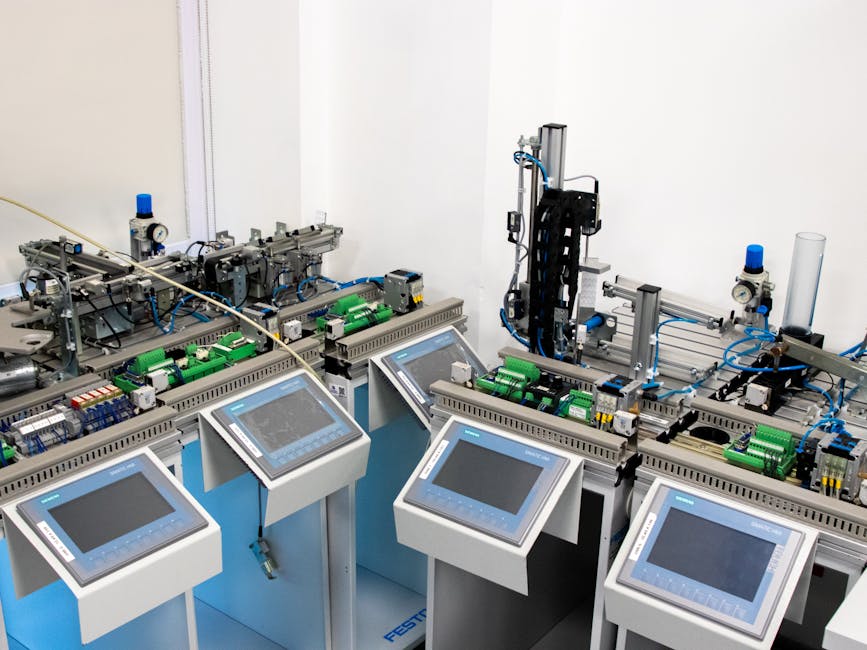
The Big Picture: Market Position in 2026
In 2026, the global PLC market is valued at approximately $14.8 billion USD, with Siemens holding roughly 22–24% market share and Mitsubishi Electric sitting firmly at around 14–16%. Both are Tier-1 giants, but they’ve carved out distinctly different niches. Siemens dominates in Europe, the Middle East, and large-scale process industries, while Mitsubishi has a deeply loyal following across East Asia, Southeast Asia, and precision manufacturing sectors. Understanding why that split exists tells you almost everything you need to know before making a purchase decision.
Hardware Deep-Dive: Siemens SIMATIC S7-1500 vs Mitsubishi MELSEC iQ-R Series
Let’s get into the numbers, because specs matter when you’re designing a system that needs to run 24/7 for the next decade.
- Processing Speed: The Siemens S7-1500 CPU 1518 boasts a bit cycle time of approximately 1 ns, while the Mitsubishi iQ-R CPU R120CPU clocks in at 0.98 ns — essentially a dead heat at the top tier. For mid-range CPUs, Mitsubishi edges slightly faster on basic instruction processing.
- Memory: The S7-1500 series offers up to 60 MB of work memory on high-end models. Mitsubishi’s iQ-R tops out around 4 MB of program memory with expandable data memory, which can feel restrictive in data-heavy applications.
- I/O Scalability: Siemens supports up to 131,072 I/O points per system with ET 200 distributed I/O. Mitsubishi supports a comparable scale but requires more careful planning with CC-Link IE Field Network topology.
- Built-in Security: As of 2026, Siemens ships the S7-1500 with TLS 1.3 encryption and OPC UA security natively baked in. Mitsubishi’s iQ-R has improved significantly but still relies more on external security modules for equivalent protection — a growing concern in today’s ICS cybersecurity landscape.
- Form Factor & Heat: Mitsubishi wins handily here. The iQ-R modules are compact, generate less heat, and are excellent for smaller cabinet installations. Siemens modules tend to be bulkier and require more attention to thermal management.
Programming Environment: TIA Portal vs GX Works3
This is where many engineers make or break their experience. Siemens’ TIA Portal (Totally Integrated Automation Portal) is arguably the most feature-rich programming environment in the industry. It integrates PLC programming, HMI design, drive configuration, and network setup into a single unified workspace. The learning curve is steep — genuinely steep — but once mastered, the efficiency gains are substantial. In 2026, TIA Portal V20 introduced improved AI-assisted debugging tools that can flag ladder logic conflicts in real time.
Mitsubishi’s GX Works3, on the other hand, is widely praised for being more intuitive for newcomers, especially engineers transitioning from older relay-based systems. The structured text and function block diagram support is solid, and the software is noticeably lighter on system resources. However, GX Works3 lacks the seamless cross-domain integration that TIA Portal offers — you’ll still be jumping between separate tools for HMI and drives.
Real-World Examples: Where Each Brand Shines
Let’s ground this in actual industry use cases, because theory only gets you so far.
Siemens on the global stage: BASF’s chemical processing plants across Germany and Belgium run heavily on Siemens SIMATIC architecture, largely because of the seamless integration with their SAP MES and the redundancy options available on the S7-1500R/H series. In the semiconductor fab space, TSMC’s European expansion facilities (announced in 2024 and now operational in 2026) also standardized on Siemens for their cleanroom automation, citing the robust OPC UA ecosystem as a decisive factor.
Mitsubishi on the Asian manufacturing floor: Toyota’s domestic Japanese plants remain almost entirely Mitsubishi PLC territory — a relationship built on decades of close co-development. In South Korea, companies like Hyundai Robotics and LS Electric use Mitsubishi iQ-R extensively in their robotic welding cells, praising the sub-millisecond synchronization with Mitsubishi servo amplifiers via SSCNET III/H. In Vietnam and Thailand’s growing electronics manufacturing sector, Mitsubishi’s lower total cost of ownership and strong local distributor networks have made it the go-to choice for mid-sized factories.
Cost Comparison: Initial Investment vs Lifecycle Value
Here’s a practical breakdown for a mid-sized 200 I/O point system as of Q1 2026:
- Siemens S7-1500 (CPU 1512SP + ET 200SP I/O): Hardware cost approximately $8,500–$11,000 USD. Add TIA Portal licensing at $1,200–$2,500 USD depending on tier. Support contracts run higher but provide excellent response times globally.
- Mitsubishi MELSEC iQ-R (R04CPU + RX/RY I/O): Hardware cost approximately $5,800–$8,000 USD. GX Works3 is significantly cheaper, often bundled with hardware purchases. Spare parts in Asia are faster and cheaper to source.
- Long-term consideration: Siemens’ Lifecycle Management program guarantees parts availability for 10 years post-discontinuation. Mitsubishi offers a comparable 10-year support window. Neither will leave you stranded — but Siemens’ global support network gives it an edge for multinational operations.
Connectivity & Industry 4.0 Readiness
In 2026, any PLC discussion that skips connectivity is incomplete. Both brands have made enormous strides, but their philosophies differ. Siemens pushes hard into the Industrial IoT ecosystem via MindSphere (now rebranded as Siemens Industrial Operations X) and deep integration with AWS and Azure industrial IoT hubs. The S7-1500’s native MQTT and REST API support makes cloud data pipelines genuinely straightforward to build.
Mitsubishi’s answer is the e-F@ctory concept and their partnership with Rockwell Automation, which has deepened considerably since 2024. Their CC-Link IE TSN (Time-Sensitive Networking) implementation is technically impressive and handles mixed IT/OT traffic elegantly. If your architecture is heavily CC-Link based — common in Japanese-influenced supply chains — Mitsubishi’s ecosystem cohesion is hard to beat.
Realistic Alternatives Worth Considering
Before you commit fully to either camp, here are a few realistic alternatives depending on your specific constraints:
- Allen-Bradley / Rockwell ControlLogix 5580: If your operations are North America-centric and your engineering team is already Rockwell-trained, this is the logical third option. Studio 5000 remains the gold standard for usability in the Americas, and the EtherNet/IP ecosystem is vast.
- Beckhoff TwinCAT 3: For engineers comfortable with PC-based control and IEC 61131-3 structured text, Beckhoff offers extraordinary flexibility and is increasingly popular in European machine-building SMEs. Cost-competitive and highly open.
- Omron NX-series: Often overlooked, but Omron’s NX1P2 and NX102 PLCs offer excellent value in compact machine applications, with strong built-in motion control and a clean Sysmac Studio environment.
- Hybrid strategy: Some forward-thinking plants in 2026 are running Siemens for process-level control and Mitsubishi for machine-level motion control, connected via OPC UA. It adds integration complexity but leverages each brand’s genuine strengths.
So, Who Actually Wins?
Here’s the honest answer: Siemens wins if you’re running large-scale, process-heavy, or multinational operations where unified integration, cybersecurity depth, and global support justify the premium. Mitsubishi wins if you’re in Asia-Pacific manufacturing, running precision motion-heavy applications, working with tight cabinet space, or operating with budget constraints that make lifecycle cost a primary driver. Neither brand is objectively better — they’re optimized for genuinely different worlds.
Editor’s Comment : After spending weeks digging through this comparison, what strikes me most is how often engineers pick a PLC brand based on habit or distributor relationships rather than a genuine fit analysis. In 2026, with ICS cybersecurity threats at an all-time high and Industry 4.0 integration no longer optional, taking two extra days to map your connectivity requirements and long-term support needs against these platforms will save you far more than two days of headaches down the line. Whichever you choose, make sure your choice is deliberate — your night shifts will thank you.
태그: [‘Siemens PLC’, ‘Mitsubishi PLC’, ‘PLC comparison 2026’, ‘industrial automation’, ‘SIMATIC S7-1500’, ‘MELSEC iQ-R’, ‘Industry 4.0 PLC’]
Leave a Reply