Picture this: you’re standing in the middle of a factory floor in 2026, surrounded by humming conveyor belts and robotic arms, and your plant manager just handed you the task of selecting a new PLC system for a major automation upgrade. You’ve narrowed it down to two giants — Siemens and Mitsubishi — and suddenly the decision feels a lot heavier than it should. Sound familiar? You’re not alone. This is one of the most debated choices in industrial automation, and honestly, there’s no single ‘right’ answer. Let’s think through this together.
What Is a PLC, and Why Does Brand Matter?
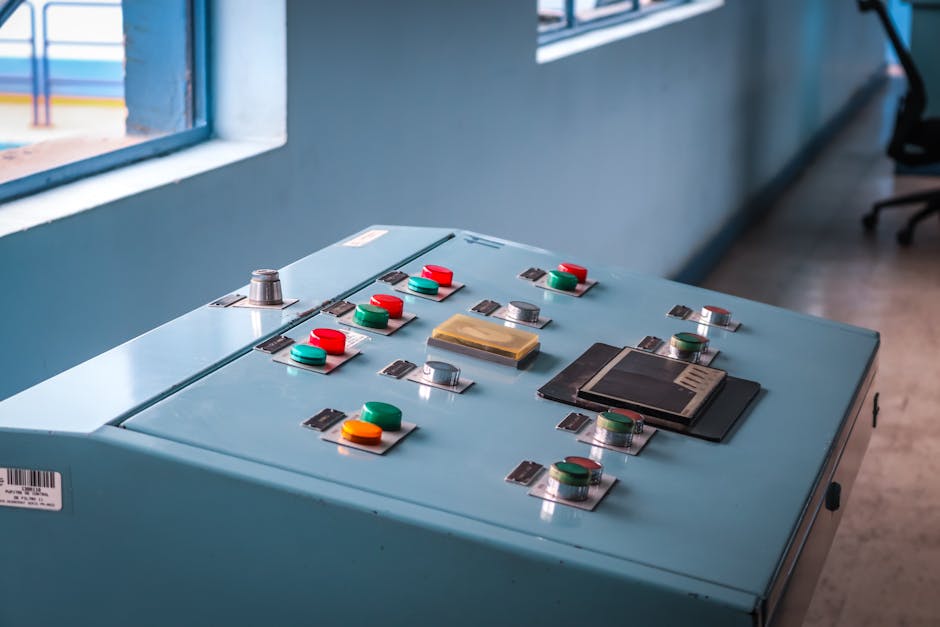
A Programmable Logic Controller (PLC) is essentially the brain of an automated system. It monitors inputs (sensors, switches), processes logic, and controls outputs (motors, valves, actuators). Think of it like a very fast, very reliable industrial computer that never calls in sick. Brand matters because PLCs are deeply integrated into your infrastructure — the programming environment, communication protocols, spare parts ecosystem, and local technical support all flow from your brand choice. Switching brands mid-lifecycle is painful and expensive.
Brand Backgrounds: Two Very Different Philosophies
Siemens (Germany) is the old guard of European industrial automation. Their flagship PLC line, SIMATIC S7 (covering S7-1200, S7-1500, and the legacy S7-300/400 series), is known for robustness, deep integration with TIA Portal software, and dominance in European and Middle Eastern markets. As of 2026, Siemens has been aggressively pushing their Industrial Edge and cloud-connected solutions, making their PLCs part of a broader Industry 4.0 ecosystem.
Mitsubishi Electric (Japan) brings a different engineering philosophy — precision, compactness, and exceptional price-to-performance ratios. Their MELSEC iQ-R and MELSEC iQ-F series are the current flagship lines, celebrated for their high-speed processing and seamless integration with Mitsubishi’s servo systems and HMIs. They dominate in Asia-Pacific and are gaining serious ground in North America.
Head-to-Head: Core Technical Specifications (2026 Data)
Let’s get into the numbers that actually matter on a spec sheet:
- Processing Speed: Mitsubishi’s iQ-R series boasts a scan cycle time as low as 0.98 ns per basic instruction, which is genuinely jaw-dropping for high-speed motion control. Siemens S7-1500 clocks in at around 1 ns per bit instruction — essentially neck-and-neck, though real-world performance varies by application.
- Memory: Siemens S7-1500 offers up to 30 MB of work memory on high-end models. Mitsubishi iQ-R matches this with scalable memory options, typically up to 32 MB program memory depending on the CPU module.
- Communication Protocols: Siemens natively supports PROFINET, PROFIBUS, Modbus TCP, and OPC UA. Mitsubishi supports CC-Link IE (their proprietary industrial Ethernet), SLMP, Modbus, and OPC UA. PROFINET is more universally adopted globally; CC-Link IE is faster in throughput but requires compatible devices.
- Programming Software: Siemens uses TIA Portal (Totally Integrated Automation Portal) — a unified engineering framework that’s powerful but has a steep learning curve. Mitsubishi uses GX Works3 — widely regarded as more intuitive, especially for beginners, and it supports all IEC 61131-3 languages.
- I/O Expansion: Both systems offer excellent modular I/O. Siemens ET 200 distributed I/O is industry-leading. Mitsubishi’s remote I/O via CC-Link IE is equally capable in Asian-centric networks.
- Cybersecurity Features: As of 2026, both brands have upgraded significantly. Siemens integrates with their Sinema Remote Connect and Industrial Security Suite. Mitsubishi has partnered with MELSOFT to offer encrypted communication and role-based access control — a critical update post the global OT security mandates of 2024-2025.
- Price Range (Entry-Level Systems): Mitsubishi iQ-F FX5U starter kits typically run $400–$800 USD. Siemens S7-1200 starter configurations range from $600–$1,200 USD. Mitsubishi consistently wins on initial cost.
Real-World Applications: Who’s Using What?
Let’s look at how these platforms perform outside the spec sheet, because that’s where the real story lives.
Domestic (South Korea): South Korea’s manufacturing backbone — from Hyundai’s automotive assembly lines in Ulsan to Samsung’s semiconductor fab auxiliary systems — has historically leaned toward Mitsubishi for mid-range automation due to strong local distributor networks and competitive pricing. However, large chemical plants and utilities (especially those aligned with European engineering firms) have standardized on Siemens SIMATIC. In 2026, Korean system integrators report a roughly 55% Mitsubishi / 45% Siemens split in new mid-size factory projects.
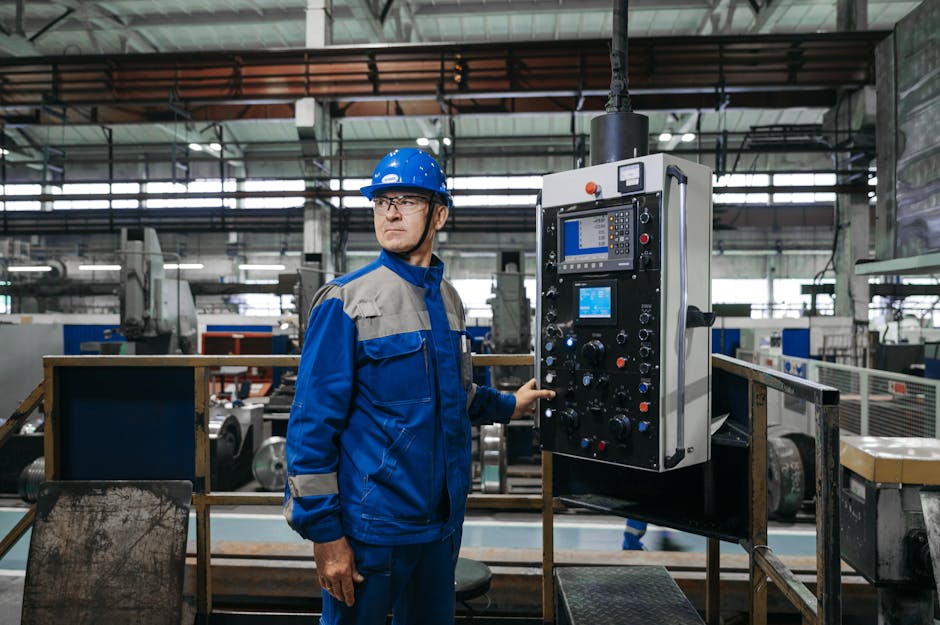
International Examples: Germany’s automotive giants — Volkswagen Group, BMW — have Siemens deeply embedded in their production lines, largely because Siemens’ TIA Portal integrates seamlessly with their broader digital twin and MES (Manufacturing Execution System) architectures. In contrast, Toyota’s global plants overwhelmingly use Mitsubishi PLCs, which makes perfect sense given the cultural and supply-chain alignment. In the U.S., a 2026 survey by Control Engineering Magazine found Siemens holding a 28% market share in large-scale process industries, while Mitsubishi leads in food & beverage and packaging automation with nearly 31% adoption.
Ecosystem and Support: The Long Game
Here’s something buyers often overlook: the PLC itself is only part of the investment. Consider the full ecosystem:
- Training & Talent Pool: Siemens TIA Portal training is more widely available globally, and certified engineers command premium salaries. Mitsubishi GX Works3 is easier to self-learn, which is great for smaller teams.
- Spare Parts Availability: Both brands are excellent in their respective strongholds. If you’re in rural Southeast Asia, Mitsubishi parts arrive faster. If you’re in Central Europe, Siemens wins hands-down.
- Software Updates & Longevity: Siemens officially supports older S7-300/400 hardware through 2033 with extended lifecycle programs. Mitsubishi has committed to iQ-R series support well past 2035.
- Integration with SCADA/HMI: Siemens WinCC is a powerhouse SCADA that integrates deeply with SIMATIC. Mitsubishi’s GOT series HMIs are plug-and-play with MELSEC PLCs — fewer headaches for smaller projects.
Weaknesses — Let’s Be Honest
Siemens weaknesses: TIA Portal licensing costs are substantial — a full professional license can exceed $3,000–$5,000 USD. The software is also resource-hungry and has a famously steep learning curve that can slow down smaller teams. Siemens hardware is premium-priced, which can price them out of budget-sensitive projects.
Mitsubishi weaknesses: CC-Link IE, while technically excellent, is a proprietary protocol that can create vendor lock-in headaches in multi-vendor environments. Mitsubishi’s global support network outside Asia can be inconsistent — finding a certified Mitsubishi engineer in, say, Eastern Europe or Latin America is harder than finding a Siemens expert. Their cloud integration story, while improving, still lags behind Siemens’ Industrial Edge platform in maturity.
Realistic Alternatives to Consider in 2026
Here’s where I want to give you something genuinely useful — because sometimes the best answer isn’t either of these two giants:
- Allen-Bradley (Rockwell Automation): If you’re in North America and your team already knows RSLogix 5000 / Studio 5000, staying in the Rockwell ecosystem may be the most cost-effective long-term decision. Their FactoryTalk suite is excellent for large, integrated facilities.
- Beckhoff TwinCAT: For edge-computing-heavy applications or when you need PC-based control flexibility, Beckhoff’s software PLC approach is increasingly compelling in 2026, especially for R&D or highly customized automation.
- Omron Sysmac: Often overlooked, Omron’s NX/NJ series offers a unified controller approach (PLC + motion + vision + safety) that can dramatically simplify architecture in medium-complexity systems. Very strong in food & pharma.
- Hybrid Approach: Some integrators in 2026 are running Mitsubishi PLCs for machine-level control with Siemens SCADA/MES layers on top — leveraging cost efficiency at the device level while using Siemens’ stronger enterprise integration tools at the system level. Worth exploring if your budget allows it.
So, Which Should YOU Choose?
Here’s an honest framework: Choose Siemens if you’re working on large-scale process automation, your team has TIA Portal experience, you operate in Europe or the Middle East, and you need deep Industry 4.0 / cloud integration today. Choose Mitsubishi if you’re optimizing for cost-efficiency, you operate in Asia-Pacific, your application is motion-heavy (servo systems, high-speed packaging), or you need something your team can learn quickly without expensive training programs. Neither is categorically ‘better’ — they’re optimized for different contexts, and that nuance is what makes this decision worth thinking through carefully.
Editor’s Comment : After years of watching engineers wrestle with this decision, here’s my honest take — the PLC wars between Siemens and Mitsubishi are less about raw specs and more about ecosystem fit. The best PLC is the one your team can actually maintain, that your supply chain can support, and that integrates cleanly with the rest of your plant architecture. Don’t let brand loyalty or marketing glossies make this call for you. Pilot both if the project allows it, and always — always — factor in 10-year total cost of ownership, not just the purchase price sticker. Your future self on the 2 AM maintenance call will thank you.
📚 관련된 다른 글도 읽어 보세요
- Edge Computing in Web Development: Real-World Use Cases Reshaping the Internet in 2026
- PLC Automation in Manufacturing: What the 2026 Digital Transformation Wave Actually Delivers
- 2026년 웹 개발 트렌드: 백엔드·프론트엔드 통합 기술로 혼자서도 풀스택이 되는 법
태그: [‘Siemens PLC vs Mitsubishi PLC’, ‘SIMATIC S7-1500 review 2026’, ‘MELSEC iQ-R comparison’, ‘industrial automation PLC guide’, ‘TIA Portal vs GX Works3’, ‘PLC selection guide for engineers’, ‘factory automation 2026’]
Leave a Reply