Picture a mid-sized automotive parts factory in the American Midwest, circa five years ago. Operators walked the floor with clipboards, manually logging machine cycle times and downtime events. A single unplanned conveyor stoppage could idle 40 workers for two hours while a technician hunted down the fault. Fast-forward to today, and that same plant runs a network of Programmable Logic Controllers (PLCs) talking in real time to a cloud-based SCADA dashboard. The clipboard is a museum piece. That story isn’t unique — it’s playing out across thousands of factories globally in 2026, and the numbers behind it are genuinely worth unpacking.
If you’ve been hearing terms like “digital transformation,” “Industry 4.0,” or “smart factory” thrown around and wondered what they actually mean for the shop floor, let’s walk through it together — starting with the backbone technology that makes most of it possible: PLC automation.
What Is PLC Automation, and Why Does It Matter in 2026?
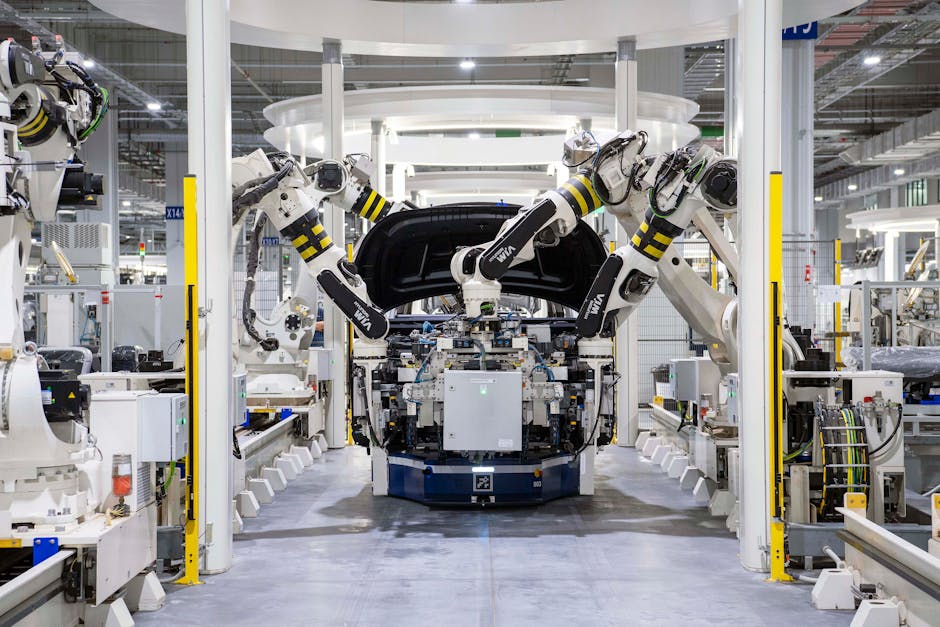
A Programmable Logic Controller (PLC) is essentially a ruggedized industrial computer designed to control machinery and processes in real time. Unlike a general-purpose PC, PLCs are built to withstand vibration, extreme temperatures, and continuous 24/7 operation. They read inputs (sensors, switches, encoders) and trigger outputs (motors, valves, conveyors) based on programmed logic — all within milliseconds.
What’s changed dramatically in 2026 is connectivity. Modern PLCs from Siemens (S7-1500 series), Rockwell Automation (Allen-Bradley ControlLogix), and Mitsubishi Electric (iQ-R series) now ship with native OPC-UA, MQTT, and Industrial Ethernet protocols built in. This means a PLC isn’t just controlling a machine anymore — it’s a data node feeding into your entire digital infrastructure.
The Numbers: What Digital Transformation Through PLC Automation Actually Delivers
Let’s be specific, because vague claims help nobody. Here’s what the data landscape looks like heading through 2026:
- Overall Equipment Effectiveness (OEE) gains of 15–25%: McKinsey’s 2025 manufacturing survey found that factories deploying integrated PLC-to-MES (Manufacturing Execution System) architectures reported average OEE improvements of 18% within the first 18 months. OEE measures availability, performance, and quality — so that’s a real, compound gain.
- Unplanned downtime reduction of 30–45%: When PLCs feed real-time diagnostic data into predictive maintenance platforms (think Siemens MindSphere or PTC ThingWorx), maintenance teams shift from reactive to predictive work. The Deloitte Smart Factory Report (2025) pegged average unplanned downtime reductions at 37% post-implementation.
- Labor productivity improvements of 20–35%: This doesn’t mean job elimination in every case — it often means redeployment. Repetitive manual tasks get automated, while skilled workers move into quality oversight and exception management roles.
- Energy consumption reduction of 10–20%: Automated PLC-driven variable frequency drives (VFDs) on motors and HVAC systems optimize power usage dynamically. A 2025 IEA industrial efficiency report cited 13% average energy savings in digitally transformed light manufacturing facilities.
- Defect rate reductions of up to 50%: Inline quality inspection tied to PLC logic — measuring torque, pressure, temperature, or dimensional tolerances in real time — catches deviations before they become scrap or warranty claims.
Real-World Examples: Who’s Actually Doing This?
Theory is nice, but let’s look at what’s happening in practice across different scales and geographies.
Hyundai Motor Group (South Korea): Hyundai’s Ulsan and Asan plants have undergone phased PLC modernization since 2022, integrating legacy relay-logic panels into a unified Siemens TIA Portal architecture. By early 2026, the company reported that welding line changeover times — historically taking 4–6 hours for a new model introduction — dropped to under 90 minutes, directly tied to PLC-driven flexible fixturing systems. This kind of agility is becoming a competitive necessity as EV model cycles compress.
Bosch Rexroth (Germany): At their Lohr am Main facility, Bosch Rexroth deployed a fully connected PLC network as part of their “Factory of the Future” initiative. By linking 200+ PLCs to their proprietary ActiveCockpit system, they achieved a 25% increase in production output without adding floor space — essentially squeezing more throughput from existing assets through better scheduling and near-zero idle time.
Toyota’s Georgetown, Kentucky Plant (USA): Rather than a rip-and-replace approach, Toyota took a brownfield strategy — retrofitting existing older PLCs with edge gateways that translate proprietary protocols into modern IoT-friendly formats. This pragmatic approach, increasingly popular in 2026, allowed them to gain digital visibility across aging assets without a $50M infrastructure overhaul. Retrofit costs ran approximately 15–20% of full replacement cost.
A Korean Mid-Sized Mold Manufacturer (Ansan, Gyeonggi Province): Not every success story is a multinational. A 120-person injection molding company participating in Korea’s “Smart Factory Support Project” (스마트공장 보급·확산 사업) implemented PLC automation with MES integration using government co-funding. Within 14 months, their customer defect claim rate dropped from 3.2% to 0.8%, and on-time delivery improved from 84% to 96%. Their payback period: approximately 22 months.
The Honest Challenges — Because There Are Always Some
It would be intellectually dishonest to only present the wins. Here’s what organizations consistently struggle with:
- Legacy system integration headaches: Many factories have PLCs from the 1990s running perfectly stable but speaking no modern protocol. Integration requires either costly middleware or replacement.
- Skilled talent gap: The 2026 demand for PLC programmers and industrial automation engineers far outstrips supply. Globally, there’s an estimated 40% shortfall in qualified PLC technicians, per the International Federation of Robotics (IFR) 2025 report.
- Cybersecurity exposure: Connecting PLCs to enterprise networks and the cloud opens attack surfaces that didn’t exist when these systems were air-gapped. The 2025 Purdue Model for ICS security is increasingly being applied, but implementation takes time and budget.
- Change management resistance: Technology is often the easy part. Getting floor supervisors who’ve operated the same way for 20 years to trust — and act on — automated system recommendations is a genuine organizational challenge.
Realistic Alternatives and Entry Points for Different Budgets
Not every manufacturer can write a seven-figure check for a full digital transformation. Here’s how to think about it based on where you actually are:
- If you’re a small manufacturer (under 50 employees): Start with a single high-pain process. A PLC-based downtime counter and alert system for your most critical machine can cost $8,000–$25,000 installed and deliver immediate ROI visibility. Don’t boil the ocean.
- If you’re a mid-sized operation with some existing PLCs: Consider edge computing retrofits first. Devices like the Moxa UC-8100 or HMS Networks’ Anybus can sit alongside existing PLCs and extract data without touching the control logic. This “data tap” approach gets you analytics without risk.
- If you’re a larger enterprise planning greenfield or major renovation: Invest in a unified automation platform (Siemens TIA Portal, Rockwell Studio 5000, or Mitsubishi GX Works3) from the start. The standardization dividend compounds over years of operation and reduces per-engineer training costs significantly.
- For all sizes in Korea specifically: The KOSMO (Korea Smart Manufacturing Office) program and KIAT’s 2026 manufacturing digitalization grants offer up to 50% co-funding for qualified SMEs. These programs are genuinely underutilized — worth a serious look before committing private capital.
What the Next 12–18 Months Look Like
In 2026, the PLC automation space is converging with AI inference at the edge. Companies like Siemens (with their Industrial Copilot), Rockwell Automation, and startups like Viam are pushing toward PLCs that don’t just execute logic but suggest parameter adjustments based on real-time machine learning models running locally. This means the gap between factories that have started their digital transformation journey and those that haven’t will widen faster than most executives currently appreciate.
The factories winning in 2028 are largely being built — or rebuilt — right now.
Editor’s Comment : What strikes me most after going deep on this topic is that PLC-driven digital transformation isn’t really a technology story — it’s a compounding advantage story. The manufacturers who started this journey in 2022–2024 are already operating on a fundamentally different cost and quality curve than those who waited. That said, “start somewhere sensible” genuinely beats “plan the perfect system forever.” If you’re sitting on a critical machine with no visibility into why it goes down, that’s your first PLC project — and it doesn’t require a boardroom strategy deck to justify.
태그: [‘PLC automation’, ‘manufacturing digital transformation’, ‘smart factory 2026’, ‘Industry 4.0’, ‘OEE improvement’, ‘industrial IoT’, ‘predictive maintenance’]
Leave a Reply