A friend of mine — sharp guy, works in finance, not easily fooled — called me last spring absolutely fuming. He’d spent over $4,000 on what the jeweler described as a ‘lab-created diamond with all the same properties as natural,’ only to find out later he’d paid a premium price for a stone that any reputable grading lab would have flagged as inconsistently certified. The paperwork looked right. The stone sparkled. But something was off, and it took a second opinion from a GIA-trained gemologist to unravel it.
That story stuck with me. Because lab grown diamonds — the real, legitimate ones — are genuinely one of the most fascinating shifts in the jewelry market right now. But the gap between a well-informed buyer and a confused one is enormous, and in 2025, that gap can cost you thousands.
So let’s dig in together.
What Actually Makes a Lab Grown Diamond a Diamond?
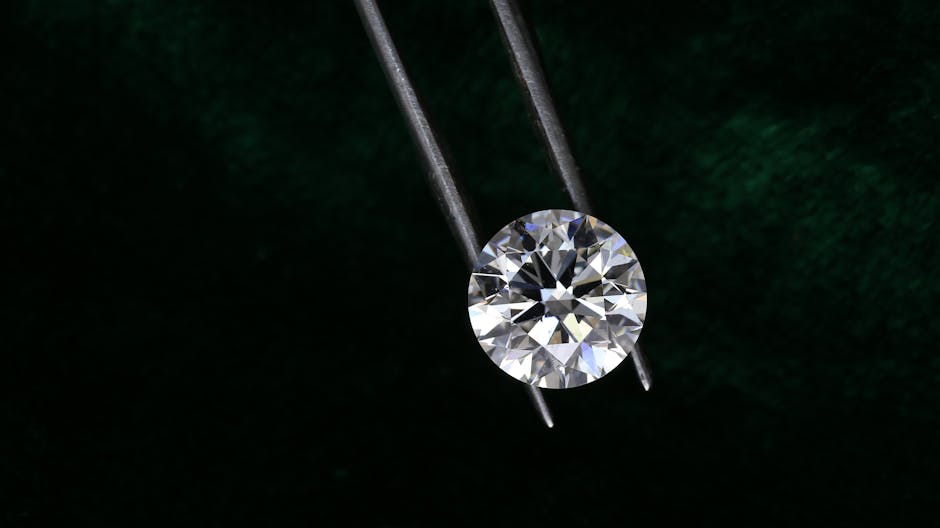
First, let’s get the science straight, because this matters more than most salespeople will admit. A lab grown diamond is not a simulant. It’s not cubic zirconia, it’s not moissanite. It is, chemically and physically, identical to a mined diamond — pure carbon arranged in a cubic crystal structure, with the same refractive index (2.417), the same hardness (10 on Mohs scale), and the same thermal conductivity.
There are two production methods, and knowing the difference will help you ask smarter questions:
- HPHT (High Pressure High Temperature): Mimics the geological conditions deep in the Earth. A carbon source is subjected to pressures exceeding 1.5 million PSI and temperatures around 1,400–1,600°C. Tends to produce stones with a slight yellowish or bluish tint if not carefully controlled. Often used for smaller, industrial-grade stones, but high-quality gem HPHT exists.
- CVD (Chemical Vapor Deposition): A hydrocarbon gas (usually methane) is introduced into a chamber with a diamond seed crystal. The carbon atoms precipitate layer by layer onto the seed. CVD produces larger, gem-quality stones more consistently and is currently the dominant method for jewelry-grade lab diamonds.
The important thing: a well-grown CVD or HPHT diamond cannot be told apart from a mined diamond by the naked eye. Not by your jeweler’s loupe either. It takes specialized equipment — a DiamondView machine or spectroscopy — to distinguish them.
The 2025 Price Landscape — And Why the Numbers Surprise People
Here’s where it gets really interesting, and frankly, a bit counterintuitive. In 2025, lab grown diamond prices have continued their steep descent that began around 2020–2021. We’re talking about a 1-carat, G color, VS1 clarity, excellent cut lab grown diamond retailing for roughly $800–$1,400 depending on the vendor — compared to $5,000–$7,000 for a comparable natural stone.
That’s a price gap of 75–85%. A few years ago it was closer to 50%. The gap is widening, not narrowing.
Why? Because production has scaled dramatically. Facilities in China now produce tens of millions of carats annually. The marginal cost of producing a 1-carat CVD diamond has dropped below $300 at scale. Meanwhile, natural diamond supply remains constrained — De Beers and Alrosa control significant portions of global supply, and new major mines are increasingly rare finds.
This creates a paradox for buyers: the resale value of lab grown diamonds has essentially collapsed. If you paid $2,000 for a 1-carat lab diamond two years ago, you might get $200–$400 for it today. Natural diamonds aren’t great investments either, but they’ve retained value comparatively. So the question isn’t just ‘which is better’ — it’s ‘what are you actually buying this for?’
Grading Reports — The Detail That Separates a Smart Buy from a Costly Mistake
This is where my friend got burned, and where a lot of buyers do. Not all grading reports are equal. Here’s what you need to know in 2025:
- GIA (Gemological Institute of America): The gold standard. GIA now grades lab grown diamonds with the same 4C rigor as naturals. Look for their distinctive laser inscription on the girdle and a report number you can verify online at gia.edu.
- IGI (International Gemological Institute): Has become very popular specifically for lab grown diamonds, especially from vendors like James Allen and Brilliant Earth. IGI grades are generally reliable, though some gemologists note IGI can grade slightly more generously than GIA on color and clarity.
- GCAL (Gem Certification & Assurance Lab): Gaining traction, particularly because they include an ‘eye clean’ guarantee and light performance analysis — useful for buyers who care about brilliance over paperwork specs.
- Avoid or scrutinize carefully: EGL (European Gemological Laboratory) reports, especially older ones, and any in-house certifications from the retailer itself. These are where inconsistencies appear most often.
Pro tip: Always cross-reference the report number on the certifying lab’s official website. A legitimate report will pull up instantly with matching specs. If it doesn’t, walk away.
Real-World Vendor Comparison — Who’s Actually Worth Your Money in 2025?
I’ve spent time reading through buyer reviews, gemologist assessments, and pricing comparisons across major platforms. Here’s a practical breakdown:
- James Allen (jamesallen.com): Excellent 360° video previews for every stone — genuinely useful when buying online. Strong IGI-certified lab grown selection. Pricing is competitive, and their customer service has consistently ranked well in independent reviews. Good for mid-range buyers ($800–$3,000 range).
- Brilliant Earth (brilliantearth.com): Positions itself as the ethical choice, and their supply chain transparency is above average. Prices run slightly higher than competitors, but they offer both IGI and GIA certified stones. They also have physical showrooms in major US cities, which matters if you want to see before you buy.
- Whiteflash (whiteflash.com): If cut quality is your priority above all else, Whiteflash’s ‘A CUT ABOVE’ lab grown line is genuinely exceptional. Their light performance data is detailed and independently verified. Premium priced, but for engagement rings where brilliance matters most, the difference is visible.
- Clean Origin (cleanorigin.com): Lab grown diamonds only, aggressive pricing, but stick to IGI-certified stones from their catalog. Their website UI isn’t the slickest, but value-per-carat is hard to beat for budget-conscious buyers.
The Question Nobody Asks: Is a Lab Diamond Right for Your Situation?
Let’s be honest about use cases here, because this is genuinely conditional advice:
- If you want maximum size/visual impact for a fixed budget — lab grown is an obvious win. You can get a 2-carat VS1 for what a 0.8-carat natural would cost. The sparkle is identical to an untrained eye.
- If you’re buying for long-term emotional value or heirloom potential — natural diamonds hold sentimental and cultural weight that many buyers still associate with rarity. Right or wrong, that perception exists.
- If resale or investment is any part of your thinking — neither option is a great investment, but lab grown diamonds have almost no secondary market value in 2025. Do not factor resale into your lab diamond purchase decision at all.
- If the environmental angle matters to you — this is nuanced. CVD diamond production is energy-intensive, though some producers (Ada Diamonds, for example) use 100% renewable energy. Ask specifically about energy sourcing, not just the ‘lab grown = eco-friendly’ marketing pitch.
Red Flags to Watch Before You Swipe Your Card
Based on aggregated buyer experiences and industry reports from 2025, here are the warning signs worth knowing:
- No independent grading report, or a report from an unfamiliar/in-house lab
- Pressure to ‘decide today’ or claims that pricing won’t last — a tactic more common in physical stores than reputable online vendors
- Vague answers about whether a stone is HPHT or CVD treated (post-growth treatment to improve color exists and should be disclosed)
- Missing laser inscription — reputable stones have the report number inscribed on the girdle, visible under 10x magnification
- Prices dramatically below market rate without explanation — a 1-carat VS1 G lab diamond for $300 is not a deal, it’s a flag
What I’d Actually Do With a $2,000 Budget in 2025
Purely practical scenario: $2,000 for an engagement ring center stone. In 2025, that budget gives you genuinely different options depending on your priorities.
With lab grown: You’re looking at a well-cut 1.5–2 carat, G-H color, VS1-VS2, IGI certified stone from James Allen or Clean Origin, with $400–$600 left over for a quality setting. That’s a visually impressive, ethically sourced, scientifically real diamond.
With natural: At $2,000 for the stone alone, you’re in the 0.7–0.9 carat range, probably G-H, SI1-SI2, which is respectable but noticeably smaller. You’d need to decide if rarity and resale consideration outweigh the size difference.
Neither choice is wrong. They’re different value propositions for different buyers.
From a fellow buyer who’s been down this research rabbit hole: The lab grown diamond market in 2025 is genuinely mature enough to trust — but only if you buy from vendors with independent third-party grading reports (GIA or IGI), verify those reports directly online, and go in with clear eyes about resale value. The technology is real, the savings are real, and the sparkle is absolutely real. Just don’t let a slick sales pitch skip you past the paperwork. That’s where the actual protection lives.
📚 관련된 다른 글도 읽어 보세요
- Why I Almost Missed My Flight Trusting Online Guides — Real 2025 Carry-On Liquid Rules
- TypeScript Full-Stack Best Practices in 2026: What Actually Works in Production
- 어릴때 이것 키워주지 않으면 후회해도 소용없어요 — 2026년 기준 초등 수학 사고력, 지금 시작 안 하면 진짜 늦습니다
태그: lab grown diamonds, lab created diamond buying guide, CVD diamond, GIA IGI certified diamonds, diamond price 2025, engagement ring guide, lab diamond vs natural diamond
Leave a Reply