Picture this: a mid-sized automotive parts manufacturer in South Korea, struggling with inconsistent weld quality and a shrinking skilled labor pool, makes one bold decision — integrating a collaborative robot (cobot) directly into their existing PLC-controlled assembly line. Within six months, their defect rate drops by 34%, and their line operators? They’re no longer doing repetitive strain-inducing tasks. They’re now monitoring dashboards and fine-tuning parameters. That’s not a futuristic fantasy — that’s a real trend reshaping factory floors globally in 2026.
If you’ve been wondering whether cobots and PLC automation are truly compatible — or whether all this hype actually translates into measurable results — let’s dig into the data, the case studies, and the honest trade-offs together.
What Exactly Is a Cobot-PLC Integration? A Quick Primer
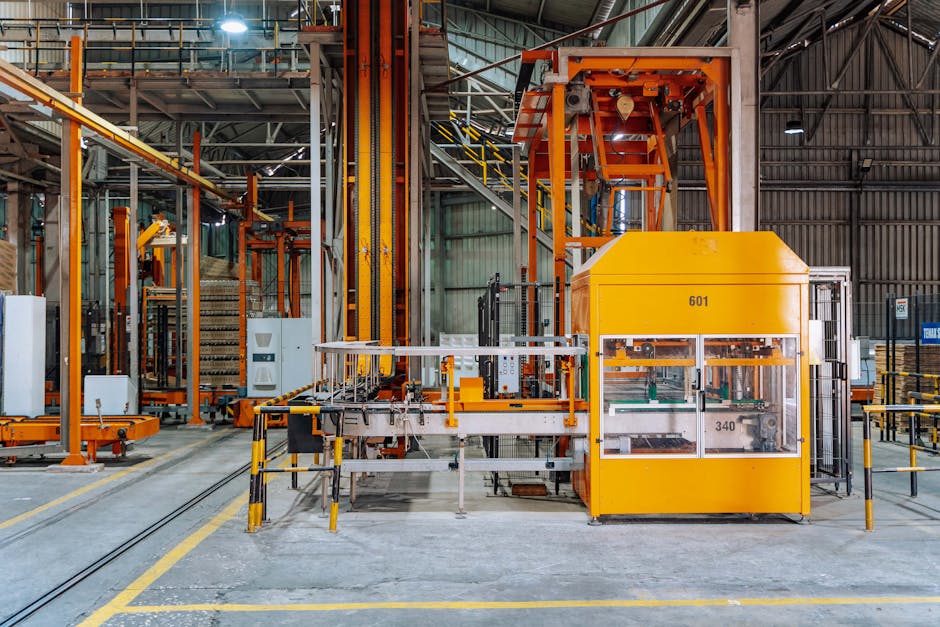
Before jumping into results, let’s ground ourselves. A collaborative robot (cobot) is a robotic arm designed to work safely alongside humans — think Universal Robots UR series, FANUC CRX, or Hanwha’s HCR line. A PLC (Programmable Logic Controller) is the industrial backbone of most automation lines — it controls machinery sequencing, sensor inputs, and output signals with rock-solid reliability.
The magic happens when these two systems communicate via industrial protocols like EtherNet/IP, PROFINET, or Modbus TCP. The PLC acts as the master controller, and the cobot becomes a flexible, reprogrammable node within the existing automation architecture. No need to tear down your legacy systems — that’s the key selling point.
The Numbers That Matter: Performance Data from 2026 Deployments
Let’s look at what the data is actually telling us this year. According to the International Federation of Robotics (IFR) 2026 Mid-Year Report, cobot installations in PLC-integrated environments have grown by 41% year-over-year in the Asia-Pacific region alone. Here are some standout metrics from documented deployments:
- Cycle time reduction: Average 18–27% improvement in throughput when cobots handle pick-and-place or quality inspection tasks within PLC-governed lines.
- Defect rate improvement: Vision-equipped cobots integrated with PLC quality gates show 28–40% reduction in downstream defects.
- ROI timeline: Most SME deployments are reporting full ROI within 14–22 months — down from the 30+ month average seen in 2022.
- Downtime incidents: Safety-certified cobot-PLC integration reduced line stoppage incidents by up to 22% compared to fully manual stations.
- Worker redeployment rate: 73% of workers displaced from repetitive cobot-replaced tasks were successfully retrained into supervisory or maintenance roles within the same facility.
Real-World Success Stories: From Seoul to Stuttgart
🇰🇷 Case 1 — Hyundai Mobis, Ulsan Plant (South Korea)
Hyundai Mobis integrated Universal Robots UR10e cobots into their brake module assembly line in early 2025, with full PLC synchronization completed by Q3 2025. The cobots handle torque-sensitive bolt fastening tasks, while the Siemens S7-1500 PLC manages the overall sequencing and interlock logic. Result? A 31% reduction in fastening errors and a line speed increase of 19%. The key insight here: they didn’t replace their PLC infrastructure — they extended it.
🇩🇪 Case 2 — Bosch Rexroth, Stuttgart Facility (Germany)
Bosch Rexroth’s hydraulics division implemented FANUC CRX-10iA cobots at six inspection stations, all communicating via PROFINET with their existing Allen-Bradley PLC network. What makes this case fascinating is their use of digital twin simulation — they virtually tested every cobot motion path against the PLC ladder logic before a single physical change was made. Deployment time? Just 11 days per station. Their quality inspection throughput increased by 44%.
🇺🇸 Case 3 — A Midwest Electronics Manufacturer (USA)
A confidential SME client of systems integrator RobotWorx (Ohio) deployed Doosan Robotics’ H2017 cobot for PCB handling in a mixed-signal electronics line. Their legacy GE Fanuc PLC was over 15 years old. Rather than upgrading the PLC, they used a cobot middleware gateway to bridge modern Ethernet protocols with the older serial communication setup. Total integration cost: under $85,000. Line output improved by 23% within the first quarter of 2026.
The Challenges Nobody Talks About (But Should)
Let’s be real — it’s not all smooth sailing. There are genuine friction points you should anticipate:
- Protocol compatibility headaches: Older PLCs using legacy fieldbus systems (like DeviceNet or Profibus) require additional gateway hardware, which adds cost and potential latency.
- Safety validation time: ISO/TS 15066 and ISO 10218 collaborative safety assessments can take 4–8 weeks for complex line configurations — budget for this.
- Programming skill gaps: Most PLC engineers aren’t fluent in cobot scripting (URScript, Karel, or DRL depending on the brand). Cross-training is non-negotiable.
- Throughput ceiling: Cobots, designed for safety, have speed limitations compared to industrial robots. If your line requires extremely high-speed repetitive motion (sub-2-second cycles), a traditional robot may still be more appropriate.
Realistic Alternatives: When Full Integration Isn’t the Right Move
Not every operation should rush into cobot-PLC integration. If your budget is under $50,000, consider a semi-automated cobot cell that operates independently alongside (but not inside) your PLC line — simpler, cheaper, and still impactful. For facilities with highly variable product mixes, mobile manipulators (MoMAs) — cobots mounted on AMRs — are gaining traction as a more flexible alternative that doesn’t require deep PLC integration at all.
For very small operations, even a cobot in standalone mode with simple I/O triggers connected via basic digital signals to an existing PLC can deliver 60–70% of the benefit at a fraction of the complexity. Don’t let perfect be the enemy of good.
Editor’s Comment : What strikes me most about the 2026 cobot-PLC success landscape is how the narrative has shifted from “replacement” to “collaboration” — not just between humans and robots, but between new technology and legacy infrastructure. The factories winning right now aren’t the ones with the biggest budgets; they’re the ones with the most honest assessment of what they actually need. Start with one station, measure everything obsessively, and let the data lead the next investment. That’s the playbook that keeps delivering.
태그: [‘collaborative robot PLC integration’, ‘cobot automation 2026’, ‘PLC automation success cases’, ‘industrial cobot deployment’, ‘smart factory 2026’, ‘manufacturing automation ROI’, ‘cobot PLC case study’]
Leave a Reply