A friend of mine — sharp guy, ran a successful tilapia farm for years — called me up last spring completely frustrated. He’d sunk a significant chunk of capital into scaling his recirculating aquaculture system (RAS), followed every guideline from the extension office, and still watched his fish mortality rate climb past 18% in the first quarter. “The books make it sound simple,” he said. “It’s not.” That conversation stuck with me, and honestly, it’s exactly why I wanted to dig deep into what’s really happening in aquaculture right now — beyond the glossy brochures and the optimistic yield projections.
Aquaculture is one of those industries where the gap between theory and practice is genuinely brutal. But here’s the thing: it’s also one of the most important food production systems we have heading into the next decade. So let’s actually think through this together — the real numbers, the real failures, and where the legitimate opportunities lie.
The State of Aquaculture in 2025: Bigger Than You Think
Global aquaculture production now accounts for roughly 57% of all seafood consumed worldwide, according to the FAO’s most recent data. That’s a number that keeps climbing as wild-catch fisheries plateau or decline. The global aquaculture market is valued at over $285 billion and is projected to grow at a compound annual rate of around 5.4% through the end of the decade.
But here’s where it gets complicated: that growth isn’t evenly distributed. Asia — particularly China, Vietnam, Indonesia, and India — still dominates production, contributing over 70% of global output. Meanwhile, operations in North America and Europe are struggling with a very different problem set: high labor costs, strict environmental regulation, and the enormous capital burden of RAS technology.
Why RAS Is Both the Future and a Financial Minefield
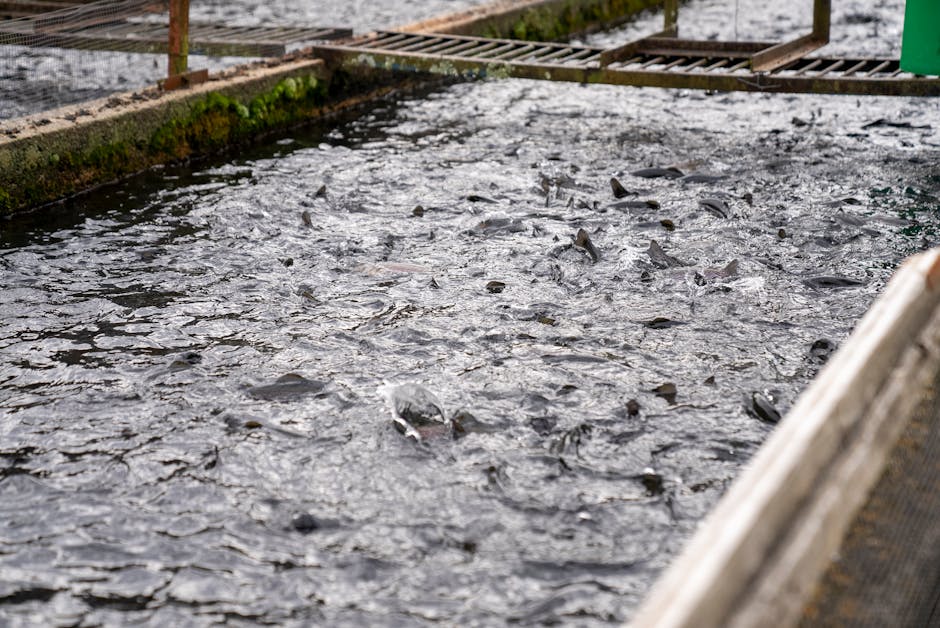
Recirculating Aquaculture Systems were supposed to solve everything — land-based, controlled environment, no dependence on coastal geography or seasonal water temperatures. And technically, they do work. Atlantic Salmon raised in RAS facilities in Denmark and Canada have achieved harvest weights of 5–6 kg in roughly 16–18 months, comparable to sea-cage operations.
The problem? The economics are punishing at smaller scales. Let’s look at real numbers:
- Capital expenditure: A small-scale RAS facility producing ~100 tonnes/year typically requires $1.5M–$3M USD in upfront infrastructure costs.
- Energy consumption: RAS systems can consume 3–7 kWh per kilogram of fish produced, making electricity your single largest operating cost in most markets.
- Water chemistry management: Ammonia spikes above 1.5 mg/L or dissolved oxygen drops below 6 mg/L can trigger mass mortality events within 6–12 hours — and these fluctuations happen fast.
- Feed conversion ratio (FCR): Optimized RAS salmon operations achieve FCRs of 1.05–1.15, but poorly managed systems routinely see FCRs of 1.4–1.6, eroding margins rapidly.
- Break-even timelines: Most independent analyses put RAS break-even at 4–7 years under favorable conditions — and that assumes consistent market pricing for your species.
My friend’s mortality problem? Turned out to be a biofilter crash — his nitrifying bacteria colony got disrupted by a disinfectant residue in a water top-up event. Total ammonia nitrogen spiked to 3.8 mg/L over 48 hours. Fixable in hindsight, catastrophic in the moment. This is the kind of cause-and-effect cascade that textbooks gloss over.
Species Selection: Where Most New Operators Go Wrong
The single most consequential decision in any aquaculture startup is species selection, and it’s often made for the wrong reasons — “salmon sounds profitable” or “tilapia is easy” — without matching the species to the operator’s actual infrastructure, market access, and technical capacity.
Here’s a practical breakdown of how major species stack up in 2025:
- Atlantic Salmon: Highest market value ($7–12/kg farmgate in North America), but demands precise water temperatures (12–14°C optimal), high dissolved oxygen (>8 mg/L), and extreme biosecurity. Not a beginner species.
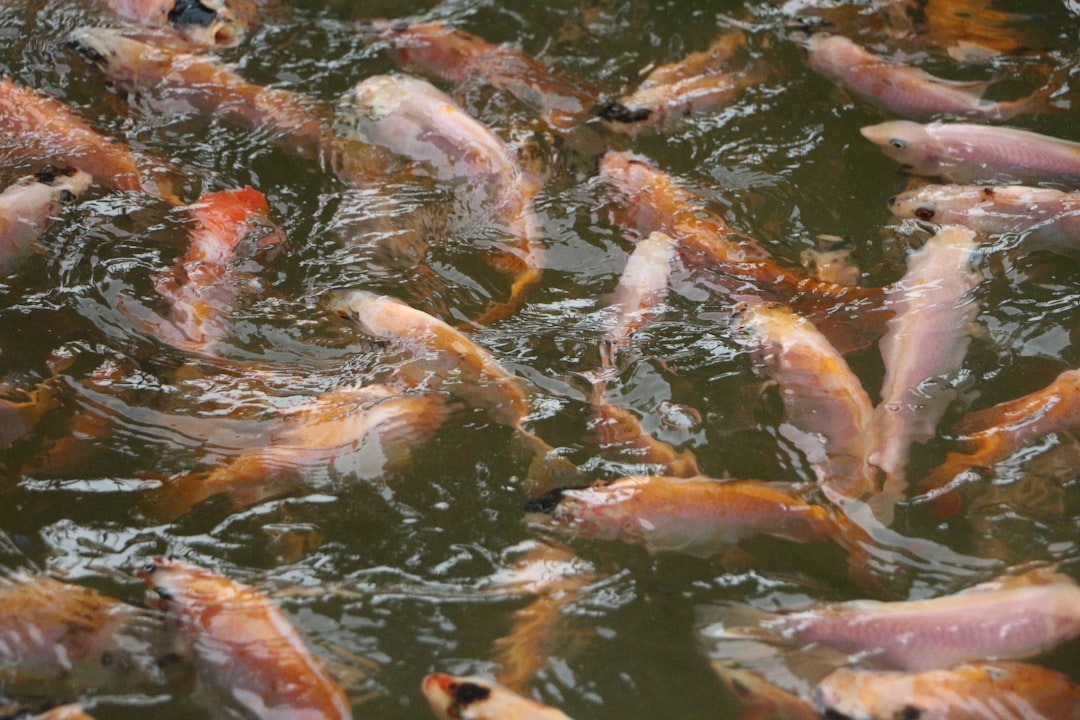
- Tilapia: Forgiving temperature range (25–30°C), tolerates lower oxygen, grows fast. However, market prices have compressed significantly — $1.50–$2.80/kg in many wholesale markets — making margin thin unless you control your own retail channel.
- Shrimp (Litopenaeus vannamei): Massive global demand, high value ($4–8/kg), but Early Mortality Syndrome (EMS/AHPND) caused by Vibrio parahaemolyticus has devastated operations across Southeast Asia. Biosecurity failures are not recoverable.
- Barramundi (Asian Sea Bass): Growing premium market in the US and Australia, adapts reasonably to RAS, fetches $6–10/kg. Underutilized opportunity in 2025.
- Rainbow Trout: Cold-water species, well-established markets in Europe, strong candidate for high-altitude or northern climate operations where ambient water temperatures work in your favor.
Technology That’s Actually Moving the Needle
Beyond basic RAS infrastructure, a few technology trends are showing genuine, measurable impact in 2025:
AI-driven feeding systems from companies like Observe Technologies (now operating across multiple Norwegian salmon farms) use underwater cameras and machine learning to detect uneaten feed pellets in real time, adjusting feeding rates dynamically. Farms using these systems report FCR improvements of 0.08–0.15 — which at scale translates to significant cost reduction and reduced organic waste loading on biofilters.
Genomic selective breeding programs, particularly in Atlantic Salmon and shrimp, have compressed generation times and are producing strains with documented disease resistance improvements. Hendrix Genetics and SalmoBreed are two names worth tracking in this space.
Biofloc Technology (BFT) has gained serious traction as a lower-cost alternative to full RAS for shrimp and tilapia. By cultivating microbial communities that consume ammonia and serve as supplemental nutrition, BFT systems can reduce water exchange requirements by over 90% while maintaining acceptable water quality — at a fraction of the capital cost of conventional RAS.
Environmental and Regulatory Reality Check
Aquaculture’s environmental track record is genuinely mixed, and regulators in the EU, US, and Canada are tightening scrutiny. Key pressure points in 2025 include:
- Sea lice management in open-net salmon farming remains a major regulatory and reputational liability. Norway’s traffic light system has restricted production in several zones as recently as this year.
- Effluent discharge standards for land-based operations are becoming stricter — particularly nitrogen and phosphorus limits. RAS operations that capture and treat sludge are better positioned for long-term permitting.
- Fishmeal dependency: The industry is under sustained pressure to reduce reliance on wild-caught forage fish for feed. Insect protein (black soldier fly), single-cell protein, and algae-based feed ingredients are entering commercial scale, but cost parity with conventional fishmeal is still 2–3 years away for most applications.
Where Are the Real Opportunities Right Now?
If you’re evaluating aquaculture seriously — whether as an investor, a new operator, or someone scaling an existing operation — here’s how I’d think about it conditionally:
- If your situation is: limited capital, warm climate, established local market → Tilapia or catfish in pond-based or biofloc systems. Keep overhead lean, focus on direct-to-consumer or restaurant relationships to escape commodity pricing.
- If your situation is: access to cold, clean freshwater, northern location → Rainbow trout or Arctic char in flow-through or low-exchange RAS. Lower energy costs, premium local food movement working in your favor.
- If your situation is: significant capital ($2M+), technical team, proximity to premium urban market → Barramundi or salmon in RAS. Viable, but model your energy costs at $0.12/kWh minimum even if your current rate is lower.
- If your situation is: existing agricultural land, interest in integrated systems → Aquaponics combining tilapia with leafy greens. Margins on the plant side often exceed the fish side; treat fish as the nutrient engine.
The Honest Conversation About Failure Rates
It would be dishonest not to acknowledge this directly: failure rates in new aquaculture ventures remain high. Industry observers estimate that 30–40% of new independent RAS operations in North America do not reach profitability within their projected timelines. The causes are well-documented — underestimated energy costs, water quality management gaps, overoptimistic market price assumptions, and insufficient working capital to survive the learning curve.
This doesn’t mean aquaculture is a bad investment. It means it demands genuine technical competence, conservative financial modeling, and ideally, a period of hands-on training at an existing operation before you commit capital. The operators who succeed consistently share one trait: they know their water chemistry the way a brewer knows their fermentation process — intuitively, obsessively, daily.
💬 Drop a comment below: Whether you’re running a backyard aquaponics setup or evaluating a commercial-scale RAS project, I’d genuinely love to hear what species you’re working with and what your biggest operational challenge has been. The real knowledge in this industry lives in the practitioners, not the textbooks — and sharing it openly is how we all get better at this.
📚 관련된 다른 글도 읽어 보세요
- 지금 당장 바꿔야 할 스마트폰 배터리 설정 — 2026년 기준 실제 수명 2배 늘리는 법
- Why I Almost Missed My Best Trade — Real Fibonacci Retracement Guide for 2025
- Why My First Solar Quote Was Dead Wrong — Real 2025 Home Solar Panel Guide
태그: aquaculture 2025, recirculating aquaculture system, RAS fish farming, fish farming profitability, aquaculture technology, sustainable seafood production, aquaponics systems
Leave a Reply