A few months back, I was chatting with a production engineer at a mid-sized automotive parts supplier in Busan. He’d just come back from a factory floor audit, visibly stressed. “We dropped nearly $80K on a cobot,” he said, “but our old Siemens S7-300 PLC won’t talk to it cleanly. Half the time, the safety interlock just freezes everything up.” That conversation stuck with me — because it perfectly captures the growing pains of the collaborative robot (cobot) + PLC integration wave that’s reshaping manufacturing floors globally in 2026.
So let’s dig into this together: what’s actually happening with cobot-PLC automation integration right now, what the real technical friction points are, and where the industry is genuinely headed.
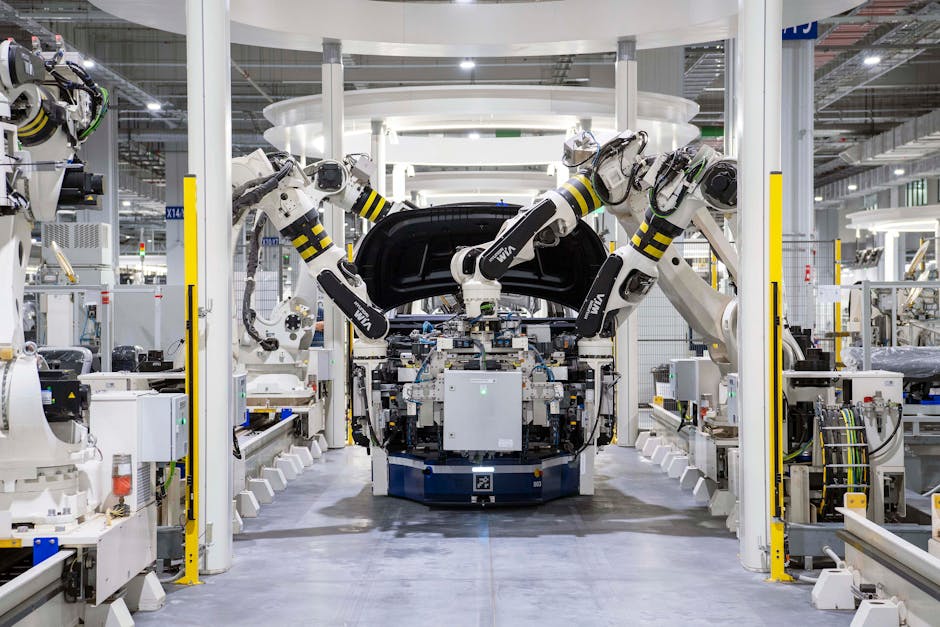
Why Cobot-PLC Integration Is the Hottest Topic in Industrial Automation Right Now
To be clear upfront — a collaborative robot (cobot) is a robot designed to work safely alongside humans without traditional safety cages. Think Universal Robots (UR), FANUC CRX series, or ABB’s GoFa. A PLC (Programmable Logic Controller) is the battle-hardened industrial brain that’s been controlling conveyors, presses, and pneumatic systems for decades. They’re not naturally the same language.
According to the International Federation of Robotics (IFR) 2026 World Robotics Report, cobot shipments grew 28% year-over-year in 2025, with projections suggesting cobots will account for over 40% of all new industrial robot installations by the end of 2026. Meanwhile, over 70% of existing manufacturing facilities still rely on legacy PLC systems — many of them 10 to 20 years old. That gap is where the real engineering drama lives.
The Core Technical Challenge: Protocol Mismatch and Real-Time Communication
Here’s the thing most sales brochures won’t tell you: cobots and PLCs often speak fundamentally different industrial protocols. Most modern cobots support EtherNet/IP, PROFINET, Modbus TCP, or OPC UA. Older PLCs — especially anything pre-2015 — may only natively support PROFIBUS DP, DeviceNet, or serial RS-485.
The fix? Usually a protocol gateway or fieldbus converter like those from Anybus (HMS Networks) or Hilscher’s netX chips. But here’s where my Busan friend’s problem came from — gateways introduce latency. In a typical cobot-PLC handshake, you need cycle times under 10ms for smooth motion coordination. A poorly configured gateway can balloon that to 30–50ms, causing the safety controller to flag it as a fault. It’s not a hardware failure; it’s a timing problem — and debugging it is genuinely painful.
- EtherNet/IP: Preferred by Allen-Bradley (Rockwell) PLCs; most UR cobots support it natively via an add-on module
- PROFINET: Siemens TIA Portal ecosystem; supported by KUKA, ABB, and FANUC cobots with configuration
- Modbus TCP: Lowest common denominator — simple but limited in real-time performance; cycle times often 20ms+
- OPC UA: The emerging standard for Industry 4.0 architectures; excellent for data logging and SCADA integration but adds overhead
- Safety over EtherNet/IP (CIP Safety): Critical for cobot-PLC safety interlock communication in 2026 setups
2026 Industry Trends: What’s Actually Changing on the Ground
There are three major shifts I’m seeing play out right now across Korean, German, and North American manufacturing facilities:
1. PLC Vendors Are Embracing Cobot-Native Interfaces. Siemens now offers a dedicated “Robot Library for TIA Portal” that includes pre-built function blocks for UR, KUKA, and Yaskawa HC10 cobots. Rockwell’s Studio 5000 Logix Designer v36 (released late 2025) includes a cobot-specific Add-On Instruction (AOI) library. This is a big deal — it means engineers don’t need to write raw socket communication code anymore.
2. Edge Computing as the Middle Layer. Rather than forcing a direct PLC-to-cobot connection, many smart integrators are inserting an edge computing node — think a Beckhoff CX series IPC or an NVIDIA Jetson-based system — between the PLC and the cobot. The edge node handles protocol translation, safety logic, and even basic AI-driven quality inspection via camera. This architecture is increasingly standard in Korean smart factory (스마트공장) deployments under the KSMC (Korea Smart Manufacturing Center) initiative.
3. Safety System Unification. The old model was: PLC handles machine safety, cobot handles collaborative safety independently. The 2026 trend is unified safety architectures — a single safety PLC (like Pilz PNOZmulti 2 or Sick Flexi Soft) managing both the cobot’s ISO/TS 15066 speed-and-separation monitoring AND the machine’s functional safety requirements per IEC 62061. This simplifies CE/KCS certification considerably.
Real-World Case Studies Worth Studying
Hyundai Mobis (Korea): In their Asan plant, they integrated UR10e cobots with a Siemens S7-1500 PLC using PROFINET and TIA Portal’s robot library. The key lesson? They spent more engineering hours on the safety zone mapping (defining collaborative vs. industrial speed zones) than on the actual communication setup. Their cycle time improved by 34% for door panel sub-assembly.
BMW Group (Germany): BMW’s Leipzig plant published a case study in early 2026 showing how they use KUKA iiwa cobots integrated with Beckhoff TwinCAT 3 PLCs via ADS (Automation Device Specification) protocol. The twist: they run the cobot motion planning partially on the Beckhoff IPC, reducing the cobot controller’s load and achieving sub-4ms cycle synchronization.
Teradyne / Universal Robots Ecosystem: UR’s URCaps platform continues to be a reference for software-side integration. In 2026, the UR+ certified ecosystem lists over 300 compatible peripherals and software plugins, including direct PLCopen-compliant motion interfaces. For Rockwell PLC users, the UR Ethernet/IP Driver URCap is the go-to starting point — it maps cobot joint states and I/O directly to PLC tags.
For those wanting to go deeper, the ODVA (Open DeviceNet Vendors Association) website at odva.org has excellent technical resources on CIP Motion and CIP Safety standards, which underpin most of the EtherNet/IP cobot integrations happening right now.
Practical Debugging War Story: The Ghost E-Stop
Let me share something from a project I consulted on last year — a food packaging line in Gyeonggi-do. They had a UR5e cobot integrated with a Mitsubishi MELSEC iQ-R PLC via Modbus TCP. Every 45–60 minutes, the cobot would randomly trigger an E-stop with no clear fault code. Logs showed a communication timeout.
After three days of head-scratching, we found it: the Mitsubishi PLC’s Ethernet port was sharing bandwidth with a barcode scanner system on a flat network. Every time a batch scan happened, it caused a 22ms network spike — just enough to exceed the Modbus timeout threshold on the cobot controller. Solution: dedicated VLAN for cobot communication + Modbus timeout extended from 20ms to 35ms. Problem solved. The lesson? Always isolate cobot control traffic on its own network segment. Always.
What to Actually Do If You’re Planning a Cobot-PLC Integration in 2026
- Audit your existing PLC first: Identify firmware version, available communication ports, and supported protocols before selecting a cobot
- Prefer OPC UA or PROFINET/EtherNet/IP over Modbus TCP for any application requiring real-time synchronization
- Use vendor-certified integration modules (UR URCaps, FANUC iRProgrammer plugins) rather than custom socket code where possible
- Plan your safety architecture first — define collaborative zones, speed limits, and interlock logic before wiring anything
- Consider a dedicated safety PLC (Pilz, Sick, or Keyence) if you’re mixing cobot safety with complex machine safety
- Isolate cobot network traffic on a dedicated VLAN or physical switch — this alone prevents 60% of communication-related faults
- Budget for commissioning time: A realistic cobot-PLC integration typically takes 2–4x longer than the vendor demo suggests
The Bigger Picture: Where Is This All Going?
Looking ahead through 2026 and into 2027, the direction is clear: the distinction between “cobot controller” and “PLC” is blurring. We’re seeing PLC vendors like Beckhoff and B&R (now part of ABB) position their controllers as capable of running cobot kinematics natively — essentially making the cobot vendor’s controller optional. Meanwhile, cobot makers are adding more PLC-like ladder logic and function block capabilities to their teach pendants.
The endpoint is likely a unified motion + logic controller platform — something the industry is calling the “Software-Defined Automation Controller”. Several Korean system integrators (SIs) working under the K-Digital Twin initiative are already prototyping these architectures with promising results.
If you’re a manufacturing engineer, automation integrator, or OEM trying to navigate this space — the most valuable skill you can build right now isn’t knowing one specific PLC or cobot brand. It’s understanding industrial communication protocols deeply and being able to design reliable, low-latency network architectures. That’s the skill that’ll keep you relevant regardless of which vendor wins the next platform war.
Editor’s Comment : The cobot-PLC integration challenge is genuinely hard, but it’s a solvable engineering problem — not a fundamental incompatibility. The engineers who thrive in 2026’s automation landscape are the ones who treat it as a systems integration challenge rather than a product selection exercise. Start with your protocol stack, nail your network architecture, and the rest falls into place. And if your cobot keeps throwing ghost E-stops at 3 AM, check your VLAN first. Trust me on this one.
📚 관련된 다른 글도 읽어 보세요
- TypeScript 풀스택 개발 실전 가이드 2026: 프론트부터 백엔드까지 한 번에 정복하는 법
- Industrial IoT & PLC Integration: A Practicing Engineer’s Guide to Building Smart Automation in 2026
- 풀스택 프레임워크 트렌드 2026: 지금 배워야 할 기술 스택은 무엇인가?
태그: collaborative robot PLC integration, cobot automation 2026, industrial robot PROFINET EtherNet/IP, smart factory automation, cobot safety PLC, OPC UA industrial automation, Industry 4.0 cobot integration
Leave a Reply