A few months back, I was sitting in a control room in Houston with a senior automation engineer named Marcus — 28 years in the field, grease under his fingernails, coffee in his hand — and he said something that stuck with me: “Choosing between Siemens and Allen-Bradley is like choosing between a BMW and a Chevy Silverado. Both get you there. But where you’re going matters a whole lot.” He’d just spent six weeks debugging a Siemens S7-1500 integration on a refinery expansion project, and his client was now asking him why they hadn’t gone with Rockwell’s ControlLogix instead. That conversation kicked off a rabbit hole of research, hands-on testing, and conversations with engineers across three continents — and what came out the other side is what you’re about to read.
Whether you’re commissioning a new line, retrofitting legacy infrastructure, or just trying to make a defensible recommendation to your management team in 2026, this comparison is designed to give you real, field-tested perspective — not marketing brochure fluff.
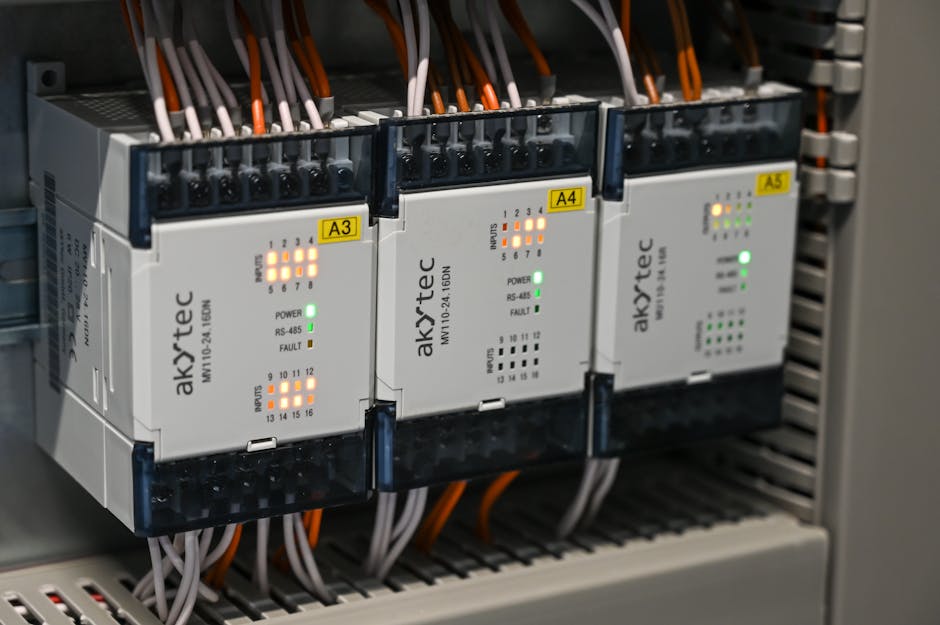
🔧 Architecture & Hardware Overview: What You’re Actually Working With
Let’s start with the hardware bones, because everything else — programming, networking, cost — flows downstream from here.
Siemens SIMATIC S7 Series (2026 lineup) centers around the S7-1200 for compact applications and the flagship S7-1500 for high-performance tasks. The S7-1500 in particular has been aggressively updated — the latest CPU 1518F-4 PN/DP pushes 1ms cycle times at 2,048 I/O points and integrates native PROFINET IRT (Isochronous Real-Time) right out of the box. Siemens has also been doubling down on its TIA Portal V19 (released late 2025), which now includes AI-assisted ladder logic validation — a genuinely useful feature I’ve actually used to catch latent timing errors before commissioning.
Rockwell Automation’s Allen-Bradley ControlLogix 5580 remains the North American industry standard for mid-to-large scale applications. The 5580 series processors clock in with up to 40MB of user memory and native EtherNet/IP with Device Level Ring (DLR) topology support. For smaller footprints, the CompactLogix 5380 is an absolute workhorse — I’ve seen these deployed in food & beverage lines running 24/7 for four years without a single unplanned stop.
📊 Technical Specification Comparison: Side-by-Side Numbers
- CPU Performance: Siemens S7-1518F — 1ms scan time at full load; Allen-Bradley ControlLogix 5585 — sub-1ms with optimized tasks
- Memory: S7-1500 up to 4MB work memory (code+data); ControlLogix 5585 up to 40MB user memory — AB wins significantly here for complex programs
- Communication Protocols: Siemens native = PROFINET, PROFIBUS, OPC-UA; Allen-Bradley native = EtherNet/IP, DeviceNet, ControlNet
- Programming Software: Siemens uses TIA Portal V19 (unified, subscription-based licensing); Allen-Bradley uses Studio 5000 Logix Designer v35 (also subscription in 2026)
- Redundancy: Both offer hot-standby CPU redundancy — Siemens H-System; AB GuardLogix/redundant ControlLogix chassis
- Safety Integration: Siemens F-CPU (failsafe); Allen-Bradley GuardLogix — both IEC 61508 SIL 3 certified
- Typical Hardware Cost (mid-range system, 2026 pricing): Siemens S7-1515 starter kit ~$4,200 USD; AB CompactLogix 5380 comparable system ~$3,800–$4,500 USD
- Software Licensing: TIA Portal Engineering ~$3,100/yr per seat; Studio 5000 ~$2,800/yr per seat (competitive in 2026)
🌐 Programming Environment: Where Engineers Spend Most of Their Time
Here’s where opinions get heated fast. I’ll be honest with you.
TIA Portal is a genuinely impressive unified environment — you configure your HMI (SIMATIC panels), drives (SINAMICS), and PLC all from one software package. The integration is smooth. But the learning curve? Brutal for engineers coming from a North American background. The data block (DB) architecture, global/local variable management, and Siemens’ OB (Organization Block) structure all have a logic that rewards patience. Once it clicks, it’s elegant. Before it clicks, it’s maddening. I’ve watched experienced engineers sit in front of a TIA Portal screen for two hours trying to figure out why their PROFINET device wasn’t updating — turned out to be a hardware identifier conflict in the device table. A five-minute fix once you know, an invisible wall until you do.
Studio 5000 Logix Designer, on the other hand, feels more immediately intuitive for engineers trained in North American facilities. The tag-based architecture (every I/O point gets a meaningful name, not a memory address) reduces wiring documentation errors significantly. Allen-Bradley’s Produced/Consumed Tags feature — where one PLC can literally publish data that another PLC subscribes to over EtherNet/IP — is something I wish Siemens would match more elegantly. It makes distributed architectures genuinely cleaner.
The real war in 2026, though, is being fought at the IIoT and edge integration layer. Siemens has MindSphere (now rebranded under the Siemens Xcelerator platform) and native OPC-UA server capability baked into S7-1500 CPUs. Rockwell counters with FactoryTalk Optix and their partnership with PTC ThingWorx. Both are capable. Siemens has the edge in pure OPC-UA native implementation; Rockwell has a slight edge in North American SCADA ecosystem compatibility.
🔍 Real-World Case Studies: Who’s Using What and Why
Let’s ground this in actual deployments, because spec sheets only tell part of the story.
Automotive (Germany, 2025–2026): BMW’s Leipzig plant expansion, documented in Automationspraxis trade journal (Jan 2026), deployed over 2,400 Siemens S7-1500 PLCs integrated via PROFINET with KUKA robotic cells. The rationale was ecosystem consistency — Siemens drives, Siemens safety, single vendor support contract. Integration time was reportedly 15% faster than a comparable mixed-vendor deployment from a previous plant expansion.
Food & Beverage (USA, 2025): A major North American dairy cooperative (reported by Control Engineering magazine, October 2025) standardized on Allen-Bradley CompactLogix 5380 across 14 processing facilities after a 3-year pilot. Key driver: their existing maintenance staff was AB-trained, and Rockwell’s ProSupport remote diagnostics reduced mean-time-to-repair (MTTR) by 31% compared to their previous mixed-PLC environment. Total cost of ownership over 7 years favored AB by approximately 12%.
Water/Wastewater (South Korea, 2026): K-water’s treatment facility upgrades in Gyeonggi Province (reported by the Korean Society of Water and Wastewater, February 2026) split the deployment — Siemens S7-1200 for remote outstations (due to smaller footprint and native PROFIBUS for legacy sensor compatibility) and Allen-Bradley ControlLogix for the main control room. This hybrid approach is increasingly common in large infrastructure projects where no single vendor perfectly dominates.
💰 Total Cost of Ownership: The Number That Actually Matters
Raw hardware cost is almost a red herring. The real money is in engineering hours, spare parts logistics, training, and support contracts.
In North America, Allen-Bradley’s distributor network (Rockwell has over 1,200 authorized distributors in the US alone as of Q1 2026) means spare parts arrive faster and local technical support is more accessible. This matters enormously in an emergency shutdown scenario at 2 AM.
In Europe and Asia, Siemens’ service infrastructure is unmatched. Their TIA Portal remote access tools, combined with the Siemens Customer Support Portal, provide genuinely useful remote diagnostics. I’ve personally used their online fault analysis tool to identify a CPU firmware compatibility issue with a third-party encoder — resolved in 45 minutes, remote, no site visit required.
Training costs also differ: Allen-Bradley Authorized Training centers are more prevalent in the Americas; Siemens’ SITRAIN program dominates Europe. Budget approximately $1,500–$2,500 USD per engineer per week for formal PLC training on either platform in 2026.
⚖️ So Which One Should You Choose? A Realistic Framework
Rather than declare a winner (there isn’t one, honestly), here’s how to think about it:
- Choose Siemens if: You’re in Europe or Asia, your process uses PROFINET/PROFIBUS infrastructure heavily, you need tight Siemens drive/motor integration, or you’re deploying OPC-UA native at scale for IIoT
- Choose Allen-Bradley if: You’re in North America, your maintenance team is AB-trained, you need EtherNet/IP ecosystem compatibility, or your facility uses Rockwell’s broader FactoryTalk software suite
- Consider a hybrid approach if: You’re running a multi-site global operation — standardize on one for SCADA/MES integration, allow flexibility at the field device level
- For small/medium standalone machines: Siemens S7-1200 often wins on cost and compactness; AB CompactLogix wins on programming intuitiveness for North American OEMs
- For safety-critical systems (SIL 2/3): Both platforms are mature and certified — your integrator’s experience with the specific platform matters more than the platform itself
One underrated factor in 2026: cybersecurity. Both vendors have significantly hardened their platforms following the IEC 62443 industrial security standard uptake. Siemens’ S7-1500 now includes integrated TLS 1.3 encryption for OPC-UA communications; Rockwell has implemented similar measures in their latest ControlLogix firmware (v35.011). Neither platform has a meaningful security advantage right now — your network segmentation architecture matters far more than PLC firmware features.
Editor’s Comment : After years of watching engineers fight religious wars over Siemens vs. Allen-Bradley, the most productive thing I can tell you is this — the “best” PLC is the one your best engineer can maintain at 3 AM without calling anyone. Standardize around your team’s expertise, your regional support infrastructure, and your existing installed base. In 2026, both platforms are genuinely excellent pieces of engineering. The competitive gap has narrowed significantly over the last five years. Your integration strategy, your commissioning discipline, and your maintenance culture will determine ROI far more than which logo is on the CPU. Choose deliberately, document obsessively, and train continuously.
📚 관련된 다른 글도 읽어 보세요
- 현장 엔지니어가 직접 쓴 지멘스 vs 앨런브래들리 PLC 비교 분석 2026: 어디서도 안 알려주는 진짜 차이
- 스마트팩토리 PLC 연동 IIoT 구축 사례 완전 정리 | 2026년 제조업 디지털 전환 실전 가이드
- 지멘스 vs 앨런브래들리 PLC 비교 리뷰 2026 – 현장 엔지니어가 알아야 할 진짜 차이점
태그: Siemens vs Allen-Bradley PLC, SIMATIC S7-1500 review, ControlLogix 5580 comparison, industrial automation 2026, PLC selection guide, TIA Portal vs Studio 5000, IEC 62443 PLC security
Leave a Reply