A friend of mine — mid-30s, desk job, zero martial arts background — came back from his first Brazilian Jiu Jitsu class looking like he’d survived a minor car accident. Not injured, just absolutely humbled. He said, ‘I couldn’t move anyone, but three different white belts made me feel like a pretzel.’ He almost didn’t go back. Three months later, he’s obsessed. That gap between Day 1 and Day 30 is exactly what nobody warns you about, and that’s the whole reason I wanted to dig into this properly.
If you’ve been circling the idea of starting Jiu Jitsu — maybe you’ve watched some competition footage, maybe a coworker won’t stop talking about it — this is the realistic breakdown you probably wish existed before you walked through that gym door.
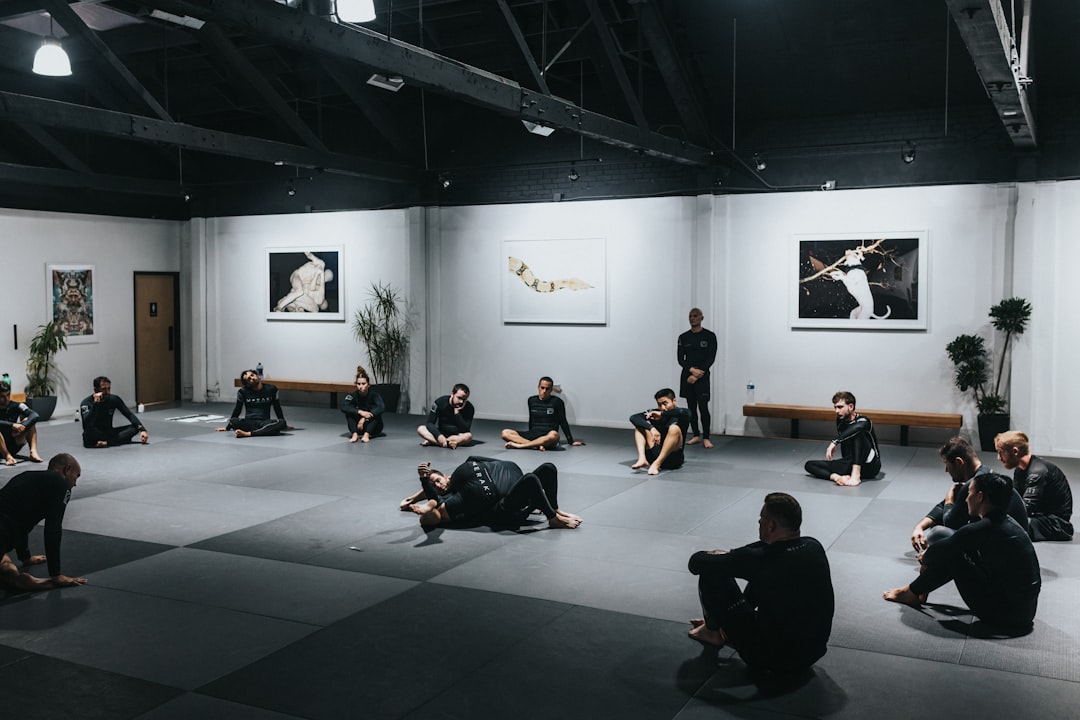
What Actually Happens in Your First Month (And Why It Feels Impossible)
Here’s the honest math: the average BJJ beginner gets submitted somewhere between 15 and 40 times in their first month of rolling (live sparring). That number isn’t exaggerated — it’s almost a rite of passage. The reason isn’t that you’re bad at fighting. It’s that Jiu Jitsu is essentially a physical language, and on Day 1 you have a vocabulary of about three words while your training partner is reading novels.
The technical term for what you’re experiencing is cognitive overload during kinesthetic learning. Your brain is simultaneously trying to remember technique sequences, manage unfamiliar physical contact, control breathing, and survive. Research from sports science programs studying combat sport novices consistently shows that retention of technique drops below 30% when ego-threat (i.e., being tapped repeatedly) is high. In plain English: you’re too stressed to learn efficiently at first, and that’s completely normal.
What experienced coaches call the ’60-class threshold’ is real. Most students who hit 60 attended classes start to feel the gears click — positional awareness improves, panic during bad positions decreases, and muscle memory starts carrying some of the cognitive load. The timeline varies, but 60 classes typically spans 4–6 months at a rate of 3 classes per week.
Choosing the Right Gym: What the Price Tag Actually Tells You
Monthly membership costs for BJJ schools in the US in 2025 typically range from $100 to $220/month for unlimited classes at legitimate academies. Here’s how to decode what you’re paying for:
- Under $80/month: Usually a community rec center or a school where BJJ is one of many offerings. Instruction quality varies wildly. Good for casual exploration, not serious development.
- $100–$150/month: Mid-tier dedicated BJJ academies. Often affiliated with a regional association. Coaching is generally solid, but class sizes may be large (20–30 students).
- $160–$220/month: Schools affiliated with major lineages (Gracie Barra, Alliance, Checkmat, Atos). Structured curriculum, smaller classes, often multiple black belts on staff. Worth it if you’re committed.
- Over $220/month: Elite competition academies or schools with world-champion coaches. Justified only if competitive aspirations are serious.
One thing that doesn’t show up in the price: the culture. A $180/month academy with toxic ‘gym bully’ upper belts will set your progress back more than a $120/month school with a genuinely supportive community. Always do a trial class — most legitimate schools offer one free — and pay attention to how blue and purple belts treat new white belts during rolling.
Gi vs. No-Gi: The Decision That Shapes Your Game
This is the first real fork in the road for beginners, and it matters more than most people realize. Gi (pronounced ‘ghee’) training uses the traditional kimono-style uniform; No-Gi uses shorts and a rash guard. They develop somewhat different skill sets:
- Gi BJJ emphasizes grips on clothing, slower and more methodical control, and a wider range of collar chokes and lapel techniques. It tends to be more forgiving for beginners because the friction of the fabric slows things down.
- No-Gi BJJ is faster, more wrestling-influenced, and directly applicable to MMA. Submissions lean toward leg locks and body triangles. Increasingly popular since the rise of submission-only formats like ADCC.
- Hybrid training (both Gi and No-Gi) is what most reputable academies now recommend for beginners in 2025, typically starting Gi-heavy and adding No-Gi after 3–6 months.
The gear investment reflects this: a starter Gi runs $60–$120 (brands like Tatami, Scramble, and Sanabul all make solid entry-level options), while No-Gi requires only compression shorts and a rash guard, usually $40–$80 for a basic set. Don’t buy competition-grade gear in your first three months — you’ll likely want to change your setup once you understand your preferences.
The Physical Reality: What Your Body Goes Through
Let’s be straightforward about the physical adaptation curve. In the first 4–8 weeks, most beginners experience:
- Grip fatigue: Your forearms will be sore in ways you didn’t know were possible. Gi gripping is brutally demanding on tendons. This typically normalizes by week 6–8.
- Mat burns: Superficial abrasions on knees, feet, and elbows from friction with the mat. Rash guards and spats (compression leggings) reduce this significantly.
- ‘Jiu Jitsu neck’: A general stiffness from being in awkward positions. Not an injury — just muscular adaptation. Proper warm-up and post-class stretching cuts this by roughly half.
- Unexpected cardiovascular demands: Even fit people from running or cycling backgrounds are frequently surprised. BJJ uses muscles in patterns that general cardio doesn’t prepare you for.
Injury rates in BJJ are a legitimate consideration. A 2022 study published in the British Journal of Sports Medicine found that the most common training injuries in BJJ involved the knee (roughly 36% of reported injuries), shoulder (22%), and foot/ankle (18%). The majority occurred during live rolling rather than drilling. The practical takeaway: for your first 60–90 days, it’s entirely reasonable to ask training partners to ‘go lighter’ and tap early rather than trying to escape every submission. Nobody worth training with will judge you for this.
Real Academies, Real Progression Systems Worth Knowing
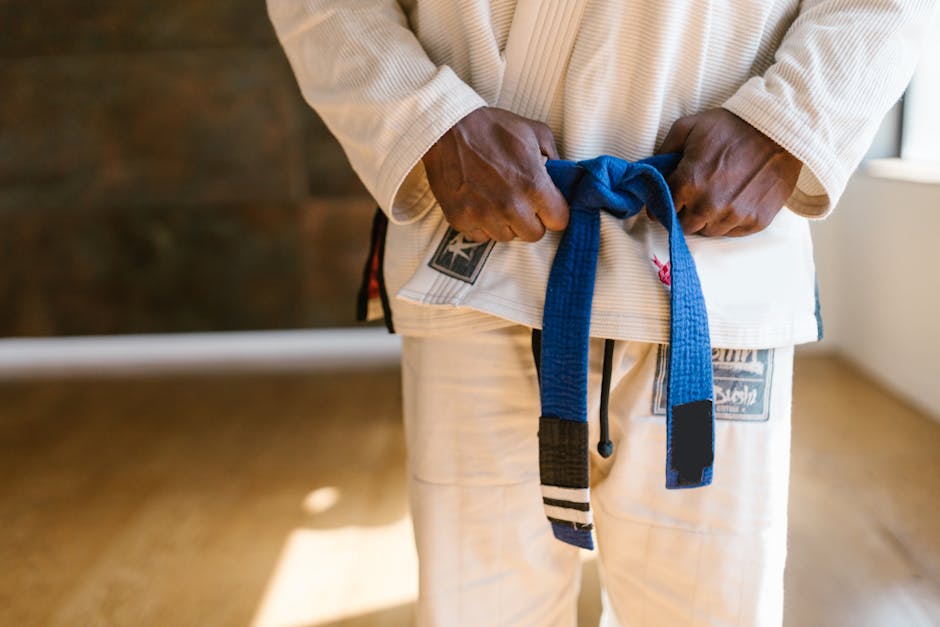
The BJJ belt system — white, blue, purple, brown, black — is famously slow by martial arts standards. The International Brazilian Jiu-Jitsu Federation (IBJJF) sets minimum time requirements between ranks: for adults, a minimum of 2 years at white belt before blue, and 1.5 years each at blue and purple. Most students realistically spend 2–3 years at white belt and another 3–4 at blue. A typical black belt timeline is 8–12 years of consistent training.
Major academy networks worth researching if you’re evaluating schools in your area:
- Gracie Barra — Largest BJJ network globally, standardized curriculum, good for travelers who want consistent training across cities.
- Alliance BJJ — Strong competition pedigree, produced multiple world champions including Marcelo Garcia.
- 10th Planet Jiu Jitsu — Eddie Bravo’s No-Gi only system, heterodox techniques, excellent if you have no interest in Gi training.
- Local independent schools — Often the best value and culture, especially if the head instructor has a traceable lineage and students who’ve competed successfully.
If Jiu Jitsu Isn’t Quite Right for You — Realistic Alternatives
Not every person thrives in high-contact rolling environments, and that’s genuinely fine. If the full grappling immersion feels like too much friction upfront, consider:
- Wrestling fundamentals classes — Offered at many community colleges and gyms, lower intensity than competitive BJJ, great base if you eventually want to transition.
- Submission wrestling or catch wrestling — Similar ground game without the Gi, often smaller communities with more individualized attention.
- Online supplementary learning first — Platforms like Bernardo Faria’s BJJ Fanatics or the Gordon Ryan instructional series let you build conceptual vocabulary before your first class, which meaningfully reduces first-session overwhelm.
One last thought worth sitting with: the single biggest predictor of whether someone sticks with Jiu Jitsu past the first three months isn’t athleticism, flexibility, or prior martial arts experience — it’s whether they found one or two training partners they genuinely enjoy showing up for. The technique comes with time. The community is what actually keeps you on the mat. When you walk into that trial class, pay as much attention to the people as to the instruction.
📚 관련된 다른 글도 읽어 보세요
- 어릴 때 이것 키워주지 않으면 후회해도 소용없어요 — 2026년 기준 수학 사고력, 지금 시작 안 하면 진짜 늦습니다
- Why My ‘Safe’ Crypto Strategy Backfired — Real Lessons from Staking & Yield Farming in 2025
- 전기차 충전 요금 폭탄 맞기 전에 읽어야 할 글 — 2026년 기준 실제 비용 총정리
태그: brazilian jiu jitsu beginner guide, BJJ for adults, how to start jiu jitsu, BJJ gym selection, gi vs no-gi jiu jitsu, jiu jitsu belt progression, martial arts for beginners
Leave a Reply