Picture this: a massive offshore oil platform off the coast of Norway, thousands of miles from the nearest maintenance crew. In 2026, instead of sending a team of engineers on a hazardous journey to diagnose a mysterious pressure anomaly in a pipeline, operators simply pull up a real-time 3D digital replica of the entire platform on their screens — sensor readings, fluid dynamics, thermal stress models, all live. They identify the fault, simulate a fix, and dispatch a precise solution. No guesswork. No unnecessary downtime. That’s the power of digital twins in industrial control systems, and it’s no longer science fiction — it’s happening right now, at scale.
If you’ve been tracking Industry 4.0 conversations, you’ve probably heard “digital twin” tossed around like a buzzword. But let’s dig into what it actually means for industrial control systems (ICS), why 2026 is a genuinely pivotal year for adoption, and how real companies are making this technology work in practice.
So What Exactly Is a Digital Twin in an Industrial Context?
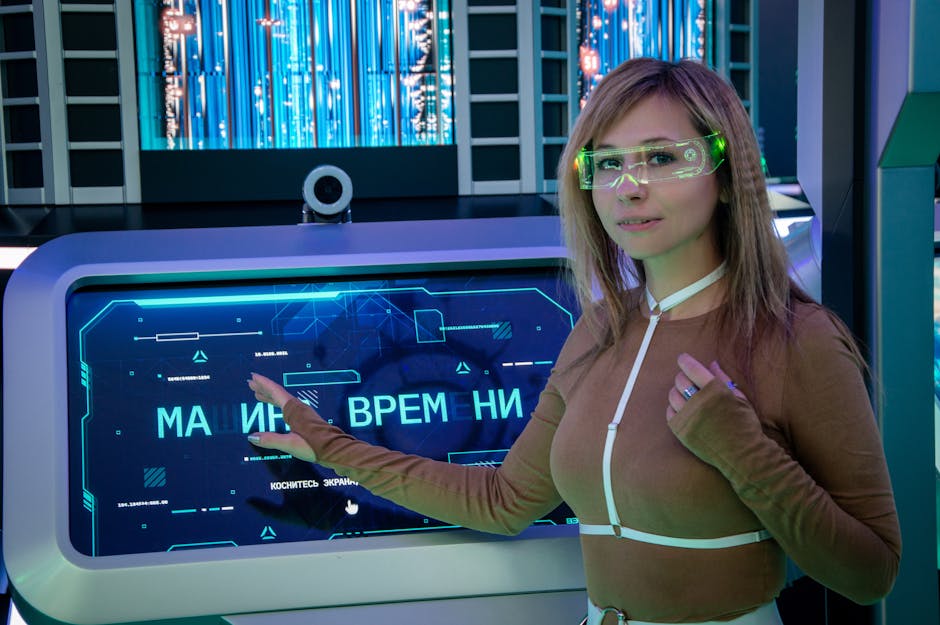
At its core, a digital twin is a dynamic virtual model of a physical system — continuously synchronized with real-world data via sensors, IoT devices, and communication protocols. In the context of industrial control systems, this means creating a living simulation of everything from a single pump or valve to an entire manufacturing plant’s SCADA (Supervisory Control and Data Acquisition) network.
The key distinction from a regular simulation? A digital twin isn’t a static model you run once. It updates in real time. It learns. And critically, it feeds back into the control loop — meaning decisions made in the virtual world can be tested, validated, and then applied to the physical system with a dramatically reduced margin for error.
The 2026 Landscape: Where Adoption Actually Stands
Let’s talk numbers, because the growth trajectory here is genuinely staggering. According to MarketsandMarkets’ 2026 industrial IoT outlook, the global digital twin market is projected to reach $73.5 billion by the end of 2026, up from roughly $48 billion in 2024. The industrial manufacturing segment accounts for approximately 28% of that total — the largest single vertical.
More telling, though, is the adoption curve. A 2026 Gartner survey found that 62% of industrial enterprises with over 1,000 employees now operate at least one digital twin within their operational technology (OT) environment, compared to just 34% in 2022. The jump is dramatic, and it’s being driven by a few converging factors:
- Edge computing maturity: The infrastructure needed to process real-time sensor data locally (not just in the cloud) has finally caught up with demand, reducing latency issues that plagued early deployments.
- AI integration: Machine learning models embedded within digital twins can now predict equipment failure with accuracy rates exceeding 91% in controlled industrial environments (Siemens internal benchmark, Q1 2026).
- Standardization progress: The IEC 63278 Asset Administration Shell standard, widely adopted by 2026, has made it far easier for different vendors’ systems to share twin data — solving the infamous interoperability headache.
- Cybersecurity frameworks: NIST’s updated OT security guidelines (revised in 2025) specifically address digital twin environments, giving risk-averse industries like energy and chemicals the regulatory confidence to invest.
- Cost democratization: Cloud-native twin platforms from AWS (IoT TwinMaker), Microsoft (Azure Digital Twins), and Siemens (Xcelerator) have brought entry costs down significantly, making mid-sized manufacturers viable adopters.
How Digital Twins Actually Interface with Industrial Control Systems
Here’s where it gets technically interesting — and where a lot of introductory articles gloss over the good stuff. Industrial control systems operate in a layered architecture. You’ve got your field devices at the bottom (sensors, actuators, PLCs — Programmable Logic Controllers), then SCADA or DCS (Distributed Control Systems) in the middle, and MES/ERP systems at the top. Digital twins can and do operate at every one of these layers, but the integration approach matters enormously.
At the PLC/field device level, digital twins enable what engineers call shadow mode operation — the twin runs parallel to the real controller, ingesting the same inputs and predicting what the output should be. Deviations between predicted and actual outputs are early warning signals for drift, wear, or malfunction. This is particularly valuable in chemical processing plants where a valve behaving 3% differently than expected can cascade into a serious safety incident.
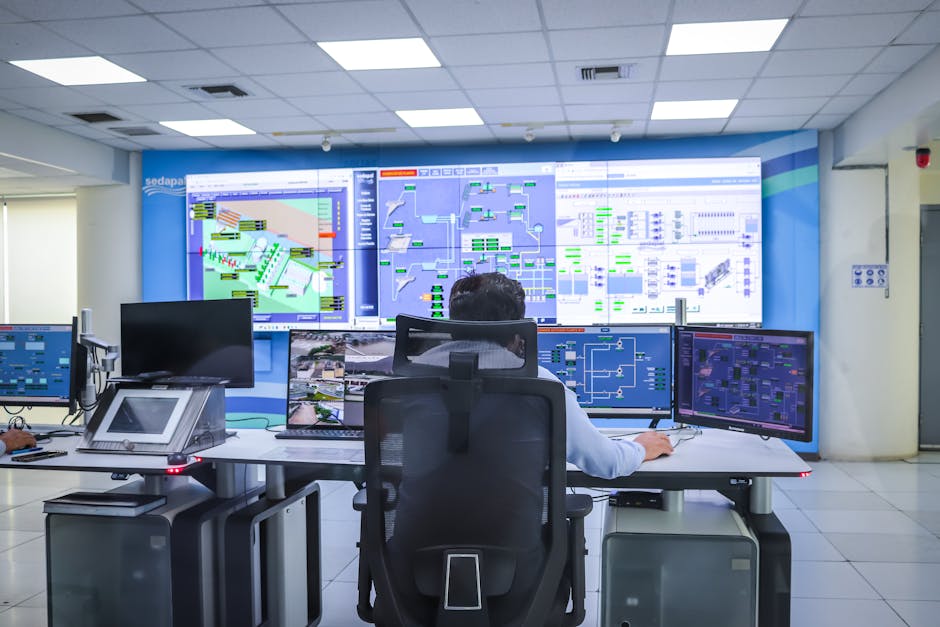
At the SCADA level, twins enable operators to run “what-if” scenarios without touching the live system. Want to know what happens to your grid substation if Transformer B goes offline during peak load in July? Run it in the twin first. This kind of risk-free experimentation was essentially impossible before without building expensive physical test rigs.
Real-World Examples: From Seoul to Stuttgart to Singapore
Let’s ground this in actual deployments, because theory only takes us so far.
Hyundai Heavy Industries, South Korea (2025-2026): Hyundai’s Ulsan shipyard — one of the largest in the world — has been rolling out a comprehensive digital twin of its entire production workflow, including robotic welding stations and overhead crane systems. By integrating twin data with their MES, they’ve reported a 19% reduction in unplanned downtime and a 12% improvement in throughput scheduling accuracy as of early 2026. The twin also serves as a training environment for new operators, who can practice emergency shutdown procedures in a fully simulated version of the real facility.
BASF, Germany: The chemical giant’s Ludwigshafen complex — the world’s largest integrated chemical site — began using digital twins for reactor simulation back in 2022, but their 2026 implementation is qualitatively different. They now run twins for over 200 individual process units, with AI-driven optimization recommendations pushed directly to DCS operators. The system reportedly identifies energy savings opportunities in real time, contributing to a measurable reduction in per-unit carbon intensity — important given the EU’s tightening industrial emissions targets.
Sembcorp Industries, Singapore: Operating in the energy and utilities space, Sembcorp deployed a digital twin of their Sakra Island industrial utilities network in late 2024. By 2026, the twin is being used to optimize steam and power distribution across dozens of industrial tenants in real time, balancing load with a sophistication that manual operators simply couldn’t match. They’ve publicly cited a 7% reduction in overall energy waste across the network.
The Honest Challenges — Because Nothing Is This Clean in Practice
Let’s be real for a moment. If digital twins were plug-and-play miracles, every factory would have had one years ago. The persistent challenges in 2026 are worth naming clearly:
- Data quality and sensor density: A digital twin is only as good as the data feeding it. Older facilities with legacy equipment often lack the sensor coverage needed for meaningful twin fidelity. Retrofitting sensors is expensive and operationally disruptive.
- Model accuracy decay: Physical systems change over time — equipment wears, processes evolve. Keeping the twin calibrated to reality requires ongoing engineering effort that’s often underestimated in initial project scopes.
- OT/IT convergence security risks: Connecting operational technology to the broader data infrastructure needed for twins expands the attack surface. The 2025 Triton-variant malware incident in a Gulf petrochemical facility was a sobering reminder that ICS cybersecurity isn’t solved.
- Organizational change management: Operators who’ve worked with traditional SCADA interfaces for 20 years don’t automatically trust or know how to use twin-based recommendations. Training and cultural buy-in remain genuine obstacles.
Realistic Alternatives for Different Organizational Situations
Not every company is in a position to deploy a comprehensive digital twin ecosystem tomorrow, and that’s completely fine. Here’s how I’d think about it depending on where you are:
If you’re a mid-sized manufacturer with limited budget: Start with a “component twin” rather than a full facility twin. Pick your highest-criticality single asset — the compressor that shuts down your whole line when it fails — and build a predictive maintenance twin around just that. The ROI is faster and easier to demonstrate to leadership. Platforms like PTC ThingWorx or Aveva’s asset-level tools are designed for exactly this entry point.
If you’re in a highly regulated industry (pharma, nuclear, aerospace): Focus on using twins as validation and testing environments first, before touching live control integration. Regulators are increasingly accepting twin-based testing as a complement to physical commissioning — use that to reduce your validation costs while building organizational confidence.
If you’re a large enterprise already mid-journey: The 2026 priority should be federation — connecting your siloed twins into a coherent enterprise-wide view. Individual asset twins that don’t talk to each other miss the biggest value opportunity, which is system-level optimization and cross-asset scenario planning.
The bottom line is that digital twin technology for industrial control systems in 2026 isn’t a future investment anymore — it’s a present-tense competitive differentiator. The organizations getting real value from it aren’t necessarily the ones with the most sophisticated technology; they’re the ones who’ve been thoughtful about implementation sequencing, data governance, and change management. The virtual and physical worlds of industrial operations are merging, and the question isn’t really whether to engage with that shift — it’s how to do it in a way that fits your actual situation.
Editor’s Comment : What genuinely excites me about digital twins in industrial control isn’t the flashy holographic interfaces you see in product demos — it’s the quieter revolution happening when a maintenance engineer in a control room somewhere in Ulsan or Rotterdam catches a fault three weeks before it becomes a catastrophe, just because a virtual model flagged an anomaly in a pressure reading at 2 AM. That’s technology earning its keep. If you’re evaluating this space for your organization, my honest advice: resist the urge to boil the ocean. Find one high-value problem, build a twin that solves it well, demonstrate the win, and let the momentum build from there.
📚 관련된 다른 글도 읽어 보세요
- 풀스택 프레임워크 추천 2026: 지금 당장 배워야 할 최강의 선택지 5가지
- 산업용 PLC 고장 진단부터 예방 유지보수까지 — 2026년 현장 실무 완전 가이드
- React 서버 컴포넌트 실무 적용 완전 가이드 2026 — 성능과 DX를 동시에 잡는 법
태그: [‘digital twin industrial control systems 2026’, ‘ICS digital twin technology’, ‘Industry 4.0 manufacturing automation’, ‘SCADA digital twin integration’, ‘predictive maintenance industrial IoT’, ‘smart factory OT technology’, ‘digital twin cybersecurity’]
Leave a Reply