Picture this: It’s 2019, and a mid-sized automotive parts manufacturer in Ohio is in the middle of a major line upgrade. Their engineering team is split right down the middle — half swear by Siemens S7 series, the other half won’t touch anything but Allen-Bradley ControlLogix. The debate gets so heated that the project manager eventually has to flip a coin. Sound familiar? If you’ve spent any time on a factory floor or in a controls engineering office, you’ve probably lived some version of this story.
Fast forward to 2026, and the Siemens vs. Allen-Bradley (Rockwell Automation) rivalry is still very much alive — but the landscape has shifted significantly. With the rise of IIoT (Industrial Internet of Things), edge computing integration, and increasingly stringent cybersecurity requirements, choosing the right PLC platform is no longer just about ladder logic and scan times. It’s a strategic decision that ripples across your entire operation for the next decade.
So let’s think through this together, carefully and honestly, because the “right” answer genuinely depends on your situation.
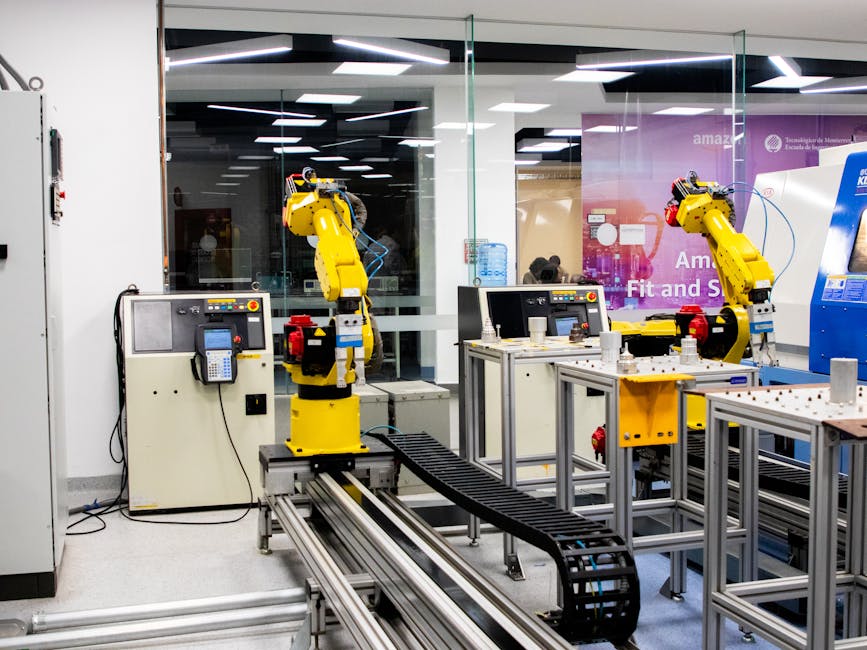
1. The Core Platforms: What Are We Actually Comparing?
Before diving into specs, let’s get clear on what we’re talking about. Both companies offer tiered product lines, so a fair comparison means aligning the right tiers.
- Siemens SIMATIC S7-1200 / S7-1500: The S7-1200 is Siemens’ compact workhorse for small-to-mid-scale applications, while the S7-1500 is their flagship for complex, high-speed, and safety-critical systems. As of 2026, the S7-1500 TM series now includes native OPC UA over TSN (Time-Sensitive Networking) support out of the box.
- Allen-Bradley MicroLogix / CompactLogix / ControlLogix: Rockwell’s lineup mirrors this structure. MicroLogix for small tasks, CompactLogix for mid-range, and ControlLogix for mission-critical applications. The 2026 ControlLogix 5580 series now ships with enhanced cybersecurity firmware (v35+) as a response to CISA industrial advisory updates.
2. Programming Environment: TIA Portal vs. Studio 5000
This is where opinions get really passionate. Let’s break it down objectively.
Siemens TIA Portal (v20, as of 2026): TIA Portal is genuinely impressive in terms of vertical integration. You can program your PLC, configure your HMI, set up your drives, and manage your network diagnostics — all within a single environment. The learning curve is steeper for those coming from a North American background, but the payoff in cross-platform consistency is real. Version 20 introduced AI-assisted function block suggestions, which has been a genuine productivity boost for experienced engineers.
Rockwell Studio 5000 Logix Designer (v36, as of 2026): Studio 5000 remains the gold standard for ladder logic clarity and tag-based programming. For North American engineers especially, it feels intuitive. The Add-On Instruction (AOI) library ecosystem is vast, and the integration with FactoryTalk View and FactoryTalk Optix for HMI/SCADA is tightly coupled. Version 36 added native digital twin linking with Emulate3D, which is a significant workflow upgrade.
Honestly? If your team is primarily North American-trained, Studio 5000 will get you to productivity faster. If you’re operating globally or integrating heavily with European supply chains and machinery, TIA Portal’s standardization advantage is hard to ignore.
3. Hardware Performance & Specifications (2026 Benchmarks)
Let’s look at some concrete numbers for the flagship models:
- Siemens S7-1516F (S7-1500 series): 10 ns bit instruction time, up to 5 MB work memory for program, integrated PROFINET IRT, safety-rated up to SIL 3 / PLe. Typical list price range: $1,800–$2,400 USD (CPU only, 2026 pricing).
- Allen-Bradley ControlLogix 5580 (1756-L85EP): 2 ns bit instruction time (impressive), 40 MB user memory, EtherNet/IP with DLR (Device Level Ring) topology support, safety integration via GuardLogix. Typical list price range: $2,200–$3,100 USD (CPU only, 2026 pricing).
The ControlLogix wins on raw processing speed for the CPU comparison, but Siemens closes the gap significantly at the system level when you factor in the lower cost of Siemens I/O modules and distributed ET 200 systems. A full panel build-out often ends up being 15–25% less expensive on the Siemens side, depending on I/O count and communication requirements.
4. Networking & IIoT Connectivity in 2026
This category has become arguably the most important differentiator as factories accelerate their Industry 4.0 journeys.
Siemens: PROFINET remains dominant in Europe and is gaining ground globally. The S7-1500’s native OPC UA server capability (no additional gateway needed) is a significant advantage for direct cloud connectivity. Siemens MindSphere cloud integration, now rebranded under the Siemens Xcelerator ecosystem, allows direct PLC-to-cloud data pipelines with minimal middleware.
Allen-Bradley: EtherNet/IP is the backbone, and in North America, it’s ubiquitous. Rockwell’s integration with PTC ThingWorx (a long-standing partnership) and their own FactoryTalk Analytics platform gives them a strong IIoT story. The 2026 addition of native MQTT broker support in the ControlLogix firmware was a genuinely smart move that closed a previous gap.
5. Real-World Examples: Who’s Using What in 2026?
Let’s ground this in reality with some representative cases.
BMW’s Leipzig Plant (Germany): Predominantly Siemens SIMATIC infrastructure, deeply integrated with their Digital Twin initiative via TIA Portal and Siemens NX. Their recent EV battery production line expansion in 2025–2026 doubled down on S7-1500 with PROFISAFE for collaborative robot cells. The consistency across their European facilities was a primary driver.
General Motors’ Spring Hill Assembly (Tennessee, USA): A classic Allen-Bradley shop. Their ControlLogix-based systems are tightly integrated with GM’s proprietary MES, and the North American service network — dense with certified Rockwell technicians — makes downtime management predictable. When a module fails at 2 AM, a replacement can often be sourced within hours domestically.
Samsung SDI Battery Manufacturing (South Korea & Hungary): Interestingly, a hybrid approach. Korean domestic lines lean Siemens (reflecting European partnership standards), while their Alabama and Indiana US facilities use Allen-Bradley to align with local workforce skills and supply chain. This is a growing trend in 2026 — multinational manufacturers maintaining platform diversity by region rather than standardizing globally.
6. Support, Ecosystem & Total Cost of Ownership
Hardware price is just the entry fee. Let’s think about the full picture:
- Technical Support: Rockwell’s TechConnect support program is well-regarded in North America, with strong 24/7 phone support. Siemens’ Industry Online Support portal is genuinely excellent for self-service, with an enormous knowledge base — but regional support responsiveness varies more widely outside Germany and key markets.
- Spare Parts Availability: In North America, Allen-Bradley wins on distribution density. Globally, Siemens has fewer geographic gaps. For facilities in Southeast Asia, South America, or Eastern Europe, Siemens often has the edge in parts availability.
- Training & Workforce: North American community colleges and trade schools heavily favor Allen-Bradley curricula. If you’re hiring locally in the US or Canada, finding Studio 5000-proficient technicians is easier. Globally, the balance is more even.
- Licensing Costs: TIA Portal licensing has historically been more affordable than Studio 5000 + associated FactoryTalk licenses. This gap has narrowed somewhat in 2026, but Siemens still holds a modest advantage here for smaller shops.
7. Cybersecurity: An Increasingly Critical Factor in 2026
With ransomware attacks on industrial infrastructure hitting record levels in 2024 and 2025, both vendors have stepped up — but with different approaches.
Siemens S7-1500 now ships with Integrity Monitoring (detecting unauthorized firmware changes) and TLS 1.3 encrypted communication as standard. Their Security Integrated concept embeds protection at the CPU level rather than relying solely on network perimeter defenses.
Rockwell’s response has been equally serious. The 2026 ControlLogix firmware enforces digitally signed user programs and integrates with Claroty and Dragos industrial security platforms more seamlessly than any previous generation. Their partnership with Cisco for industrial network security (OT/IT convergence) remains one of the most mature in the industry.
Conclusion: So Which One Should You Actually Choose?
Here’s the honest, practical breakdown for 2026:
- Choose Siemens if: You operate in Europe or have significant European supply chain integration, you want lower total cost of ownership on large I/O-count systems, your team is comfortable with structured text and IEC 61131-3 programming, or you’re deeply invested in the Siemens Xcelerator digital ecosystem.
- Choose Allen-Bradley if: Your facility is in North America and local workforce skills and service density matter, you need the absolute fastest raw CPU processing for complex motion or high-speed applications, your MES/SCADA stack is already built on FactoryTalk, or you work in industries where ControlLogix is the de facto standard (automotive OEM lines, CPG, many process industries).
- Consider a hybrid approach if: You’re a multinational manufacturer. Standardizing by region (AB in Americas, Siemens in Europe/Asia) is a legitimately smart strategy that many global manufacturers are formalizing in 2026.
And don’t overlook the realistic alternatives: Mitsubishi Electric MELSEC iQ-R series has made serious inroads in Asia-Pacific and offers excellent price-performance, while Beckhoff TwinCAT 3 is winning converts in high-precision manufacturing and robotics where PC-based control makes more sense than traditional PLC architecture. For smaller operations with tighter budgets, Schneider Electric Modicon M580 offers solid IIoT capabilities at a more accessible price point.
The bottom line: neither platform is universally superior in 2026. The “best” PLC is the one that aligns with your geography, your team’s skills, your ecosystem integrations, and your total cost picture. Don’t let brand loyalty — or a coin flip — make this decision for you.
Editor’s Comment : After a decade of covering industrial automation, the most expensive mistake I see manufacturers make isn’t choosing the “wrong” platform — it’s choosing a platform without a clear 10-year support and skills roadmap. Whichever direction you go in 2026, make sure your choice comes with a talent pipeline plan. The hardware is only as good as the engineers who maintain it.
📚 관련된 다른 글도 읽어 보세요
- Node.js vs Bun vs Deno 성능 비교 (2026년 최신판) — 당신의 프로젝트엔 어떤 런타임이 맞을까?
- Edge Computing in Web Development: Real-World Use Cases Reshaping the Internet in 2026
- 풀스택 개발자 취업 현실 2026: 연봉·채용 트렌드·생존 전략 완전 분석
태그: [‘Siemens vs Allen-Bradley 2026’, ‘PLC comparison review’, ‘industrial automation 2026’, ‘ControlLogix vs S7-1500’, ‘SIMATIC TIA Portal’, ‘Rockwell Automation PLC’, ‘IIoT PLC selection guide’]
Leave a Reply