Picture this: It’s early 2026, and a mid-sized auto parts manufacturer in Ohio is facing a familiar dilemma. Their aging production line — patched together with decade-old PLCs and manual assembly stations — can no longer keep pace with demand. Hiring more workers helps short-term, but turnover is brutal and training costs are eating margins alive. A consultant walks in, points to the corner of the floor, and says, “What if your robots and your PLCs actually talked to each other?”
That moment — the realization that collaborative robots (cobots) and Programmable Logic Controllers (PLCs) aren’t competing technologies but deeply complementary ones — is exactly where a lot of manufacturers find themselves right now. So let’s think through this together: what does building a cobot-integrated PLC automation line actually look like, and is it the right move for your operation?
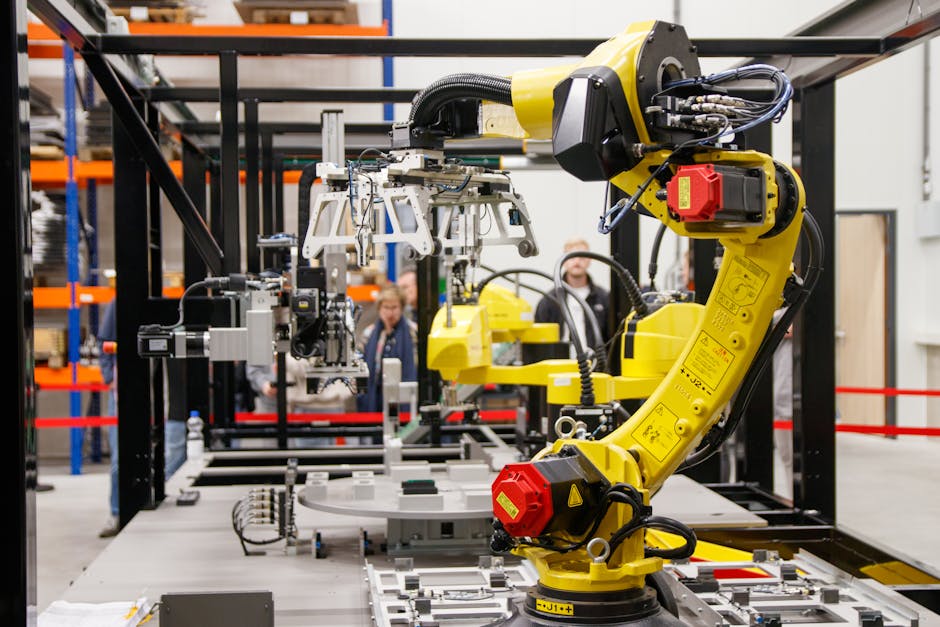
🔧 What’s Actually Happening on the Shop Floor in 2026?
The cobot market has matured considerably. According to data from the International Federation of Robotics (IFR), global cobot installations surpassed 350,000 units in 2025, with projections pushing past 500,000 by the end of 2026. The key shift? These aren’t just pick-and-place machines anymore. Modern cobots from players like Universal Robots (UR), FANUC’s CRX series, and Doosan Robotics now feature force-torque sensing, built-in vision systems, and — critically — native PLC communication protocols.
PLCs, the workhorses of industrial automation, have evolved too. Siemens’ SIMATIC S7-1500 series, Rockwell Automation’s ControlLogix 5580, and Mitsubishi’s MELSEC iQ-R platform all now support OPC UA (Open Platform Communications Unified Architecture) natively. This is the lingua franca that lets a cobot arm and a 20-year-old conveyor controller actually have a conversation in real time.
📊 The Economics: What Do the Numbers Actually Say?
Let’s get specific, because vague ROI claims don’t help anyone make a real decision.
- Deployment cost: A mid-range cobot (e.g., UR10e) plus integration hardware runs roughly $45,000–$80,000 USD per cell in 2026, down about 18% from 2023 levels due to supply chain stabilization and increased competition.
- Payback period: Industry-wide average is sitting at 14–22 months for light assembly and quality inspection tasks — faster if you’re replacing a high-turnover position paying $22+/hour.
- OEE (Overall Equipment Effectiveness) improvement: Manufacturers integrating cobots with PLC-controlled lines report 12–27% OEE gains, largely from reduced idle time and consistent cycle repeatability.
- Error reduction: Vision-guided cobots working alongside PLC safety interlocks have shown defect rate reductions of up to 34% in electronic assembly applications (source: ABI Research, Q1 2026).
- Downtime: Here’s the honest caveat — integration downtime during commissioning averages 3–6 weeks for a greenfield setup. Retrofitting into a live line? Budget for 8–12 weeks of phased cutover.
🌍 Real-World Examples: Who’s Actually Doing This Well?
South Korea — Hyundai Mobis, Asan Plant: In late 2025, Hyundai Mobis completed a phased rollout of 47 cobot cells integrated with Mitsubishi MELSEC PLCs across their brake module assembly line. The result? A 22% reduction in line takt time and a 41% drop in repetitive strain injury (RSI) claims among workers. The key insight here: they didn’t replace workers — they repositioned them as cobot supervisors and quality reviewers, which actually improved employee satisfaction scores.
Germany — Bosch Rexroth, Stuttgart Facility: Bosch has been running a hybrid cobot-PLC line since 2024, using their own ctrlX AUTOMATION platform as the PLC backbone. Their cobots handle sub-millimeter torque fastening while the PLC manages the broader line sequencing and safety zones. In 2026, they expanded this model to three additional European plants, citing a 19% energy efficiency improvement because the integrated system can dynamically throttle power during low-demand cycles.
United States — Jabil Circuit, Louisville: Jabil’s electronics manufacturing site deployed a FANUC CRX-10iA cobot fleet talking to Rockwell ControlLogix PLCs via EtherNet/IP. Their biggest win wasn’t throughput — it was flexibility. They can now retool a cell for a new product in under 4 hours versus the previous 2-day changeover. In a contract manufacturing environment where product mix changes weekly, that’s a genuine competitive moat.
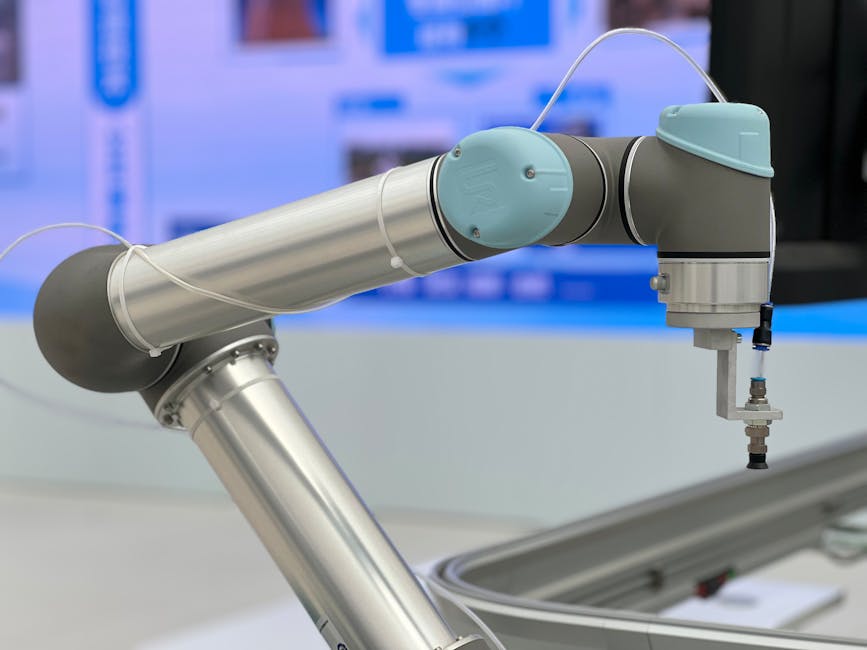
⚙️ The Technical Architecture: How Do You Actually Wire This Together?
For those newer to this space, here’s the basic communication stack you’re looking at:
- Field Level: Cobot controller (e.g., UR’s Polyscope) sends/receives I/O signals and process data via PROFINET, EtherNet/IP, or OPC UA.
- Control Level: PLC acts as the orchestrator — it tells the cobot when to start, monitors safety zones, and manages handshaking with upstream/downstream equipment.
- SCADA/MES Level: Data from both the PLC and cobot feeds into a manufacturing execution system (MES) for real-time dashboarding, traceability, and predictive maintenance alerts.
- Safety Architecture: This is non-negotiable. ISO/TS 15066 defines the parameters for cobot-human collaboration zones. Your PLC’s safety PLC (e.g., Siemens F-CPU or Pilz PNOZ) must monitor these zones independently of the cobot’s own safety system — defense in depth.
🤔 Is This Actually Right for You? Realistic Alternatives to Consider
Here’s where I want to be genuinely useful rather than just enthusiastic. Cobot-PLC integration is not always the answer, and overselling it does real damage to companies that aren’t ready.
If your production volume is low and highly variable: A full cobot cell might actually be overkill. Consider a semi-automated assist device (like a counterbalanced arm or pneumatic torque tool) paired with your existing PLC — you get ergonomic benefits and some cycle time consistency without the $60,000 ticket price.
If your PLC infrastructure is genuinely ancient (pre-2010 hardware): Don’t bolt a cobot onto a crumbling foundation. The integration will be fragile and your IT/OT security exposure will be significant. A PLC upgrade or replacement should precede the cobot conversation — and yes, that means budgeting for both in sequence.
If your team lacks robotics literacy: The technology is only as good as the people maintaining it. Consider starting with a cobot-as-a-service (CaaS) arrangement — companies like Hirebotics and Rapid Robotics offer monthly subscription models where you pay per part produced and the vendor handles programming and maintenance. It’s more expensive per unit long-term, but it dramatically lowers your risk exposure while your team builds competency.
If you’re a small manufacturer (under 50 employees): Look seriously at regional automation hubs and shared resource programs. In 2026, MEP Centers (Manufacturing Extension Partnership, U.S.) and similar bodies in Germany’s Mittelstand support network offer subsidized cobot pilot programs that let you trial integration before committing capital.
🚀 The Bottom Line: Start Small, Integrate Smartly
The most successful cobot-PLC deployments I’ve seen — and the research consistently backs this — start with a single, well-defined process cell, prove the value, and then scale. Trying to automate an entire line in one project is where budgets blow out and timelines collapse. Pick your highest-pain, most repetitive task. Map the PLC handshakes carefully. Involve your operators from day one (they will identify failure modes your engineer never would). And then, only after that first cell is humming, talk about cell 2.
The technology in 2026 is genuinely ready. The question is whether your process, your people, and your data infrastructure are ready to meet it.
Editor’s Comment : The real story of cobot-PLC integration in 2026 isn’t about robots replacing humans — it’s about building systems where machines handle the repetitive and the hazardous, while people do the adaptive, judgment-heavy work that automation still genuinely struggles with. If you approach this with that framing, the ROI case almost writes itself. But please — don’t skip the safety architecture conversation. ISO/TS 15066 compliance isn’t just a checkbox; it’s the difference between a showcase facility and a liability nightmare.
태그: [‘collaborative robots 2026’, ‘PLC automation’, ‘smart factory integration’, ‘cobot PLC communication’, ‘industrial automation ROI’, ‘OPC UA manufacturing’, ‘cobot deployment guide’]
Leave a Reply