Picture this: It’s early 2026, and a mid-sized automotive parts manufacturer in Ohio is struggling. Their legacy PLC-controlled assembly line is hitting throughput ceilings, but a full automation overhaul would cost millions and take years. Then their engineering team does something clever — they drop a cobot arm into the existing line, wire it into the Siemens S7-1500 PLC already humming on the floor, and within six weeks, cycle time drops by 23%. No rip-and-replace. No production shutdown. Just smart integration.
That story is playing out in factories worldwide right now, and if you’re evaluating whether a collaborative robot (cobot) + PLC integration setup makes sense for your production line, you’re in exactly the right place. Let’s think through this together.
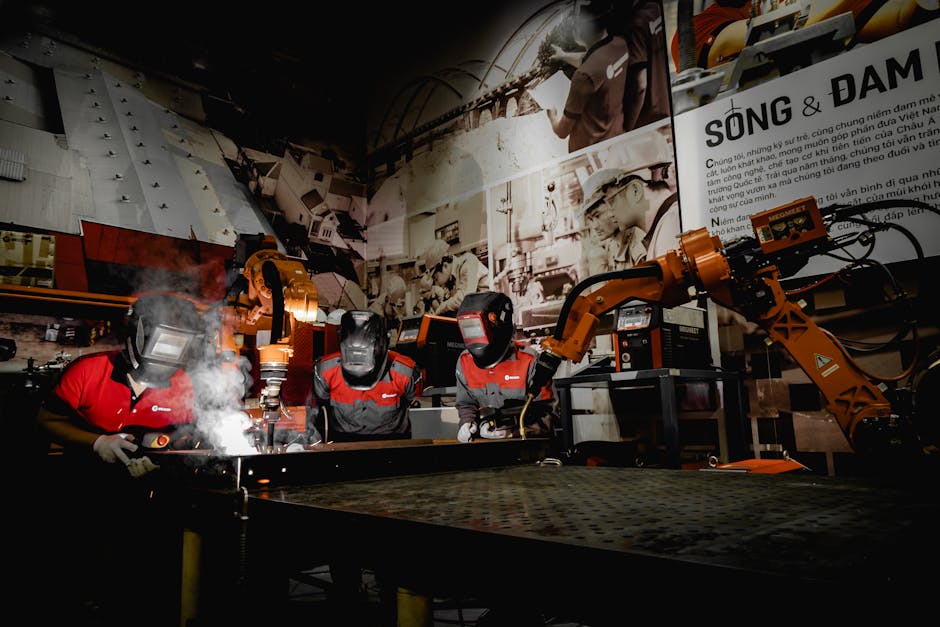
What Exactly Is a Cobot-PLC Integration, and Why Does It Matter?
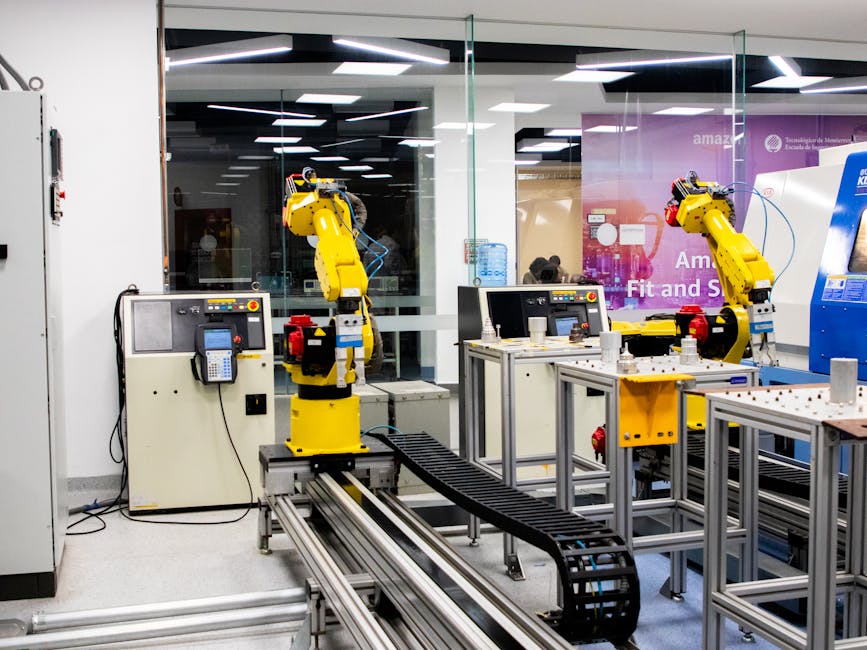
A cobot (collaborative robot) is designed to work safely alongside human operators — think Universal Robots UR10e or FANUC CRX series — without the full safety caging traditional industrial robots require. A PLC (Programmable Logic Controller) is the industrial brain that’s been orchestrating machinery on production floors since the 1970s. Brands like Siemens, Allen-Bradley (Rockwell), Mitsubishi, and Omron dominate this space.
The magic happens when you connect these two worlds. The PLC handles deterministic, real-time control of conveyor belts, sensors, and pneumatic actuators — tasks requiring microsecond precision. The cobot handles flexible, adaptive manipulation tasks that would otherwise demand human hands. Together, they create what industry analysts call a hybrid automation cell.
According to the International Federation of Robotics (IFR) 2026 World Robotics Report, cobot installations grew by 31% year-over-year globally, with PLC-integrated deployments accounting for nearly 58% of all new cobot setups in manufacturing environments. That’s not a trend — that’s a structural shift.
The Technical Architecture: How PLC and Cobot Actually Talk to Each Other
This is where most blog posts gloss over the details, but let’s get specific because the communication protocol you choose will define your entire integration experience.
- PROFINET (Siemens ecosystem): The most common protocol in European manufacturing. Cobots like UR series support PROFINET via add-on modules, enabling the PLC to trigger cobot programs, read joint positions, and monitor force-torque data in near real-time (cycle times ~1ms). Ideal if your floor already runs Siemens S7-1200/1500 PLCs.
- EtherNet/IP (Rockwell/Allen-Bradley ecosystem): Dominant in North American plants. Universal Robots and FANUC CRX both offer native EtherNet/IP support. The Allen-Bradley CompactLogix + UR5e combo is arguably the most field-tested pairing in U.S. automotive supply chains as of 2026.
- MODBUS TCP/IP: The “universal translator” of industrial protocols — slower but universally supported. Great for brownfield integrations where you’re connecting older PLCs (2000s-era) to modern cobots without protocol-specific hardware.
- OPC-UA (Unified Architecture): The rising star. OPC-UA is vendor-agnostic and increasingly the backbone of Industry 4.0 and smart factory architectures. If you’re building a new line in 2026 and planning for data analytics and digital twins, design for OPC-UA from day one.
- Digital I/O (hardwired): Don’t overlook the humble option. Sometimes a simple 24V digital signal from PLC output to cobot input — “start program,” “pause,” “emergency stop” — is all you need for straightforward pick-and-place tasks. Low cost, zero latency complexity.
Real Data: What ROI Actually Looks Like
Let’s talk numbers, because “improved efficiency” without data is just marketing copy.
A 2025-2026 benchmark study by the Association for Manufacturing Technology (AMT) tracked 87 SME manufacturers across North America and Europe that implemented cobot-PLC integrated cells. Key findings:
- Average payback period: 14.7 months (down from 22 months in 2022, driven by lower cobot hardware costs)
- OEE (Overall Equipment Effectiveness) improvement: average +18.4%
- Defect rate reduction in cobot-handled tasks: -34% compared to manual operations
- Workforce redeployment (not displacement): 71% of companies reported moving workers to higher-value inspection or programming roles
- Integration cost range: $45,000–$180,000 USD per cell, depending on protocol complexity and safety system requirements
The variance in integration cost is significant and worth understanding. A simple digital I/O integration with a single UR10e on an existing conveyor line might cost $45K all-in. A full PROFINET-based multi-cobot cell with safety PLCs (like Pilz PNOZ or Siemens ET 200SP F), force-torque integration, and vision system tie-in can push toward $180K. Know what you’re solving for before you scope the project.
Real-World Examples: Who’s Doing This Well?
South Korea — Hyundai Mobis, Asan Plant: In 2025, Hyundai Mobis integrated FANUC CRX-10iA cobots with their existing Mitsubishi MELSEC iQ-R PLC infrastructure across EV battery module assembly lines. Using CC-Link IE Field Network (Mitsubishi’s industrial Ethernet protocol), cobots handle precision cell stacking while the PLC manages thermal management system coordination. Result: 27% throughput increase with zero additional headcount, and the safety validation completed in just 11 weeks — remarkable for a Class II medical-grade assembly environment.
Germany — Bosch Rexroth, Lohr am Main: Bosch Rexroth published a 2026 case study on their own factory as a showroom for ctrlX AUTOMATION (their next-gen PLC platform) integrated with Universal Robots cobots via OPC-UA. The cobot not only receives motion commands from the PLC but pushes real-time process data back into their MES (Manufacturing Execution System), enabling predictive maintenance triggers. This closed-loop data architecture is the template for what “smart factory” actually means operationally.
USA — Jabil Circuit, San Jose: Electronics contract manufacturer Jabil deployed a fleet of six UR16e cobots on PCB handling and inspection, integrated with Allen-Bradley CompactLogix PLCs via EtherNet/IP. The critical innovation here was using the PLC as the “conductor” — scheduling which cobot program runs based on real-time demand signals from their ERP system. Flexible, scalable, and their changeover time between product variants dropped from 45 minutes to under 8 minutes.
Common Integration Pitfalls (And How to Avoid Them)
- Safety system afterthought: Cobots are inherently safer than traditional robots, but in a PLC-integrated cell, you need a proper safety PLC or safety relay system managing emergency stop circuits. ISO/TS 15066 (cobot safety) and IEC 62061 (safety PLC) must both be addressed. Don’t let your integrator skip this.
- Protocol mismatch assumptions: Just because your cobot “supports PROFINET” doesn’t mean it’s plug-and-play with your specific PLC firmware version. Always run a protocol compatibility matrix before procurement.
- Underestimating software integration: Hardware is often 40% of the project. The PLC logic modifications, cobot program development, and HMI updates frequently take longer and cost more than expected. Budget 30–40% of your hardware cost for software/commissioning.
- No simulation phase: Tools like FANUC ROBOGUIDE, URSim (Universal Robots simulator), and Siemens NX MCD allow you to simulate the entire cell digitally before a single bolt is turned. Companies that skip simulation report 2.3x longer commissioning times on average.
Realistic Alternatives: What If Full Integration Isn’t Your Starting Point?
Full PLC-cobot integration is powerful, but it’s not always the right first step. Here are tiered alternatives worth considering based on your current situation:
- Standalone cobot cell (no PLC integration): If your bottleneck is a single manual task isolated from the main line — final packaging, quality inspection, label application — a standalone cobot with its own teach pendant and simple sensor inputs can deliver ROI without touching your PLC infrastructure. Lower risk, faster deployment (4–8 weeks), good proof-of-concept.
- Digital I/O bridge: Before investing in PROFINET or EtherNet/IP modules, try hardwired I/O first. Connect PLC output signals to cobot digital inputs to trigger programs. It’s limited in data richness but validates the workflow concept for under $5K in integration cost.
- Edge computing middleware: Platforms like Cogent DataHub or Kepware KEPServerEX can act as protocol translators, letting your legacy PLC and modern cobot communicate without hardware changes. Particularly useful for brownfield sites with 10–15 year old PLCs that would otherwise need full replacement.
- Cobot-as-a-Service (CaaS): In 2026, providers like Formic Technologies and Rapid Robotics offer subscription-based cobot deployments (typically $8–$20/hour) that include integration support. For manufacturers not ready to build internal robotics expertise, CaaS removes the capital risk entirely.
Editor’s Comment : What strikes me most about the cobot-PLC integration wave isn’t the technology itself — it’s the democratization of sophisticated automation. Five years ago, this level of flexible, human-collaborative automation required a Fortune 500 budget and a team of PhD engineers. Today, a 50-person manufacturer in Daegu or Detroit can architect a genuinely smart production cell for under $100K and have it running in three months. The key insight from every successful deployment I’ve studied? They didn’t start with the technology — they started with a ruthlessly specific problem statement. Know your bottleneck, choose your protocol wisely, don’t skip the safety validation, and seriously consider whether a simpler digital I/O integration can prove the concept before you commit to full PROFINET architecture. The robots are ready. The question is whether your integration strategy is.
태그: [‘collaborative robot PLC integration’, ‘cobot production line 2026’, ‘industrial automation cobot’, ‘PROFINET EtherNet/IP cobot’, ‘smart factory automation’, ‘cobot ROI manufacturing’, ‘Industry 4.0 PLC cobot’]
Leave a Reply