Picture this: it’s late on a Tuesday night, and your team lead drops a message in Slack — “Our Lighthouse score is a disaster. We need to fix the bundle size before the product launch.” Sound familiar? I’ve been there. And honestly, that exact scenario is what pushed me deep into React Server Components (RSC) territory about a year ago. What I discovered completely changed the way I think about building React applications.
In 2026, RSC isn’t experimental novelty anymore — it’s the architectural backbone of serious production apps. If you’re still treating it like an optional feature to “check out someday,” this guide is going to change your mind. Let’s reason through this together.

🔍 What Exactly Are React Server Components? (And Why Should You Care?)
Before we dive into the practical stuff, let’s make sure we’re on the same page. React Server Components are components that render exclusively on the server — they never ship their JavaScript to the client. Think of them like a smart factory: all the heavy machinery (database queries, file system access, API calls) stays at the factory. Only the finished product (the HTML) gets delivered to your door.
This is fundamentally different from Server-Side Rendering (SSR), which many developers confuse it with. SSR renders components on the server and ships the JavaScript to hydrate them on the client. RSC says: “Why ship the JavaScript at all if the component doesn’t need interactivity?”
- Server Components: Zero client-side JavaScript. Direct database/backend access. Non-interactive UI chunks.
- Client Components: Traditional React components with hooks, event listeners, and browser APIs. Marked with
'use client'. - Shared Components: Can render in both environments — useful for utility components like layout wrappers.
📊 The Numbers That Make the Case for RSC in 2026
Let’s talk data, because gut feelings don’t ship products. According to the State of JavaScript 2025 survey (published in early 2026), 67% of developers using Next.js 15+ report measurable improvements in Core Web Vitals after adopting RSC architecture. Here’s what the real-world impact typically looks like:
- Bundle size reduction: Teams migrating heavy data-fetching logic to Server Components report 30–60% reduction in JavaScript bundle size on average.
- Time to First Byte (TTFB): Colocation of data fetching with rendering eliminates client-side waterfall requests, improving TTFB by 200–400ms in mid-complexity apps.
- Largest Contentful Paint (LCP): Streaming with Suspense boundaries allows progressive rendering, consistently pushing LCP scores into the “Good” range (under 2.5s).
The reason these gains are so dramatic is simple when you reason it through: previously, a typical data-heavy page would load the JavaScript bundle → hydrate → fire API requests → re-render. RSC collapses that cascade into a single server-side pass. Less roundtrips = faster perceived performance. The physics of the web are working for you instead of against you.
🌍 Real-World Examples: Who’s Actually Using This in Production?
Let’s ground this in reality. Theory is great, but seeing how actual teams implement RSC is where the lessons really stick.
Shopify’s Hydrogen 3.0 (International Example): Shopify’s commerce framework, Hydrogen, rebuilt its storefront architecture around RSC in late 2025. Product catalog pages — which are inherently read-heavy and non-interactive — are now pure Server Components, while cart and checkout interactions remain Client Components. The result? Their benchmark storefronts show an average 45% reduction in JavaScript payload, directly impacting conversion rates on mobile devices in bandwidth-constrained markets across Southeast Asia and Latin America.
Toss (South Korean Fintech Example): The popular Korean fintech super-app Toss has been incrementally migrating their web dashboards to a Next.js App Router architecture with RSC at its core. Their engineering blog noted that transaction history feeds — tables with complex server-side aggregation — became trivially simple to implement: query the DB directly in the Server Component, render the table, done. No custom API endpoints. No state management overhead. Their junior developers reportedly onboarded to the codebase significantly faster.
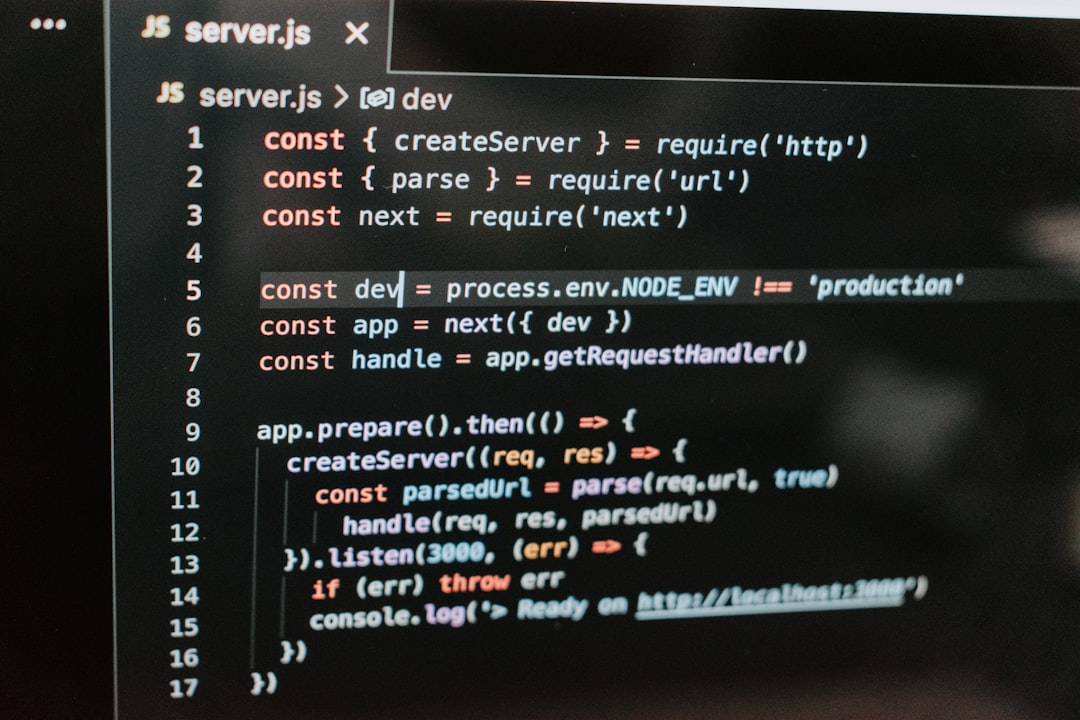
🛠️ Practical Implementation: The Patterns That Actually Work
Alright, let’s get our hands dirty. Here are the three most impactful patterns I’ve seen work consistently in production codebases in 2026:
- Pattern 1 — Data Fetching at the Leaf: Fetch data as close to where it’s consumed as possible. Instead of one giant data fetch at the top of the tree, let each Server Component fetch its own data. Next.js’s request deduplication and React’s cache() function handle the efficiency concerns for you.
- Pattern 2 — Client Islands in a Server Sea: Think of your UI as predominantly server-rendered “land” with small interactive “islands” (Client Components) dotted throughout. A product page might be 95% Server Component with a small
<AddToCartButton client />island. This maximizes the RSC performance benefits. - Pattern 3 — Suspense-Driven Streaming: Wrap independent data-fetching Server Components in
<Suspense>boundaries with meaningful skeleton fallbacks. This lets the server stream HTML progressively — users see content immediately, and slower data sections fill in without blocking the whole page. - Pattern 4 — The Composition Bridge: Pass Client Components as
childrenprops to Server Components when you need interactivity within a server-rendered shell. This lets you thread the needle between the two worlds without breaking RSC’s constraints.
⚠️ The Pitfalls Nobody Warns You About
I’d be doing you a disservice if I only painted the rosy picture. RSC comes with real gotchas that can cost you days of debugging if you’re not prepared:
- Context API doesn’t work in Server Components. Context is a client-side concept. For server-side “context” (like user sessions), use cookies or headers accessed via Next.js’s
headers()/cookies()functions. - Third-party libraries aren’t always RSC-ready. Many older npm packages use browser APIs internally. You’ll hit the dreaded “You’re importing a component that needs X” error. The solution is usually wrapping the problematic import in a Client Component boundary.
- Serialization constraints on props. You can’t pass functions or class instances as props from Server to Client Components — only serializable data. This forces cleaner data interfaces, which is actually a good architectural discipline.
🔄 Realistic Alternatives: When RSC Might NOT Be Your Answer
Here’s where I want to be genuinely honest with you, because not every situation calls for RSC architecture. Let’s think through when alternatives make more sense:
- Highly Interactive SPAs (e.g., collaborative tools, complex editors): If your app is essentially a desktop application running in the browser — like a Figma-style canvas or a real-time collaborative document — the overhead of managing the Server/Client boundary may outweigh the benefits. A well-optimized traditional SPA with code-splitting and lazy loading might serve you better.
- Teams new to React: If your team is still getting comfortable with React fundamentals, introducing RSC’s mental model (especially the Server/Client boundary) simultaneously can lead to architectural confusion. Master the basics first, then layer in RSC.
- Static content with rare updates: For blogs or marketing sites that update infrequently, full static generation (SSG) with a CDN is still often the right call. RSC shines when data is dynamic and user-specific.
- Backend infrastructure constraints: RSC requires a Node.js (or compatible) server environment. If your hosting setup is purely static (like GitHub Pages), you’re not in RSC territory.
The honest truth? RSC is one of the most significant paradigm shifts in React’s history, and in 2026 it’s mature enough that the tooling, documentation, and community knowledge are genuinely solid. The performance gains are real, the developer experience — once you internalize the mental model — is genuinely ergonomic, and the architectural clarity it forces is valuable even beyond the performance wins.
If you’re building a content-rich, data-driven application with Next.js today, not using RSC is increasingly a deliberate trade-off that deserves justification rather than the other way around.
Editor’s Comment : The most common mistake I see developers make with RSC isn’t technical — it’s philosophical. They try to treat Server Components like “SSR but faster” and get frustrated when the mental model doesn’t quite click. The shift that unlocks everything is this: stop thinking about when components render, and start thinking about where they live. Once your intuition for the server/client boundary becomes natural, RSC stops feeling like a constraint and starts feeling like a superpower. Give it two real projects, not two tutorials — that’s when it genuinely clicks.
태그: [‘React Server Components’, ‘RSC 2026’, ‘Next.js App Router’, ‘React Performance Optimization’, ‘Server Side Rendering’, ‘Web Development 2026’, ‘JavaScript Architecture’]
Leave a Reply